Subscription Ideas for Business: Boost Recurring Revenue
The subscription economy isn't just a trend; it's a fundamental shift in how businesses create value and build lasting customer relationships. In a world of fleeting transactions, the recurring revenue model offers predictability, higher customer lifetime value (LTV), and a direct line to your most loyal audience. For Shopify Plus merchants and other high-volume stores, establishing a reliable income stream is critical for scaling operations and maintaining a competitive edge.
This article moves beyond generic concepts to provide a strategic blueprint of powerful subscription ideas for business owners looking to build a more resilient and profitable operation. We'll explore ten distinct models, breaking down their operational mechanics, implementation costs, and the specific KPIs you need to track. Whether you sell physical products, digital services, or B2B software, you'll find actionable insights to launch or optimize a subscription offering that truly resonates with your market.
We'll also show how modern tools like SelfServe can automate critical post-purchase workflows, from order edits to upsells, creating a seamless experience that reduces churn and boosts your bottom line from day one. Get ready to transform one-time buyers into lifelong subscribers.
1. Post-Purchase Customer Management Platform
One of the more powerful subscription ideas for business isn't a direct-to-consumer product but a B2B service that fundamentally improves ecommerce operations. A post-purchase customer management platform offers merchants a recurring subscription to a tool that empowers their customers to edit orders themselves, dramatically reducing support ticket volume and operational friction.
Instead of emailing support to fix a typo in a shipping address or cancel an accidental duplicate order, customers can make these changes directly from their order confirmation page. This self-service model creates a much better customer experience by giving shoppers immediate control and resolution. For merchants, especially high-volume Shopify stores, the return on investment is clear: fewer support agent hours spent on repetitive, low-value tasks and a significant reduction in costs associated with incorrect shipments.
How to Implement This Model
- Set Clear Time Windows: Define a specific period post-purchase, such as 2-4 hours, during which customers can make edits. This window prevents changes from interfering with your fulfillment process.
- Promote Visibility: Make the editing options obvious. Place clear links or buttons on the order confirmation page, in confirmation emails, and on the order status page. A simple "Need to change your order?" prompt is highly effective.
- Use Automated Reminders: Send a follow-up email or SMS an hour after purchase, reminding customers they have a limited time to modify their order. This proactive step catches errors early.
Key Insight: The goal is to strike a balance between customer autonomy and operational control. By using approval workflows for sensitive changes, like order cancellations on high-value items, you can offer flexibility without introducing risk.
Leading platforms in this space, like SelfServe for Shopify merchants, provide the tools to customize these rules and permissions. By analyzing the data on what customers change most often, you can gain valuable insights into friction points in your checkout process. For a deeper look into optimizing this part of the buyer's journey, you can read more about the post-purchase customer experience and its impact on retention. This approach not only saves money but also builds customer trust, making it a valuable subscription for any growing ecommerce brand.
2. Post-Purchase Upsell and Cross-Sell Engine
Another one of the most effective subscription ideas for business is a B2B platform that boosts average order value after the initial sale. A post-purchase upsell and cross-sell engine is a service that integrates into an ecommerce store's checkout flow, presenting customers with relevant product recommendations on the thank you page and order status page. This strategy captures incremental revenue from an already committed buyer at the peak of their engagement.
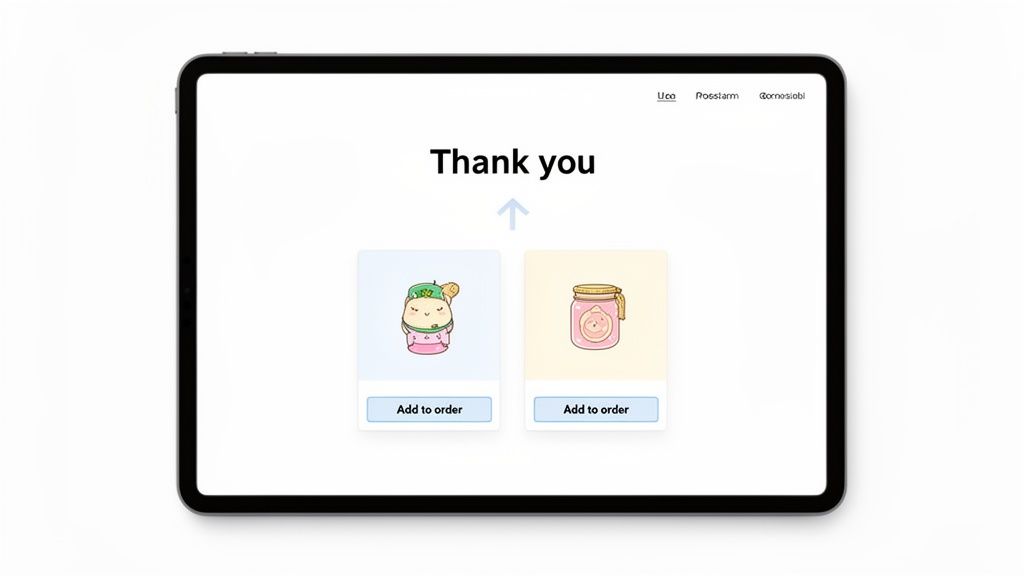
Instead of relying solely on pre-purchase order bumps, this model capitalizes on the post-transaction window when customer trust is high and payment information is already stored. A customer who just bought a new coffee machine, for example, could be offered a discounted bag of espresso beans or a set of matching mugs with a single click. For merchants, particularly direct-to-consumer brands focused on AOV growth, this approach drives immediate revenue and introduces customers to more of their product catalog without adding friction to the initial checkout.
How to Implement This Model
- Curate Limited Offers: Avoid decision paralysis by presenting only 2-3 hyper-relevant product recommendations. Use purchase history and category data to suggest items that genuinely complement the original order.
- Strategically Place Offers: The thank you page is prime real estate for an immediate upsell. Reinforce the offer on the order status page, which customers visit multiple times, to create additional conversion opportunities.
- Test Incentives and Positioning: Experiment with different offers to see what resonates. Test a small discount (e.g., "Add for 15% off") against premium positioning ("Complete your set") to find the sweet spot for your audience.
Key Insight: The primary goal is to increase customer lifetime value without being overly aggressive. Monitor your cart abandonment rates closely; if they spike after implementing upsells, your offers may be too distracting or poorly timed.
Leading solutions in this category, such as Rebuy or the built-in upsell modules within platforms like SelfServe, give merchants the tools to create these automated offers. By analyzing which upsells convert best, you can refine your strategy and build powerful product bundles. To explore how to integrate these offers seamlessly, you can learn more about the best practices for Shopify post-purchase upsells. This method is a direct and powerful way to increase revenue from every single transaction.
3. Subscription Box and Recurring Revenue Service
Among the most popular subscription ideas for business, the curated subscription box model excels at creating predictable revenue and fostering deep customer loyalty. This approach involves sending customers a selection of products on a recurring schedule, transforming one-time purchases into an ongoing relationship. Brands like Birchbox and Dollar Shave Club built empires on this model, demonstrating its power to deliver convenience and delight.
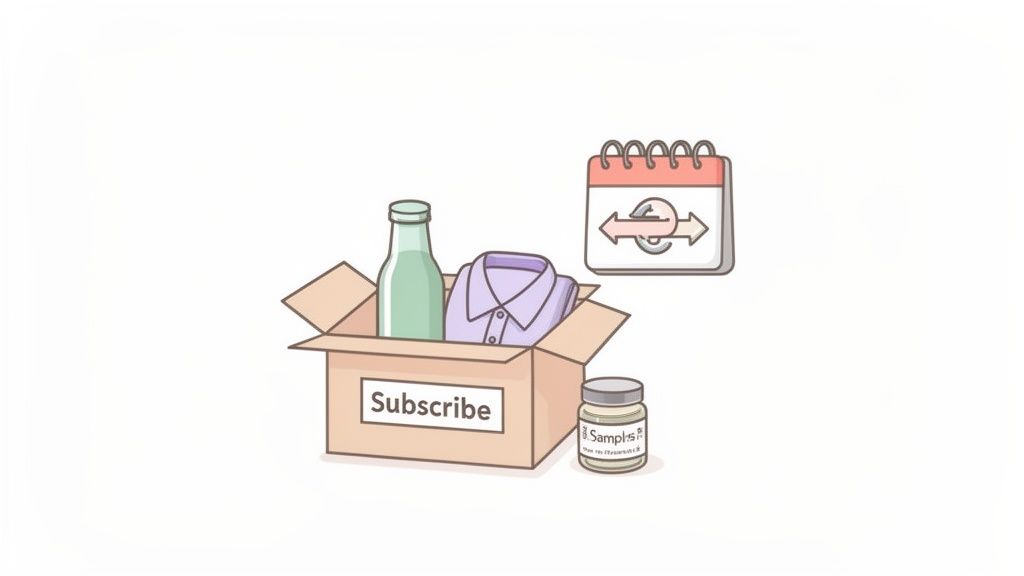
The core appeal for customers is the experience of discovery and personalization. Whether it's beauty samples, lifestyle goods from FabFitFun, or personalized clothing from Stitch Fix, subscribers receive a curated experience that feels exclusive. For merchants, this creates a stable cash flow forecast, simplifies inventory management, and provides a direct channel for customer feedback. The first box is critical; a memorable unboxing experience often determines whether a new subscriber stays for the long haul.
How to Implement This Model
- Offer Flexible Terms: Give customers easy options to skip a month, pause their subscription, or swap items. This flexibility reduces cancellation rates by accommodating changing needs and budgets.
- Create Tiered Levels: Develop multiple subscription tiers at different price points. A basic tier might offer samples, while a premium tier could include full-sized products and exclusive access, catering to different customer segments.
- Perfect the First Box: The initial delivery sets the tone for the entire customer relationship. Focus on an exceptional unboxing experience with thoughtful packaging, a personal note, and high-quality products to maximize retention from day one.
Key Insight: To combat first-month churn, consider implementing a minimum commitment period, such as three months. This structure encourages customers to fully experience the value of the subscription beyond a single box, improving lifetime value and giving your business more stability.
Successful subscription services constantly iterate based on subscriber feedback and use win-back campaigns to re-engage those who have canceled. By treating each box as a new opportunity to impress, you build a loyal community that eagerly awaits each delivery. For merchants looking to launch their own service, you can learn more about building a profitable ecommerce subscription business and the key metrics to track. This model isn't just about selling products; it's about selling an experience.
4. Software-as-a-Service (SaaS) for Ecommerce Operations
Another powerful category of subscription ideas for business involves creating B2B software solutions that address specific operational challenges for ecommerce merchants. A Software-as-a-Service (SaaS) tool for ecommerce operations provides merchants with recurring access to software that manages, automates, and optimizes functions like inventory planning, customer support, or marketing automation.
Instead of building these complex systems in-house, merchants pay a monthly or annual fee for a specialized platform. For example, a merchant might subscribe to Klaviyo for email marketing automation or Gorgias to manage customer support tickets efficiently. This model allows ecommerce brands to access enterprise-level functionality without the significant upfront investment, enabling them to focus on their core business of selling products. The value is clear: improved efficiency, data-driven decisions, and the ability to scale operations without a proportional increase in headcount.
How to Implement This Model
- Solve One Pain Point Excellently: Instead of building a tool that does everything moderately well, focus on solving one critical problem exceptionally. This focus makes your value proposition clear and your solution indispensable.
- Offer a Frictionless Trial: Implement a 14 to 30-day free trial to allow potential customers to experience the software's benefits firsthand. This approach significantly lowers the barrier to adoption and demonstrates your confidence in the product's ROI.
- Invest in Customer Success: Your goal is to ensure customers achieve their desired outcomes using your tool. Provide robust onboarding, proactive support, and clear success metrics so they can quickly see the value and are motivated to remain subscribers.
Key Insight: The most successful B2B SaaS companies for ecommerce build strong API documentation and cultivate integration partnerships. This allows their tool to seamlessly connect with other essential platforms in a merchant's tech stack, making the software stickier and more valuable over time.
Platforms like SelfServe exemplify this by focusing squarely on post-purchase order management for Shopify. By developing a specialized solution and integrating it into the broader ecommerce ecosystem, SaaS providers can create a highly defensible and profitable subscription business. The data gathered from customer usage can then directly inform the product roadmap, creating a cycle of continuous improvement that benefits both the provider and the merchant.
5. Customer Support and Help Desk Subscription
Another effective subscription idea for business focuses on B2B services, specifically platforms that help merchants manage customer inquiries at scale. A customer support and help desk subscription provides a recurring service with tools like ticketing systems, unified inboxes, knowledge bases, and AI-powered chat to streamline communications. This approach is essential for growing brands facing an overwhelming volume of customer questions.
Instead of drowning in emails and social media DMs, support teams can use a central platform to track, manage, and resolve issues efficiently. These tools consolidate inquiries from various channels into a single view, allowing for faster response times and better organization. For merchants, the benefits are twofold: a significant reduction in the manual labor required to manage support and a more consistent, professional customer service experience. This frees up internal teams to focus on more complex, high-value customer interactions.
How to Implement This Model
- Start with Self-Service: Before investing heavily in support agents, implement robust self-service options. A detailed knowledge base or FAQ page can deflect 30-40% of common questions. Similarly, tools that allow customers to manage their own orders, like making address corrections, prevent tickets from ever being created.
- Establish Clear SLAs: Define and communicate Service Level Agreements (SLAs) for response and resolution times. Tracking metrics like first-response time and tickets solved per hour helps measure team performance and identify bottlenecks.
- Integrate AI for Triage: Use AI-powered chatbots as the first line of defense. They can answer basic questions instantly, collect necessary information from the customer, and route the conversation to the appropriate human agent if the issue is complex.
Key Insight: The most effective support strategy is prevention, not just reaction. By empowering customers with self-service tools to handle their own post-purchase modifications, you can drastically reduce the support burden before it even reaches your team.
Leading platforms in this space include Gorgias, which is built for ecommerce, and the enterprise-grade solution Zendesk. However, a prevention-first tool like SelfServe complements these help desks by resolving common issues like order edits or cancellations automatically, directly reducing the ticket volume these platforms need to manage. This layered approach creates an efficient support ecosystem that scales with your business.
6. Analytics and Business Intelligence Dashboard Subscription
Another compelling B2B subscription idea for business is a service that provides merchants with real-time analytics and business intelligence dashboards. This model offers recurring access to a platform that consolidates data from multiple sources like Shopify, Google Analytics, and ad platforms, presenting it in a cohesive, actionable format. Instead of drowning in spreadsheets, merchants gain holistic views of sales, customer behavior, and operational metrics to drive strategic decisions.
For growing ecommerce brands, sifting through raw data to find meaningful patterns is a significant challenge. An analytics subscription solves this by translating complex numbers into clear reports on customer lifetime value, cohort retention, and marketing channel performance. By seeing which products are performing well or which customer segments are most profitable, merchants can make smarter investments in inventory, marketing, and product development. This data-driven approach is critical for sustainable growth.
How to Implement This Model
- Focus on Role-Specific KPIs: Create dashboards tailored to different user roles. A marketing manager needs to see campaign ROI and cost per acquisition, while an operations manager needs to monitor inventory turnover and fulfillment times. Keep each dashboard focused on 3-5 critical metrics.
- Provide Pre-Built Templates: Offer ready-to-use templates for common scenarios like "Black Friday Performance," "New Product Launch Analysis," or "Subscription Cohort Health." This provides immediate value and reduces setup friction for new users.
- Build Actionable Alerts: Go beyond static reports by building automated alerts for significant metric changes. For example, notify a merchant when a specific product's return rate suddenly spikes or when customer acquisition cost exceeds a set threshold.
Key Insight: The true value isn't just presenting data; it's providing context and actionable next steps. Combine performance metrics with benchmarking data to show merchants how they stack up against industry averages, and integrate insights directly into their workflow.
Leading platforms in this space, such as Littledata, Glew, and Daasity, excel at making complex ecommerce data accessible. They empower merchants to answer critical questions without needing a dedicated data scientist. By connecting order modification data with revenue impact, brands can even quantify the financial benefits of a flexible post-purchase experience, tying operational improvements directly to the bottom line.
7. Email Marketing and Customer Communication Platform Subscription
A fundamental subscription idea for business growth is offering a sophisticated communication platform. This B2B service provides merchants with a subscription to email, SMS, and push notification tools, complete with advanced segmentation, personalization, and automation features. It empowers brands to move beyond generic blasts and build targeted communication journeys that drive repeat purchases and long-term loyalty.
By subscribing to such a platform, merchants can automatically trigger messages based on customer behavior, like an abandoned cart or a first purchase. This direct line to the customer is crucial for nurturing relationships, sharing important updates, and promoting new products. For DTC brands, where building a community is as important as selling a product, a strong email and SMS strategy is a non-negotiable part of their tech stack. Leading examples include Klaviyo and Omnisend, which have become the benchmark for ecommerce marketing automation.
How to Implement This Model
- Segment Audiences Intelligently: Group customers based on purchase history (e.g., first-time vs. repeat buyers), engagement level, and products viewed. This allows for highly relevant messaging that resonates with specific interests.
- Automate Key Journeys: Implement automated sequences for abandoned carts, post-purchase follow-ups (including order confirmations and shipping updates), and customer win-back campaigns. These "set it and forget it" flows work around the clock to recover revenue.
- Personalize at Scale: Use personalization tokens (like customer names) and dynamic content blocks that show different products or offers based on past behavior. This makes each communication feel individual and relevant.
Key Insight: The true power of this model is combining it with other data points. When a customer edits their order using a post-purchase tool, that action can trigger a specific, highly relevant email confirming the change or even offering a complementary product, creating a seamless and intelligent customer experience.
Monitoring metrics like open rates, click-through rates, and unsubscribe rates is essential for continuous improvement. By testing subject lines, send times, and content, you can refine your strategy to maximize engagement and customer lifetime value. For a deeper understanding of how email marketing connects with the customer journey, learning more about post-purchase communication strategies can provide valuable context. This subscription doesn't just send messages; it builds profitable, lasting customer relationships.
8. Inventory Management and Forecasting Subscription
One of the most critical subscription ideas for business is a B2B service focused on inventory intelligence. This model offers merchants a recurring subscription to a platform that delivers real-time inventory tracking, predictive demand forecasting, and purchase order automation. It is designed to help businesses prevent stockouts, minimize overstock, and optimize cash flow tied up in inventory.
By using predictive analytics, these tools move merchants from reactive to proactive inventory management. Instead of guessing purchase orders based on past sales, a forecasting tool analyzes trends, seasonality, and demand signals to recommend precise quantities and reorder timing. For high-SKU retailers and inventory-intensive brands, this service provides a clear path to improved profitability by ensuring the right product is available at the right time without accumulating costly, slow-moving stock.
How to Implement This Model
- Focus on High-Impact SKUs: Begin by applying forecasting to the top 20% of your products that generate 80% of your revenue. This Pareto principle approach ensures you get the most significant results quickly.
- Set Automated Reorder Points: Configure reorder points and safety stock levels based on supplier lead times and sales velocity. This automates purchase order generation, preventing stockouts on your bestsellers.
- Implement Cycle Counting: Use the platform to guide regular, small-scale inventory counts (cycle counting) instead of relying on a single annual stock-take. This practice maintains much higher inventory accuracy throughout the year.
- Analyze Sell-Through Rates: Monitor sell-through rates to identify slow-moving inventory early. Use this data to create promotions or bundles to clear out stock before it becomes a liability.
Key Insight: The most advanced inventory strategies integrate demand signals from other parts of the business. For example, data from a post-purchase order modification tool can reveal real-time demand shifts. If customers are consistently swapping an item out of their order for another, it's a powerful, immediate signal to adjust your forecast.
Platforms like Inventory Planner offer robust demand forecasting specifically for Shopify, while tools like Cin7 and Fishbowl provide more comprehensive, ERP-level inventory management. By subscribing to such a service, merchants can turn their inventory from a major cost center into a strategic asset, making it an essential subscription for any business serious about scaling efficiently.
9. Returns Management and Reverse Logistics Subscription
Another one of the most impactful subscription ideas for business is a B2B service focused on automating and simplifying the returns process. A returns management platform offers merchants a recurring subscription to handle everything from return authorization and prepaid shipping labels to refund processing and inventory reconciliation. This transforms a major operational headache into a streamlined, data-driven process.
By providing a self-service returns portal, brands empower customers to initiate returns without contacting support. This not only improves the customer experience by removing friction but also gives merchants valuable data on why products are coming back. For high-volume stores, this service significantly cuts down on support costs and provides the operational intelligence needed to reduce return rates over time. The ROI comes from both efficiency gains and improved product quality based on customer feedback.
How to Implement This Model
- Offer Effortless Initiation: Make the return process easy to find. Place clear links on your order status page, in customer accounts, and within your website's footer. A dedicated returns portal is key.
- Automate Label Generation: Provide prepaid, pre-addressed shipping labels automatically once a return is approved. This removes a significant barrier for customers and ensures packages are routed correctly.
- Collect Detailed Return Reasons: Use a structured dropdown menu to capture specific reasons for returns, like "too small," "color not as expected," or "damaged in transit." This data is far more useful than a generic "didn't want."
Key Insight: A well-managed returns process is a retention tool. By making returns easy and transparent, you build trust and confidence, encouraging customers to shop with you again. The data collected is a goldmine for improving product descriptions, sizing guides, and even manufacturing quality.
Leading platforms in this space, such as Loop Returns and Returnly, specialize in creating these customer-centric return experiences. By integrating returns management directly with your order management system, as is possible with SelfServe, you can close the loop between sales, returns, and inventory. This approach turns a cost center into an opportunity to learn and improve, making it a critical subscription for any brand focused on long-term growth.
10. Loyalty Program and Customer Retention Subscription
A powerful subscription idea for business is not always a product, but a service that fosters long-term brand affinity. A loyalty and retention subscription involves creating a structured program where customers earn rewards, unlock exclusive perks, and gain tiered benefits for their repeat business. This model transforms transactional relationships into a sense of community and mutual investment, driving repeat purchases and increasing customer lifetime value.

Instead of relying solely on discounts to bring customers back, a loyalty program builds a rewarding ecosystem. By gamifying the shopping experience with points and achievements, brands create an engaging feedback loop. Platforms like Smile.io and Yotpo offer merchants the tools to build these programs on Shopify, while brands like Sephora and Nike have set the standard for making loyalty a core part of their brand identity. The goal is to make customers feel valued beyond their last purchase, encouraging them to choose your brand every time.
How to Implement This Model
- Keep Rewards Simple and Transparent: Establish a clear earning rule, such as "1 point for every $1 spent." This transparency helps customers quickly understand the value and track their progress without confusion.
- Offer Diverse Redemption Options: Don't limit rewards to just discounts. Offer exclusive products, early access to sales, free shipping, or even branded merchandise. This variety caters to different customer motivations.
- Create Tiers with Clear Advancement: Structure your program with levels like Bronze, Silver, and Gold. Clearly communicate the benefits of each tier and what it takes to advance, giving customers a goal to strive for.
- Gamify the Experience: Introduce seasonal challenges, double-point weekends, or badges for completing specific actions like leaving a review or making a second purchase. These limited-time events create urgency and excitement.
Key Insight: The success of a loyalty program depends on constant communication and integration. Remind customers of their point balance and redemption options in emails, on their account page, and even in post-purchase communications to keep them engaged with the program.
Integrating loyalty status with post-purchase offers can be highly effective. For example, you can use a tool like SelfServe to present a VIP-only upsell to a top-tier loyalty member right after they complete a purchase. This reinforces their special status and drives incremental revenue. By making loyalty a visible and rewarding part of the entire customer journey, you create a powerful retention engine that turns one-time buyers into lifelong advocates.
Comparison of 10 Subscription Business Ideas
Building Your Subscription Flywheel for Lasting Growth
We've explored a wide range of powerful subscription ideas for business, from consumable replenishment and curated boxes to access-based memberships and digital content. Each model presents a unique pathway to generating predictable revenue and building deeper customer relationships. However, selecting the right idea is only the beginning of your journey. The real, sustainable advantage comes from seeing these concepts not as isolated tactics, but as interconnected gears in a customer-centric growth engine.
The core principle is integration. A subscription box business (Idea #3) becomes exponentially more valuable and resilient when paired with a robust post-purchase customer management platform (Idea #1). This synergy empowers subscribers to skip a delivery, swap a product, or update their address without ever needing to contact your support team. This positive, self-directed experience directly fuels customer satisfaction and retention, forming the foundation of a strong business.
From Individual Tactics to an Integrated System
The most successful direct-to-consumer brands understand that a single subscription offering is simply the entry point. The next step is to build a "flywheel" where each component strengthens the others, creating momentum that drives long-term value.
Empowerment Reduces Churn: Giving customers control over their own subscriptions is the single most effective retention tactic. When subscribers can easily manage their orders through a self-service portal, you eliminate friction and frustration, two primary drivers of cancellations. This is where a tool like SelfServe becomes critical, turning a potential support ticket into a positive brand interaction.
Experience Feeds Loyalty: A seamless post-purchase experience, powered by a self-service portal and effective communication (Idea #7), naturally leads to greater customer loyalty (Idea #10). Satisfied subscribers are more likely to remain with your brand longer, engage with your community, and become vocal advocates who refer new customers.
Data Drives Optimization: The data gathered from your subscription program is a goldmine. By using an analytics dashboard (Idea #6) to monitor key performance indicators like churn rate, lifetime value (LTV), and average revenue per user (ARPU), you can make informed decisions. This data helps you refine your offerings, adjust pricing, and perfect your retention strategies, ensuring your subscription ideas for business are constantly improving.
Your Actionable Next Steps
Rather than trying to implement everything at once, focus on a strategic, phased approach. Identify the most significant opportunity or the most pressing pain point in your current operations.
- Start with Customer Control: If your support team is overwhelmed with basic subscription management requests like "skip my next order" or "update my address," your first move should be implementing a self-service portal. This immediately reduces operational costs and improves the customer experience.
- Layer in Post-Purchase Value: Once customers are empowered, introduce post-purchase upsells and cross-sells (Idea #2). Use the confirmation page or the customer portal to offer one-time add-ons or complementary products, instantly increasing average order value without added acquisition costs.
- Build the Moat: With a solid operational foundation and an engaged subscriber base, you can then focus on building a competitive "moat" with loyalty programs, exclusive content, or community access. This elevates your subscription from a simple transaction to a true membership experience.
Ultimately, the most potent subscription ideas for business are those that create a virtuous cycle. A great product attracts a subscriber, a frictionless management experience keeps them happy, and smart, value-added offers increase their lifetime value. By viewing your subscription model as the core of an interconnected ecosystem, you build a resilient, scalable, and profitable commerce engine that doesn't just acquire customers-it keeps them for life.
Ready to give your subscribers the control they demand and reduce your support workload? SelfServe provides a powerful, self-service customer portal that empowers your subscribers to manage their own orders, from skipping a delivery to swapping products, all without filing a support ticket. See how you can implement this crucial piece of your subscription flywheel by visiting SelfServe today.