Mastering Ecommerce Subscription Models for Your Brand
Here's the rewritten section, designed to sound like an experienced human expert.
At its core, a subscription model is a simple idea: customers pay you on a recurring basis for products or services. But thinking of it just as a payment plan misses the point entirely. It's about fundamentally changing your relationship with customers—moving from one-off transactions to a long-term partnership that creates predictable, recurring revenue.
The Subscription Shift in Ecommerce
Let's be honest, the old way of doing ecommerce is getting harder. Relying on one-time sales is a constant grind. Smart brands are realizing that the real value lies in building relationships, and subscriptions are the most powerful tool in their arsenal for doing just that. This isn't just another trend; it's a deep-seated change in how businesses grow and earn loyalty.
Imagine you run a local coffee shop. You've always sold coffee by the cup, a classic transactional business. But what if you offered a monthly membership for a weekly bag of your best beans? Suddenly, you’ve done two incredible things. First, you've locked in revenue you can count on. Second, you’ve woven your brand into your customer’s daily life, creating a bond a single purchase could never achieve. That’s the magic we're bringing to online stores, especially on platforms like Shopify.
The numbers behind this shift are staggering. The global subscription e-commerce market is projected to hit $859.52 billion in 2026—a massive leap from $536.72 billion just a year before. And with forecasts pointing toward $5.36 trillion by 2030, it’s clear this isn't a bubble. It's a reflection of a profound change in how people prefer to shop, prioritizing convenience and reliable service. If you want to dig into the data, these subscription economy statistics paint a compelling picture.
New Demands for Growing Brands
Launching a subscription offering is a fantastic way to build a stable foundation for your business. That predictable revenue is a game-changer. However, it also brings a new set of challenges you absolutely must get right.
The real test of a subscription business isn't just getting customers to sign up; it's giving them an experience so good they never think about leaving. It forces you to stop thinking transactionally and start thinking relationally.
To thrive in this new model, you’ll need to sharpen your operations in a few key areas:
- Inventory and Logistics: Guesswork is no longer an option. You need to get serious about forecasting. When you have recurring orders scheduled, you have to anticipate demand to prevent stockouts and shipping delays that will inevitably tick off your most loyal customers.
- Customer Support: Your support team's role changes completely. They're no longer just solving one-off problems; they are relationship managers. A subscriber who struggles to skip a shipment or update their address is a subscriber who is about to churn.
- Post-Purchase Experience: The customer journey doesn't end at checkout anymore—in fact, that’s where the real journey begins. The post-purchase phase, where customers manage their subscriptions and interact with your brand, is your single biggest opportunity to build loyalty and prevent churn.
Don't look at these as hurdles. They're signposts, pointing you toward building a stronger, more profitable, and resilient business. Throughout this guide, we’ll break down exactly how to tackle each of these areas and turn them into your biggest competitive advantages.
Choosing Your Ecommerce Subscription Model
Picking the right subscription model is a lot like choosing the right tool for a job. You wouldn't use a sledgehammer to hang a picture frame, right? In the same way, the subscription model you choose has to be a perfect fit for your products, your brand, and what your customers actually want. Let's cut through the jargon and look at the main options so you can find the one that makes the most sense for your business.
First, it helps to see where subscriptions fit into the bigger picture. Most brands start with one-time sales, but adding a subscription creates a totally different, ongoing relationship with your customers. This simple visual shows that fork in the road.
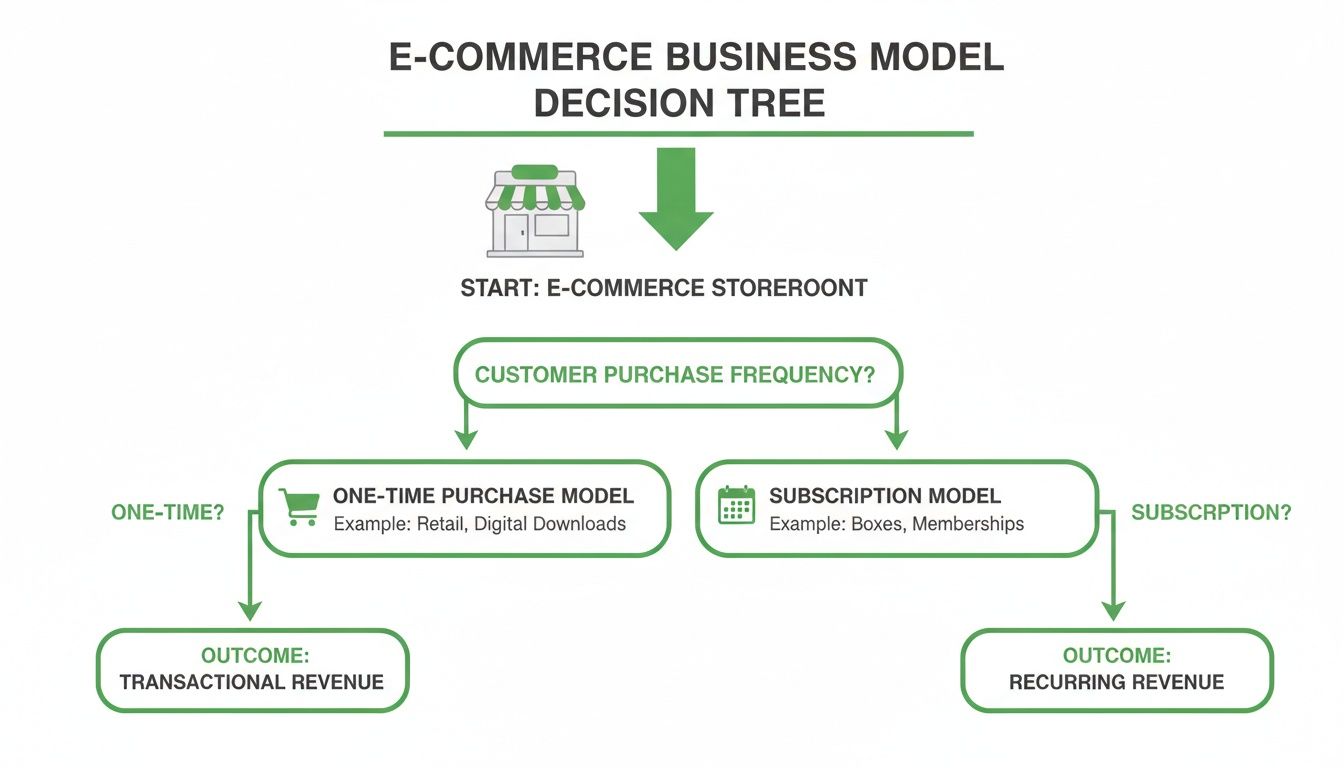
As you can see, shifting from a single transaction to a subscription is a fundamental change. It’s the move that unlocks predictable revenue and builds real, long-term loyalty. Now, let’s dig into the specific models you can use.
The Replenishment Model
Think of the replenishment model as the "set it and forget it" option for your customers. It's built entirely around convenience, making sure they never run out of the products they use every day. This is the classic "subscribe and save" you see everywhere.
This approach is a no-brainer for products that people use up and buy again and again. The value proposition is crystal clear: save time, save a little money, and never have that frustrating "Oh no, I'm out of coffee!" moment on a Monday morning.
- Best For: Things like coffee, vitamins, pet food, skincare, or cleaning supplies. Basically, any consumable that's part of a regular routine.
- Customer Motivation: Pure convenience and locking in a good deal. They're happy to automate the purchase to simplify their lives.
A perfect real-world scenario is a brand selling protein powder. They can offer a 15% discount for anyone who signs up for a monthly delivery. The customer gets a better price without having to remember to reorder, and the brand gets predictable monthly recurring revenue (MRR). It's a win-win.
The Curation Model
The curation model, famous for its subscription boxes, is all about surprise and delight. It’s like having a trusted expert or personal shopper who sends you a hand-picked collection of goodies every month.
The real magic here is the experience. Customers aren't just buying products; they're buying the thrill of discovery and the excitement of unboxing something new that feels chosen just for them.
This model only works if you build a strong brand identity and earn your customers' trust. They have to believe in your taste and trust you to introduce them to amazing new things they wouldn't find themselves.
- Best For: Niche categories like beauty and grooming, artisanal foods, apparel, books, or cool toys for kids.
- Customer Motivation: Novelty and discovery. They're passionate about a certain category and want to explore it without the risk or research.
Think of a company that sends a box of unique, healthy snacks from small-batch producers. Subscribers get to try new things they'd never find at the local grocery store, making it a fun and low-risk adventure.
The Access Model
Now, imagine the access model as a VIP club or an all-access backstage pass. With this model, customers pay a recurring fee not for products, but for exclusive perks, members-only content, and special privileges.
It’s less about the physical items and more about the status and benefits that come with being part of an "inner circle." This model is fantastic for creating a powerful sense of community and exclusivity around your brand.
- Best For: Brands with a die-hard community, exclusive digital content, or the ability to offer members-only pricing and early access to hot product drops.
- Customer Motivation: Status and exclusivity. They want to feel special and get benefits that the general public can't.
A great example would be a popular streetwear brand. They could offer a membership that gives subscribers first dibs on limited-edition sneaker releases, access to a private Discord server with the designers, and members-only discounts.
To help you see how these models stack up against each other, here’s a quick comparison.
Ecommerce Subscription Model Comparison
Each of these models serves a different purpose and attracts a different kind of customer. Understanding this is key to choosing the right one.
Hybrid and Usage-Based Models
Of course, the lines are starting to blur as savvy brands get more creative. We're seeing more and more businesses mix and match these core models to create something unique.
- Hybrid Model: This is simply a combination of two or more models. For instance, a coffee roaster could have a standard replenishment subscription for beans but also give subscribers access to exclusive brewing guides and early notice on rare, single-origin roasts. That’s a replenishment + access hybrid.
- Usage-Based Model: This is a newer kid on the block where customers pay based on how much they actually use something. It’s been huge in software for years, but it's creeping into ecommerce with products like smart water filters that bill you based on the gallons you purify.
Getting this first decision right—choosing your model—is absolutely critical. It sets the foundation for your entire relationship with your customer and directly impacts everything from your inventory planning to your customer support needs.
Tackling the Operational Side of Subscriptions
Getting your first subscription sign-up feels like a huge win, and it is. But that's just the starting line. The real marathon begins after the launch, as running a successful subscription business requires a totally different operational playbook than standard ecommerce.
You're shifting from a world of one-off transactions to one built on long-term customer relationships and the recurring logistics that support them. This new game is all about two numbers: Lifetime Value (LTV) and churn.
Think of it like this: you've got a bucket you're trying to fill. The water you pour in is your LTV—all the revenue a single subscriber will generate over their entire time with you. But the bucket has a leak. That leak is your churn rate—the percentage of subscribers who cancel.
Your job is to fill that bucket with new subscribers and bigger orders faster than the water drains out. If churn gets the best of you, the business eventually runs dry.
This constant balancing act is the core of subscription management. It forces you to zoom out from the single purchase and obsess over every touchpoint that keeps a customer happy, engaged, and subscribed for the long haul.
The New Logistical Hurdles
Predictable revenue is fantastic, but it brings the pressure of predictable fulfillment. When you promise a customer a delivery every month, you absolutely have to deliver. Any slip-up erodes trust and can send them straight to the "cancel" button. This introduces a few key operational challenges you might not be used to.
First up is inventory forecasting. With one-time sales, you can often react to demand as it happens. With subscriptions, you have to anticipate it. Stocking out isn't just a missed sale anymore; it's a broken promise to a loyal customer. That one mistake could cause them to churn and never come back. This means you need much tighter control over your supply chain and a solid buffer for any unexpected spikes in demand.
You also have to wrestle with complex shipping schedules. You're no longer just shipping orders as they come in. Now you're juggling batches of recurring orders that might need to go out on different days of the month. This adds a whole new layer of complexity to your fulfillment workflow. To keep things from getting chaotic, check out our guide on the top Shopify order management apps designed to handle this.
Transforming Customer Support into Relationship Management
In a traditional ecommerce setup, customer support is often transactional. A customer has an issue with one order, you fix it, and you both move on. With subscriptions, that model is dead on arrival. Your support team's role has to evolve from just solving problems to actively building relationships.
Every single interaction is a make-or-break moment. It's an opportunity to strengthen that customer's loyalty or give them a reason to leave. A subscriber who needs to change their next shipping date or wants to swap a product expects a quick, easy fix. Friction is the enemy.
Here’s how the support mindset needs to shift:
- Proactive vs. Reactive: Don't just wait for problems to pop up. Great subscription support anticipates needs, like sending a friendly reminder before a shipment or making it incredibly simple for customers to manage their own accounts.
- Speed and Convenience: A slow or confusing process to make a simple change is a top driver of churn. If a customer has to send an email and wait 24 hours just to update their address, they'll start wondering if your subscription is worth the trouble.
- Empowerment Over Dependence: The best support strategy is to give customers the power to help themselves. A clunky, high-friction experience where they have to contact your team for every little thing is a guaranteed recipe for high churn.
Improving Retention with Post-Purchase Self-Service
When you're running a subscription business, it can feel like you're constantly fighting two fires: customer churn and an overflowing support inbox. What if I told you the best way to handle both isn't to hire more support staff, but to give customers the power to manage their own subscriptions? That’s the magic of post-purchase self-service.
A good self-service portal is a game-changer for everyone. For your subscribers, it’s all about instant gratification. No need to write an email or wait on hold just to skip a delivery. They can log in, make a change, and get on with their day. It’s simple, fast, and puts them in control.
For you, the merchant, the payoff is even bigger. You'll see a massive drop in those repetitive, low-impact support tickets. This frees up your team to focus on what really matters: talking to customers about complex issues and finding new ways to grow the business, instead of just clicking "skip shipment" on their behalf all day.
Empowering Customers to Reduce Churn
Friction is the silent killer of customer retention. Every little roadblock a subscriber hits—no matter how small—plants a seed of doubt. It makes them wonder if the subscription is really worth the hassle. In fact, a huge reason people cancel is because they can't easily change their order or plan.
The goal is to make staying a subscriber the easiest possible choice. By giving customers direct control over their experience, you remove the friction that often leads to impulse cancellations.
Put yourself in their shoes for a second. Let's say a customer is going on vacation. Their first thought might be to cancel the subscription so they don't get a delivery they don't need. But if they see a big, friendly "Skip a Delivery" button right there in their account? They'll choose that option 9 times out of 10. Just like that, you've turned a potential cancellation into a temporary pause, protecting your long-term revenue.
Here are the must-have self-service actions that keep subscribers from churning:
- Skip a Delivery: Lets customers easily bypass their next scheduled order without having to cancel everything.
- Change Next Order Date: Gives them the flexibility to get their next shipment sooner or later, depending on their needs.
- Update Shipping Address: Makes it simple to manage address changes for a move or send a one-time order to a different location.
- Swap Products: Empowers them to try something new from your catalog without ditching their subscription altogether.
When you offer these options, the customer portal stops being a static page and becomes a dynamic tool they can actually use. This directly boosts satisfaction and keeps them subscribed longer.
Putting Self-Service into Practice
Modern apps make this level of customer empowerment surprisingly easy to implement. Tools like SelfServe, for example, are designed to plug right into your Shopify store, giving you a customizable portal where customers can manage their orders and subscriptions without any fuss.
Here’s a great example of what a clean, mobile-friendly self-service portal looks like.
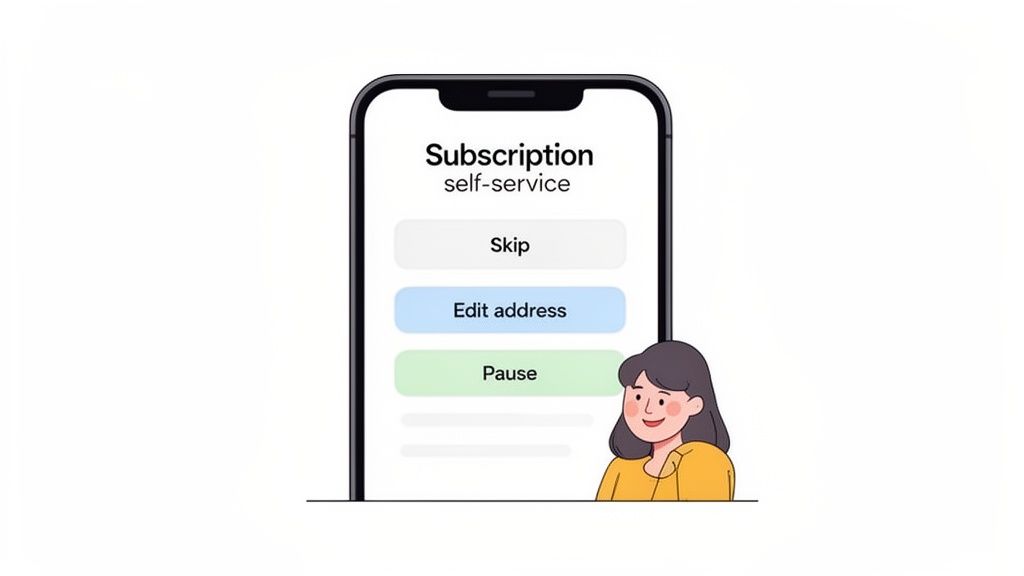
This kind of clear, intuitive interface gives customers immediate access to the controls they need, which is essential for building trust and cutting down on support tickets. The right tool doesn't just improve the customer's experience; it also gives you, the merchant, fine-grained control over what they can do and when.
For instance, you could set rules to prevent last-minute address changes that would throw a wrench in your fulfillment process. This blend of customer freedom and merchant control is the sweet spot for running a smooth operation. If you're looking to go deeper, you can learn more about how to set up an effective self-service customer portal and see the impact it can have.
Ultimately, investing in a solid self-service experience isn't just about cutting costs. It’s about building a more resilient, customer-focused business that fosters real loyalty and eliminates the operational headaches that hold so many brands back.
Generating More Revenue After the Purchase
That moment right after a customer clicks "buy" is pure gold, yet most brands let it go to waste. Think about it: the customer's excitement is at its peak, and they've just put their trust (and their credit card info) in your hands. This isn't just a spot for a boring "thank you" message—it's your best shot at boosting that sale with zero extra ad spend.
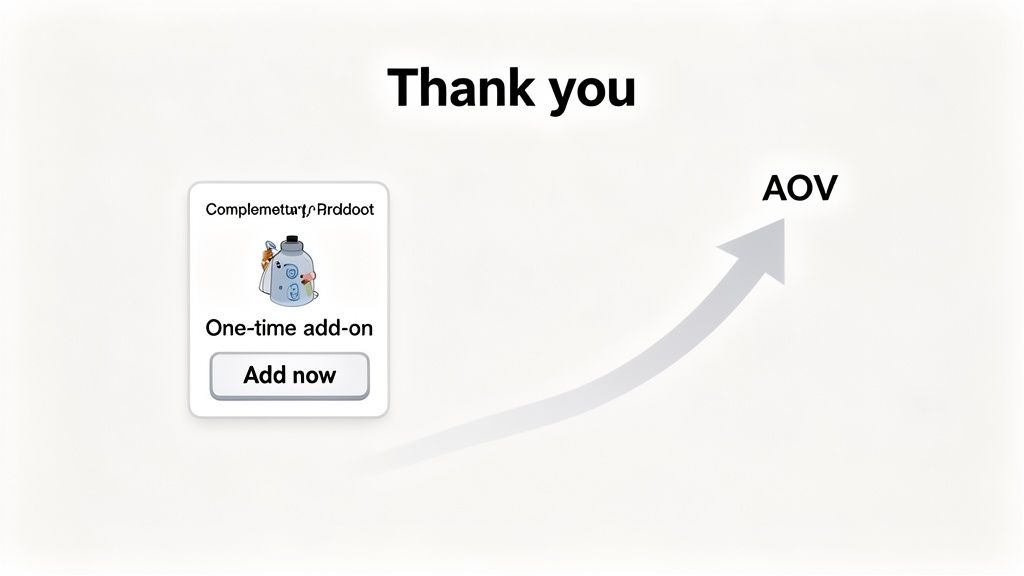
By placing a smart, strategic offer directly on the Thank You page or Order Status page, you can tap directly into that buying momentum. You’re essentially turning a functional, and often forgotten, part of the customer journey into a sales engine that lifts your Average Order Value (AOV) and builds loyalty from the very first order.
Beyond the Basic Thank You Page
The old-school thank you page basically says, "Okay, we got your money. Bye." It confirms the order and that’s it. A modern, optimized post-purchase experience, on the other hand, keeps the conversation going. Instead of just an order number, it presents a relevant, timely offer that makes perfect sense with what they just bought.
This isn't about just tossing random products at them and hoping something sticks. Great post-purchase upsells feel natural and are incredibly easy to accept. For subscription brands, this is a massive advantage because you already have a good idea of what your customer needs on a recurring basis.
The best post-purchase strategies feel less like a sales pitch and more like a helpful suggestion. The offer should enhance their original purchase, not distract from it.
This approach respects the customer's initial decision while giving them a simple way to get even more value. It's a subtle but powerful way to increase the value of every single transaction on your site.
Proven Tactics for Post-Purchase Upsells
To make this work, the offer has to be a no-brainer. Your customer has already done the hard work of entering their payment and shipping info. The key is to present a one-click offer that seamlessly adds an item to their existing order, without making them go through the whole checkout process again.
Here are a few tactics that we’ve seen work wonders:
- Offer a Complementary One-Time Product: Someone just subscribed to your premium coffee blend? Offer them a discounted bag of espresso beans or a set of high-quality filters to add to that first shipment.
- Suggest an Upgrade to a Premium Tier: For a brand-new subscriber, you could show a one-time, limited offer to upgrade to the deluxe version of their subscription for a small extra cost.
- Introduce a Trial-Sized Product: Let a new subscriber toss a sample of another popular product into their upcoming box for just a few dollars. It's a great AOV booster and a discovery tool for your other items.
These kinds of targeted offers crush generic pop-ups because they’re directly related to what the customer just decided to buy. If you want to dive deeper, we've put together a ton of ideas in our guide on the Shopify post-purchase upsell flow.
Transforming the Customer Portal into a Sales Channel
Don't stop at the thank you page. The customer portal—where subscribers go to manage their recurring orders—is another fantastic place for these kinds of offers. When a customer logs in to skip a delivery or update their address, you have their complete and undivided attention.
By embedding targeted add-on offers right inside the self-service portal, you can consistently increase the value of each recurring shipment. This turns a purely functional touchpoint into an ongoing sales channel, driving more revenue and encouraging customers to explore more of what you have to offer over time.
Taking Your Subscription Business Global
When your subscription brand starts to take off, thinking about international markets is the logical next move. But here's a crucial piece of advice: what made you a hit at home probably won't work the same way abroad. You can't just copy and paste your strategy and expect the same results when customer habits, how people pay, and even market growth can be worlds apart.
Success overseas isn't just about translating your website copy. It’s about a deep, thoughtful reimagining of your entire customer experience through a local lens. This means everything from the payment options at checkout to the languages available in your post-purchase portal needs to feel native to the customer. True localization is how you'll unlock that global growth.
Tuning Into Regional Market Rhythms
The subscription world isn't growing evenly across the map. Some regions are absolutely booming, which means huge opportunities for brands that can meet their unique demands.
The subscription e-commerce market's growth varies wildly depending on where you look. For instance, the Asia-Pacific region is set to explode, with a projected compound annual growth rate of 20.45% through 2031. This is driven by a mobile-first culture, the popularity of digital wallets, and a growing middle class. Meanwhile, more mature markets are seeing solid but slower growth—Germany is pegged at 15.3%, the UK at 12.6%, and the United States at 11.3%. Diving into the data on regional subscription market trends can give you a much clearer picture for planning your expansion.
This data paints a very clear picture. What works in a credit-card-heavy market like the U.S. is almost guaranteed to stumble in a mobile-first, digital-wallet-centric market in Asia. Thinking your home-field strategy will work everywhere is a classic mistake.
Localizing the Post-Purchase Journey
Of all the places to focus your localization efforts, the post-purchase experience is right at the top of the list. This is the nerve center for your subscribers—it’s where they manage their orders, and any hint of friction can send them running. An English-only customer portal that only takes credit cards will feel completely foreign to a huge slice of your international audience.
If you want to build a brand with a truly global feel, you have to nail this part of the experience.
- Speak Their Language: Your self-service portal absolutely must be in your customer's native language. A shopper in France needs to be able to tweak their order, skip a delivery, or change their address entirely in French, without having to guess at English terms. Smart tools like SelfServe can automatically detect and display the right language, breaking down a massive barrier to entry.
- Offer Local Ways to Pay: In many countries, credit cards are far from the most popular way to pay online. If you're not offering digital wallets, local bank transfer options, or other payment methods specific to that region, you're leaving a ton of money on the table. It's not a nice-to-have; it's a must-have.
- Get the Address Right: International shipping has enough hurdles without adding bad addresses to the mix. Incorrect addresses are a logistical nightmare that costs you money and leaves you with angry customers. A portal that validates addresses in real-time for different countries is a lifesaver, ensuring your products actually make it to their destination.
By tailoring your ecommerce subscription models to these local details, you can begin the journey from a domestic hero to a global name. The only way to build lasting success is to meet your international customers on their own turf—with the language, currency, and convenience they already know and trust.
Frequently Asked Questions
When you start digging into the world of ecommerce subscriptions, the same handful of questions always seem to pop up. Here are some straightforward answers to the things merchants ask us most often as they get started or look to grow their subscription program.
Can I Move My Existing Subscribers to a New App?
Yes, absolutely. Moving subscribers from one platform to another is a pretty standard procedure, and any serious subscription app will have a process for it.
Usually, the new app provider will either give you migration tools or have their own team handle the transfer of all your customer data, payment info, and billing schedules. Just be prepared for a potential short pause in service. The most important part is planning how you'll communicate this to your subscribers so they know what to expect.
What Happens When a Customer's Payment Fails?
Payment failures are just a fact of life in the subscription business. Don't panic; it happens all the time. When a card is declined, your subscription management app should automatically kick off a process called dunning.
This is basically a series of automated, behind-the-scenes retries of the charge over a set period. At the same time, the system will send the customer a few friendly emails letting them know there's an issue and prompting them to update their payment info in their customer portal. It’s a simple, automated way to rescue sales you'd otherwise lose to what we call "involuntary churn."
A good dunning process is the unsung hero of retention. It stops a temporary problem, like an expired credit card, from turning into a permanent cancellation. You’re giving the customer an easy way to fix it without the hassle of signing up all over again.
How Are Taxes Handled on Recurring Orders?
This is simpler than it sounds. Subscription apps built for platforms like Shopify are designed to piggyback on the store's native tax settings.
Whatever tax rules you've already set up in your Shopify admin—based on your customer's location and where you do business—the app will automatically apply them to every single recurring order. This keeps your tax calculations accurate and consistent with each billing cycle, no manual work required.
Can Customers Skip a Delivery Instead of Just Canceling?
They sure can, and you should make it incredibly easy for them to do so. Offering the flexibility to skip a delivery or pause a subscription is one of the most powerful levers you have to reduce churn.
Think about it: someone's going on vacation or just has too much product on hand. If their only option is to cancel, they might. But if they see a "Skip Next Order" button right there in their customer portal, they'll almost always choose that instead. You're turning what could have been a permanent cancellation into a temporary pause.
Ready to give your customers that control, slash your support ticket volume, and actually increase your revenue? SelfServe gives you a fully customizable portal that lets customers manage every aspect of their orders and subscriptions on their own. You can even add one-click upsells right on your Thank You page, turning a simple confirmation into another sale. Start your 30-day free trial of SelfServe today.