Top 12 Cross Border Logistics Companies for Shopify Merchants in 2026

Unlocking international markets is the next frontier for ambitious Shopify brands, but it comes with a major hurdle: logistics. From customs and duties to returns and tracking, managing the complexities of international shipping can feel overwhelming. Choosing the right partner is the single most important decision you'll make when expanding globally. This guide cuts through the noise, providing a detailed breakdown of the top 12 cross border logistics companies tailored for e-commerce.
We'll analyze the specific strengths, weaknesses, and ideal use cases for providers like DHL, UPS, and FedEx, as well as e-commerce specialists such as Asendia, Passport, and SEKO Logistics. Each profile includes a deep dive into their service types, geographic coverage, Shopify integration capabilities, and pricing models to help you find a solution that scales with your global ambitions.
To truly succeed globally, a robust understanding of the entire international supply chain is paramount. For a comprehensive overview, consider consulting a complete international supply chain management guide. This list focuses specifically on the partners who execute that strategy. We've included screenshots and direct links, so you can evaluate each option and select the best fit for your store’s unique needs.
1. DHL eCommerce Solutions (and DHL Express)
DHL is one of the most recognized names in global shipping, making it a foundational choice for merchants scaling internationally. It operates two distinct but complementary divisions: DHL eCommerce Solutions, which focuses on cost-effective, deferred parcel services, and DHL Express, which provides rapid, time-definite delivery. This dual offering allows Shopify merchants to strategically balance shipping speed and cost based on customer preference or product value.
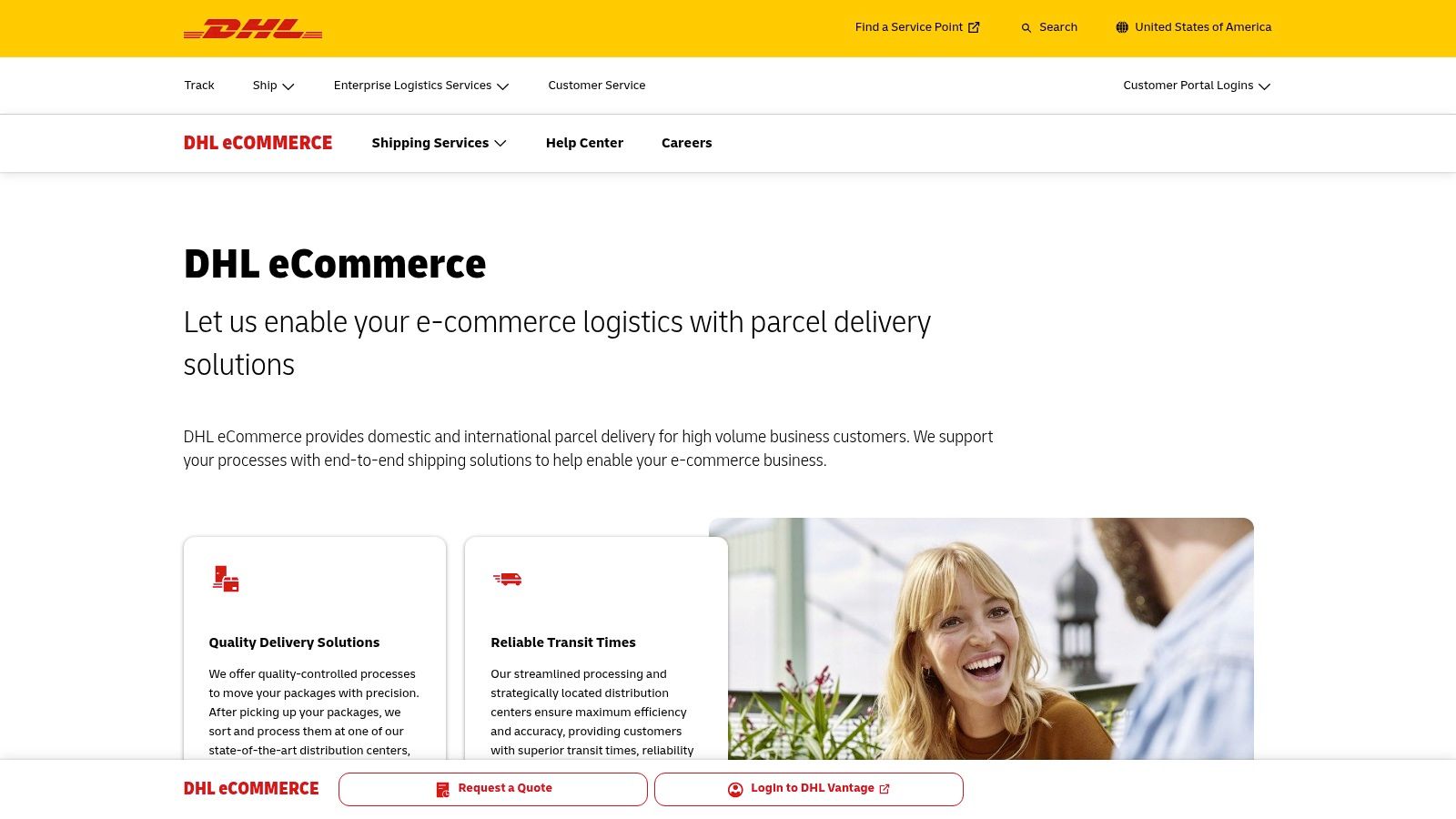
The platform’s strength lies in its extensive global network and deep customs expertise. DHL simplifies Delivered Duty Paid (DDP) workflows, especially for US-based Shopify stores, which is a significant advantage for creating a frictionless customer experience. For businesses sourcing from Asia, understanding the nuances of carrier services is key. A comprehensive guide to services like DHL Express from China can provide detailed insights into specific shipping lanes and service expectations.
While DHL Express is known for its reliability, its premium pricing reflects that. Conversely, the eCommerce Solutions services are more budget-friendly but can have longer transit times. Gaining access to the best contract rates often requires meeting certain volume thresholds, making it a better fit for established brands than for those just starting their international expansion.
Website: https://www.dhl.com/us-en/home/our-divisions/ecommerce.html
2. UPS (Trade Direct Cross Border, Worldwide Economy, DDP tools)
UPS offers a suite of integrated cross-border parcel and freight solutions, making it a strong contender for Shopify merchants looking to provide a seamless international customer experience. Specialized programs like UPS Trade Direct Cross Border allow businesses to consolidate shipments, while services such as Worldwide Economy offer a lower-cost option for direct-to-consumer delivery. This combination helps brands balance speed, cost, and operational efficiency for their global logistics.

The company’s strength is its mature tooling for managing duties and taxes. With robust Delivered Duty Paid (DDP) enablement and landed-cost calculator options, merchants can present clear, all-inclusive pricing at checkout. This transparency is critical for reducing cart abandonment and improving customer trust. For a deeper analysis of the cost structures involved, a detailed breakdown of how UPS international shipping costs work can help merchants budget effectively.
One major benefit is UPS's end-to-end network, which includes its own customs brokerage, ensuring predictable transit and reliable tracking. However, accessing specialist products like Trade Direct often requires specific contracts or direct integration, which might be a hurdle for smaller businesses. Additionally, while the core service is dependable, brands must be mindful of surcharges and ancillary fees that can add complexity to final shipping costs.
3. FedEx (including FedEx International Connect Plus)
FedEx stands as a giant among cross border logistics companies, offering a spectrum of services tailored for B2C e-commerce. For Shopify merchants, the key offering is FedEx International Connect Plus (FICP). This service is specifically engineered for e-commerce parcels, providing day-definite delivery at a mid-tier price point that bridges the gap between its premium International Priority and more deferred International Economy services. It’s designed to balance speed and cost effectively.
The company’s major strength is its powerful combination of global customs clearance, brokerage services, and robust tracking capabilities. This integrated system simplifies international shipping and provides the transparency customers expect. FedEx's recognized support for e-commerce workflows and its seamless integrations via common shipping platforms make it a dependable choice for established brands looking to provide a consistent, high-quality delivery experience across multiple regions.
However, the availability of FICP can vary significantly by origin and destination country, requiring merchants to verify service lanes. Access to the most competitive pricing for FICP and other international services typically requires a direct account with FedEx and is dependent on shipping volume. This makes it a more suitable option for high-volume stores rather than businesses just beginning their international expansion.
Website: https://www.fedex.com
4. Asendia USA
Asendia, a joint venture between La Poste and Swiss Post, is purpose-built for e-commerce parcel delivery, making it a strong contender among cross border logistics companies. It focuses on providing reliable, cost-effective shipping solutions for direct-to-consumer brands. Their services are specifically designed to handle the unique demands of international e-commerce, including customs clearance, delivery, and returns management, with a growing operational focus on the LATAM region.
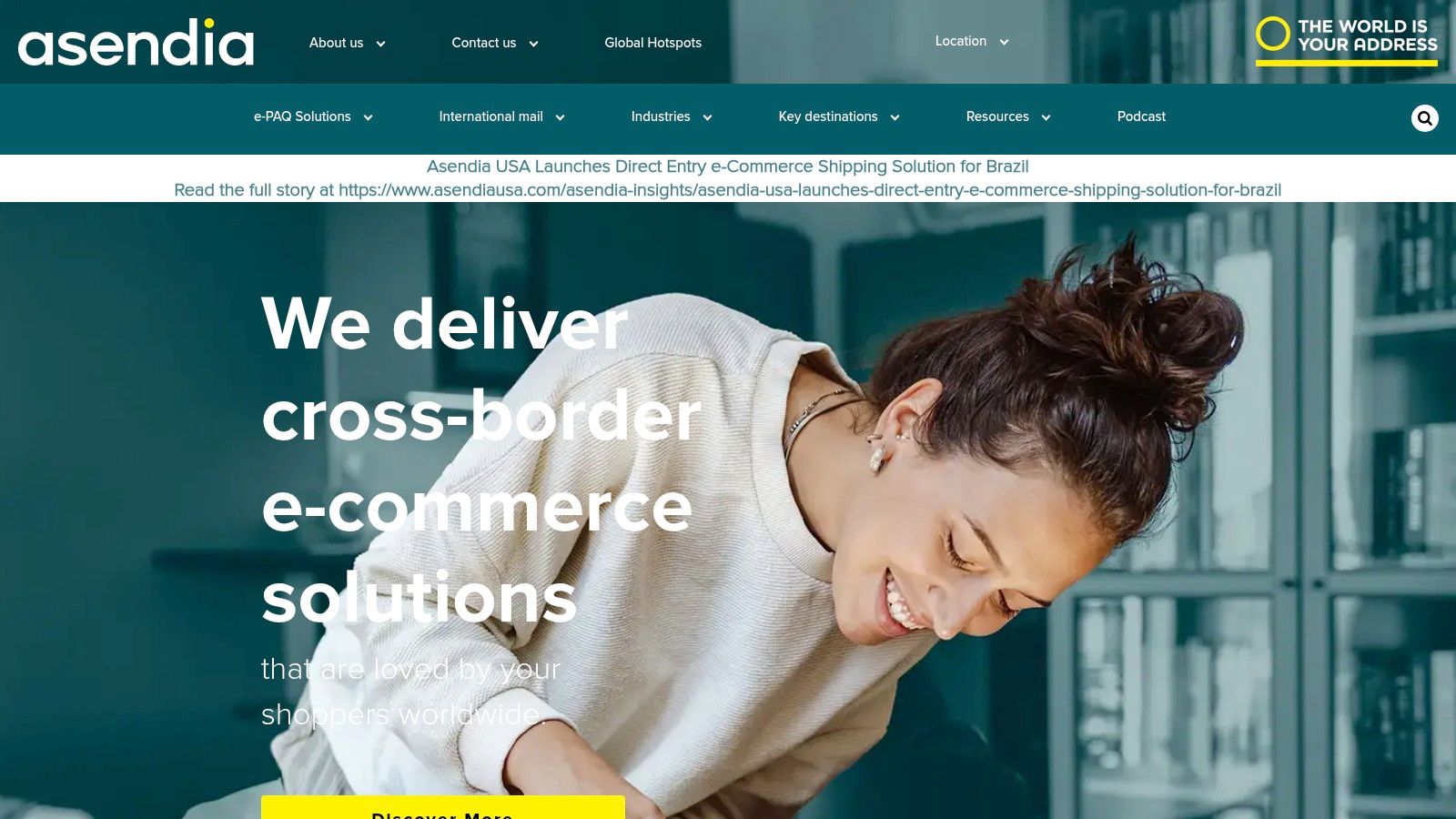
The platform’s key advantage lies in its balance of price and service for lightweight parcels, offering a practical alternative to premium express carriers. Asendia also provides localization support and platform integrations that simplify international order fulfillment for Shopify merchants. Through its ownership of ESW, it can offer a complete end-to-end solution that covers the entire cross-border journey from checkout to final delivery.
While Asendia presents a good value proposition, its transit times are generally longer than express options, making it better for non-urgent shipments. The specific service mix and capabilities can also differ depending on the destination country. This makes it an ideal fit for established DTC brands looking to optimize shipping costs to key international markets without the high price tag of expedited services.
Website: https://www.asendiausa.com
5. Passport (Passport Global)
Passport is a cross-border carrier and technology provider built specifically for direct-to-consumer (DTC) brands. The platform focuses on simplifying international expansion by emphasizing a Delivered Duty Paid (DDP) first approach. This means duties and taxes are calculated at checkout, which helps prevent the delivery surprises and carrier-related support tickets that often frustrate international customers and clog support queues.
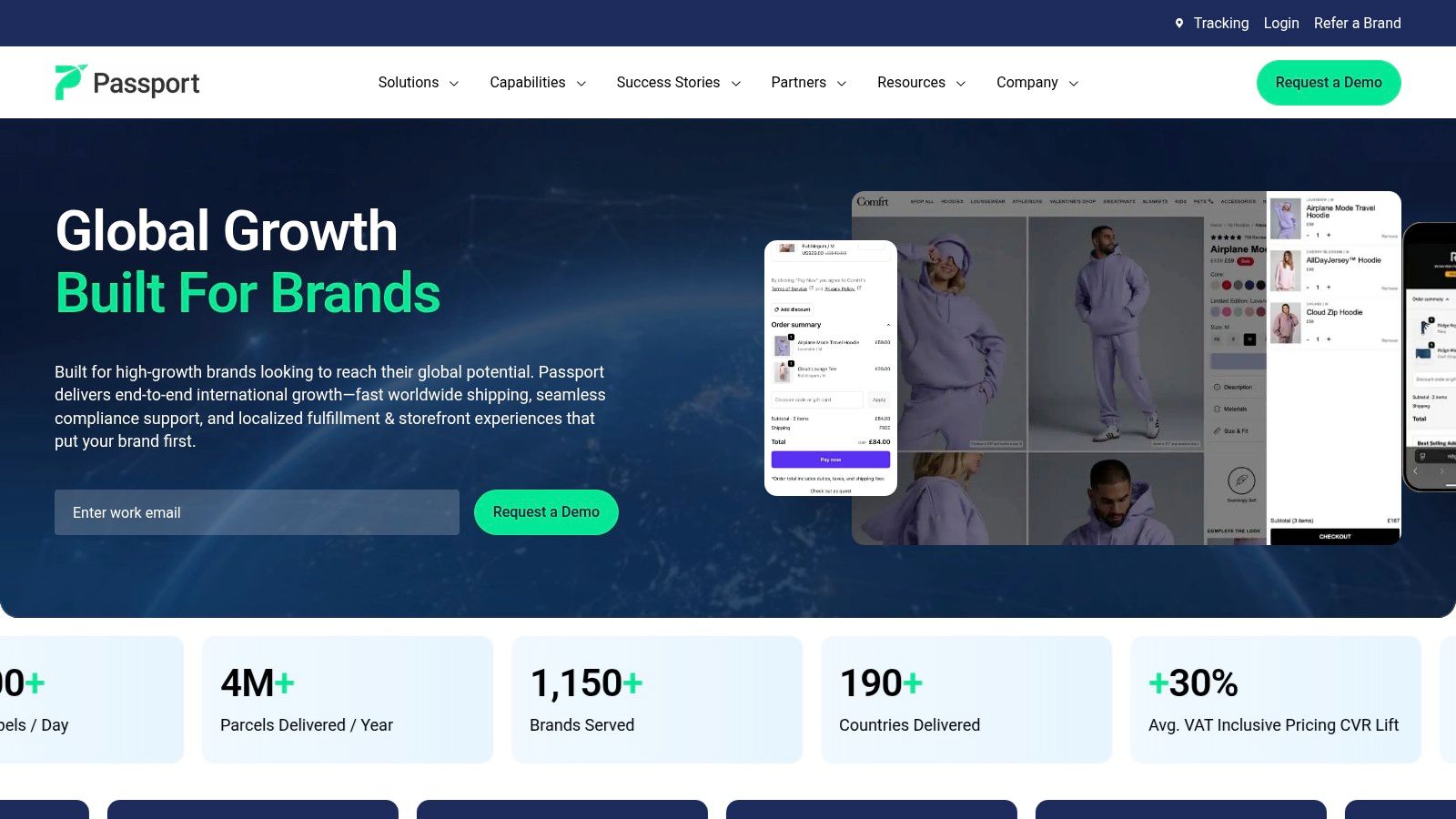
The service is distinguished by its brand-centric features, including branded tracking pages and proactive customer support. It's an excellent choice for Shopify merchants who are new to international shipping and want a partner that prioritizes the post-purchase customer experience. For a deeper look into the strategy, you can explore guides on how to sell internationally on Shopify. These resources often highlight the importance of a clear and transparent shipping process. Passport is one of the cross border logistics companies that truly gets this.
While Passport is great for brands focused on customer experience, its service levels and network coverage can vary by shipping lane when compared to major global integrators. Achieving the best economics typically requires meeting certain volume thresholds and integrating with their system, making it less suitable for very small or low-volume shippers.
Website: https://passportglobal.com/
6. Landmark Global (a bpost company)
Landmark Global, part of the bpostgroup, positions itself as a specialist for cross-border e-commerce logistics. It offers a suite of services designed for merchants expanding internationally, focusing on parcel delivery with integrated customs clearance and returns management. For US-based brands, Landmark provides particularly strong and competitive lanes into Canada and the European Union, making it a valuable partner for targeting those specific markets.
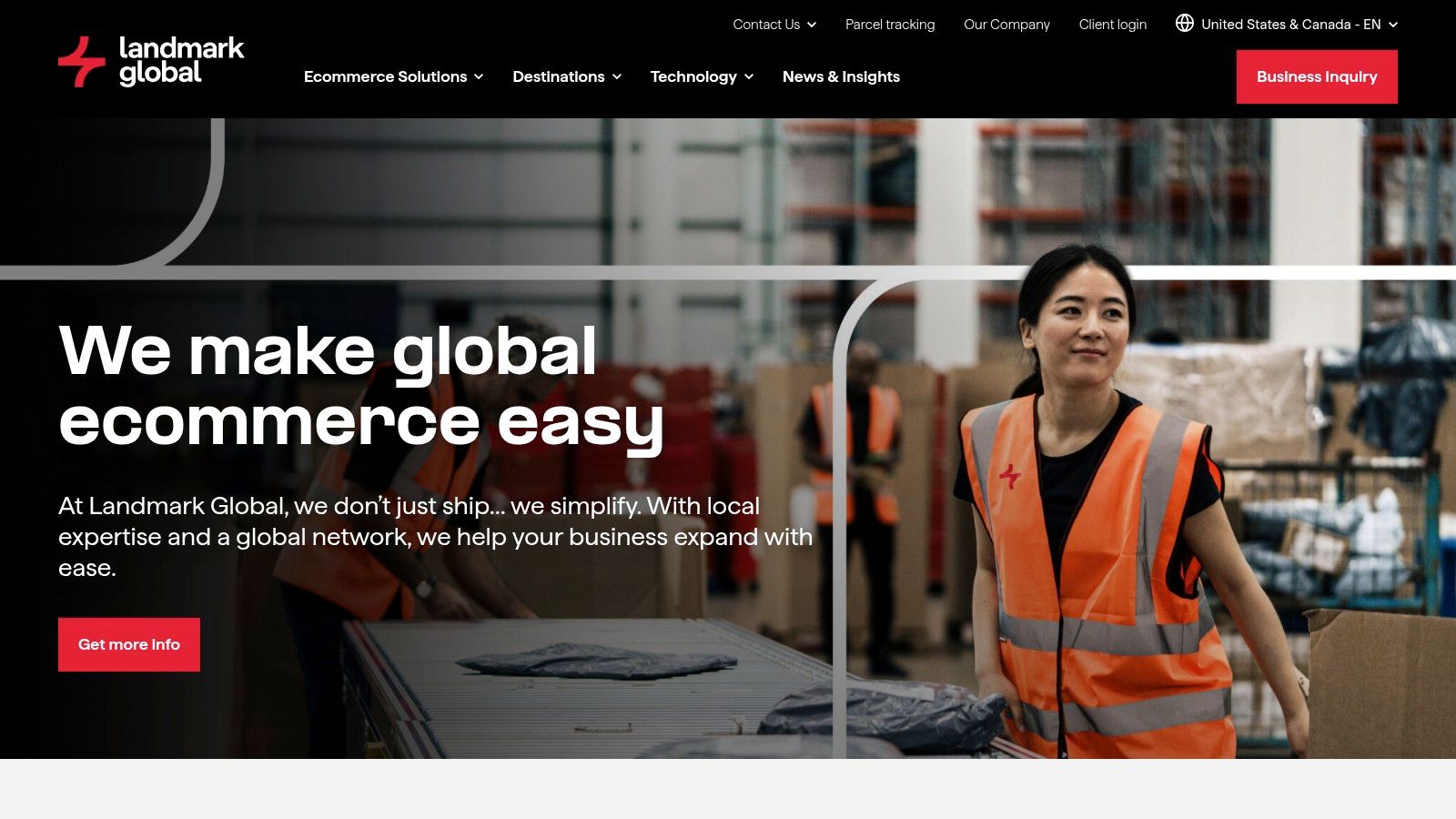
The company’s strength comes from its backing by a national postal operator (Belgium's bpost), which gives it access to an extensive postal and commercial network. This makes it a scalable solution among cross border logistics companies. It provides merchants with cost-effective, deferred shipping options that are a good alternative to premium express carriers, especially for less time-sensitive shipments where budget is a primary concern.
However, the trade-off for its competitive pricing can be longer transit times compared to express services. The final-mile delivery experience may also vary by destination country, as Landmark relies on a network of different local partners. This makes it a solid choice for established brands that can manage varied delivery expectations and are looking to optimize shipping costs on high-volume routes.
Website: https://landmarkglobal.com/us/en/
7. ePost Global
ePost Global is a US-headquartered provider specializing in cross-border parcel and mail services to over 200 countries. It serves direct-to-consumer (DTC) brands by orchestrating shipments through a multi-carrier network, which allows for flexible routing based on cost and speed. With its US-based processing centers, ePost Global offers a consolidated entry point for international shipments, aiming to provide consistent service for growing e-commerce merchants.
The platform’s key strength is its intelligent routing, which balances postal and private last-mile carrier options to optimize delivery. This makes it a cost-effective alternative to premium express services for brands that don't always need day-definite speed. The inclusion of compliance support and data validation helps merchants avoid common customs pitfalls. For many Shopify stores, working with such a cross border logistics company can simplify global expansion.
Accessing the most beneficial rates and service tiers requires a direct contract and onboarding process, so it's less of an off-the-shelf solution. Final delivery quality can also vary, as it depends on the performance of in-country postal or private partners. However, for businesses with enough volume to warrant a dedicated account, the personalized support and flexible service model offer a strong value proposition for international DTC shipping.
Website: https://epostglobalshipping.com/
8. SEKO Logistics (E‑commerce)
SEKO Logistics operates as a global 3PL with robust e-commerce cross-border services, making it a strong partner for brands needing more than just parcel delivery. Its offerings cover international shipping, global hub fulfillment, and comprehensive returns management. This end-to-end approach is particularly beneficial for high-growth DTC brands looking for an omnichannel solution that combines logistics with tech-enabled visibility.
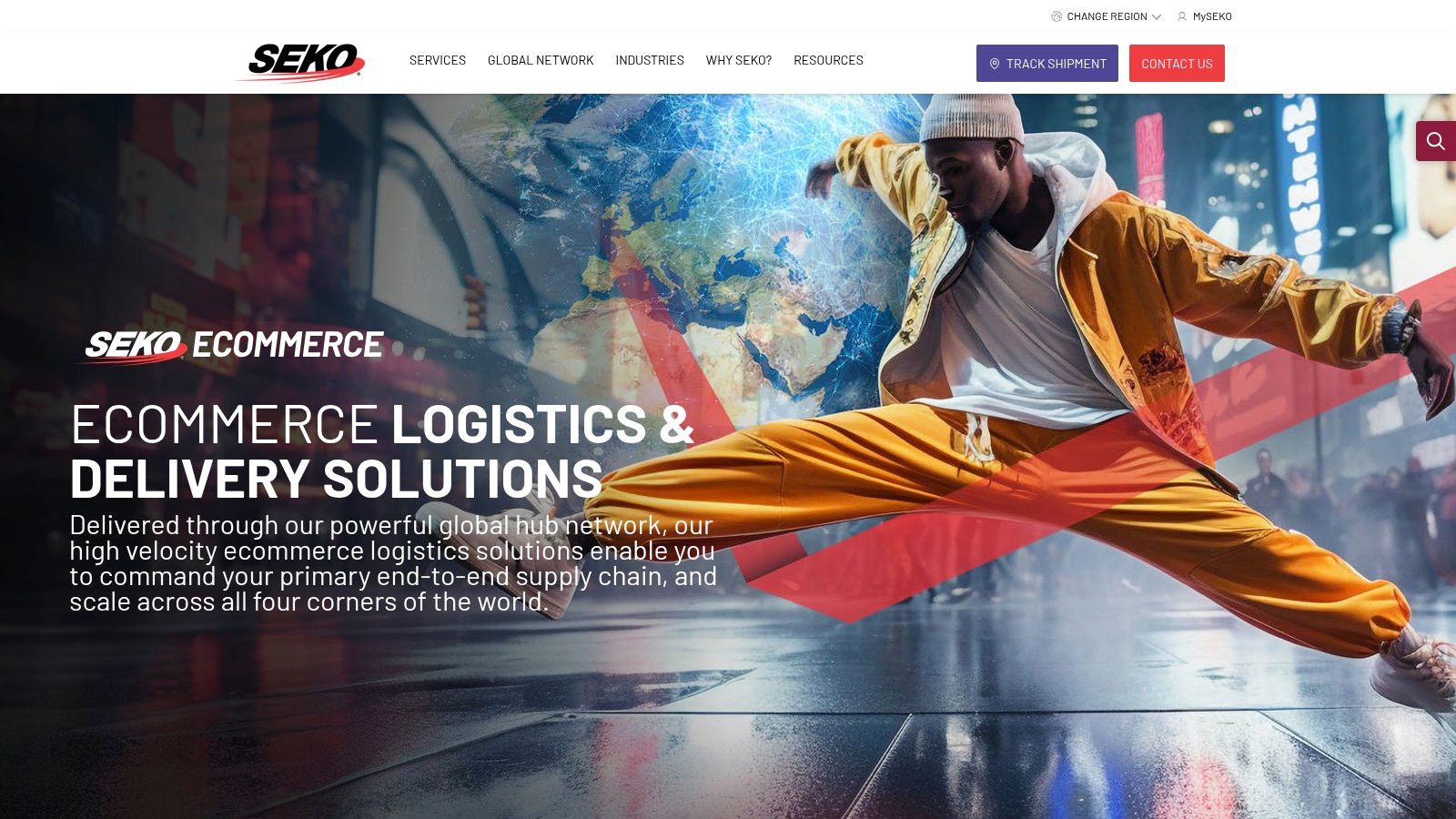
The company excels in providing a unified solution that spans from freight and fulfillment to final-mile delivery. As one of the more integrated cross border logistics companies, SEKO’s experience supporting rapidly scaling Shopify stores means they can handle increasing order volumes effectively. Their tech platform provides crucial visibility into the entire supply chain, from warehouse to customer doorstep.
However, this comprehensive model is not for everyone. The solution's complexity and typical volume minimums make it less suitable for businesses just starting out. The onboarding process for the full scope of services can also be more involved compared to signing up with a parcel-only carrier. SEKO is best for established brands ready to invest in a scalable, long-term logistics partnership that can manage their entire global operation.
Website: https://www.sekologistics.com/us/omni-channel/ecommerce/
9. Maersk E‑Commerce Logistics (incl. Performance Team in the US)
Historically a titan of ocean freight, Maersk has decisively expanded into end-to-end e-commerce logistics, creating an integrated supply chain solution under a single global provider. This evolution offers Shopify merchants a path from origin freight and customs clearance straight through to middle-mile and direct-to-consumer fulfillment via its US arm, Performance Team. This single-partner model is a significant shift from managing multiple vendors across the supply chain.

The key advantage lies in its asset ownership and global scale. Maersk's strategic investment in border-adjacent facilities is particularly useful for brands managing US-Mexico trade, speeding up cross-border flows. The company offers a cohesive ecosystem combining ocean/air, customs, and omnichannel fulfillment, which simplifies complex logistics for high-volume stores.
However, this integrated approach is not for everyone. Maersk is best suited for established brands with multi-node or omnichannel distribution needs that can meet typical volume minimums and navigate a longer, more corporate sales cycle. For smaller DTC brands, the scale and complexity might be overwhelming, but for merchants looking for a stable, single provider to manage their entire global logistics network, Maersk presents a powerful option among cross border logistics companies.
Website: https://www.maersk.com
10. Flexport (Freight + E‑commerce Fulfillment)
Flexport presents a modern approach to supply chain management by integrating international freight, customs brokerage, and fulfillment into a single, technology-driven platform. For Shopify brands managing complex supply chains-from overseas manufacturing to direct-to-consumer delivery-Flexport provides a unified solution. It connects first-mile ocean and air freight with last-mile parcel delivery through its network of partners, offering a cohesive view of the entire logistics process.
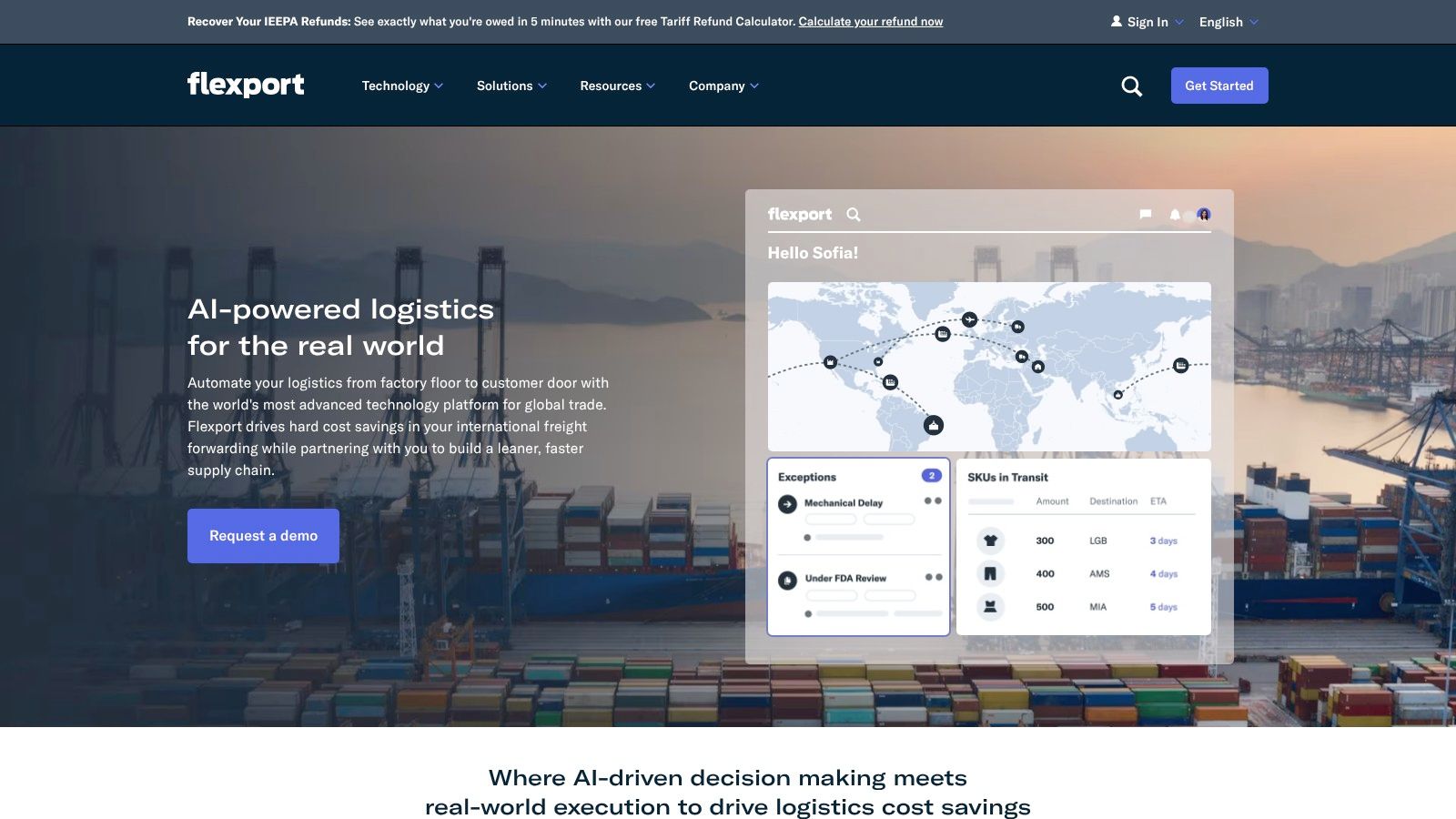
The platform’s key strength is its data visibility and trade advisory services, which help merchants navigate the complexities of global commerce. Its strong Shopify connectivity and parcel DDP options (often managed via partners like Passport) make it a powerful choice for brands aiming to consolidate their logistics stack. Exploring the role of third-party logistics software can offer more context on how these integrated systems function. This end-to-end management from a single provider makes it one of the more complete cross border logistics companies.
However, achieving the best pricing often requires a certain scale or volume commitment, making it a better fit for established brands than for startups. While Flexport offers a comprehensive suite of services, its parcel DDP solutions frequently depend on external carriers, which can feel less integrated than its core freight offerings.
Website: https://www.flexport.com
11. ShipBob (Global Fulfillment with Cross‑Border Shipping)
ShipBob is a tech-focused 3PL that provides global fulfillment capabilities ideal for direct-to-consumer Shopify brands. It allows merchants to either ship internationally from a single location or distribute inventory across its network of fulfillment centers in North America, Europe, and Australia. This flexibility helps brands scale by placing products closer to international customers, reducing transit times and shipping costs.
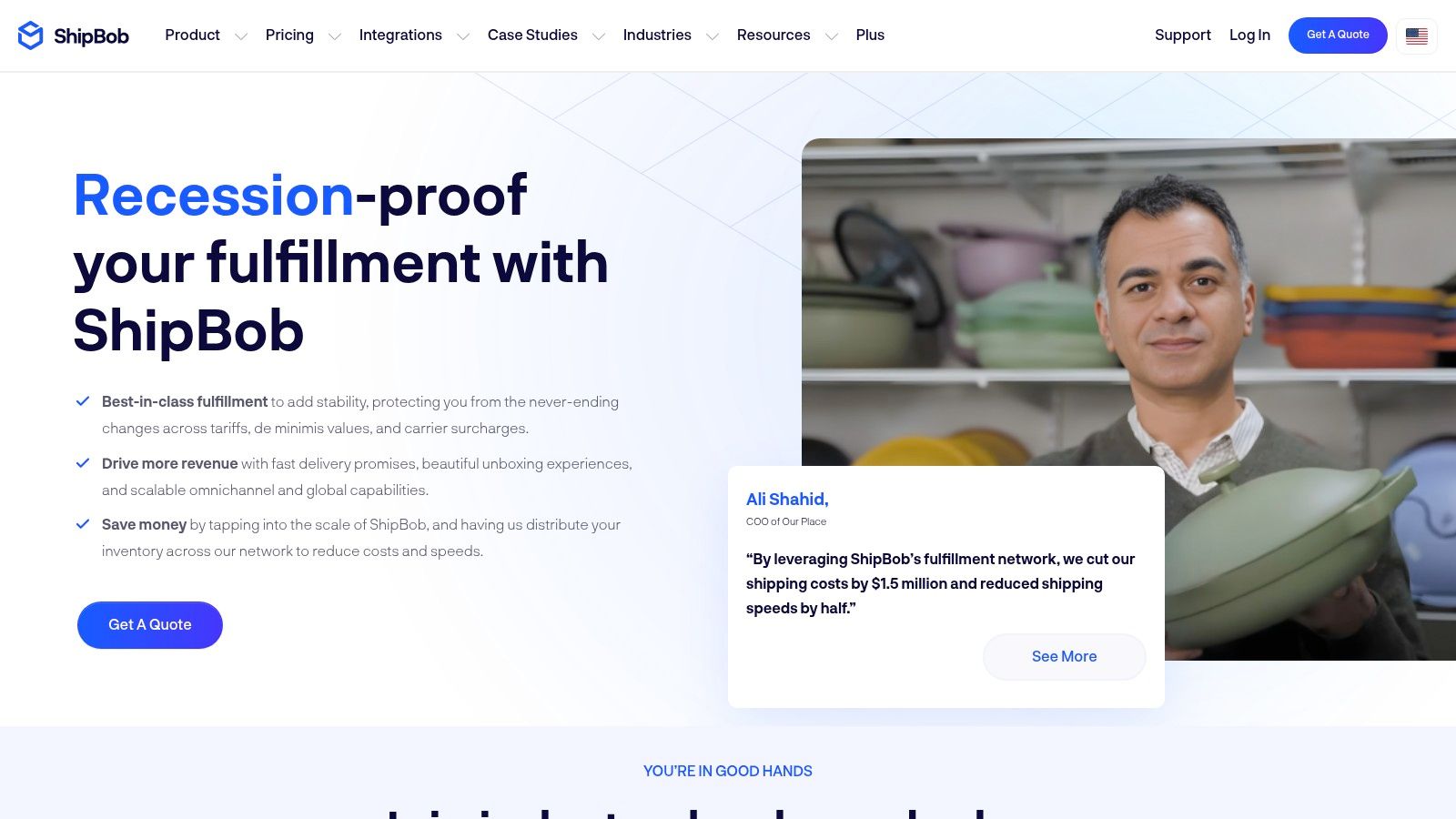
The platform stands out for its merchant-friendly technology stack and seamless Shopify integration, making it quick to launch. ShipBob provides a single dashboard to manage inventory, orders, and shipments across all locations. It supports Delivered Duty Paid (DDP) shipping through carrier integrations, simplifying landed cost calculations to improve the customer experience. This makes it a strong contender among cross border logistics companies for brands prioritizing operational simplicity.
While the transparent SLAs and carrier options are a major plus, the cost structure can be a consideration. Storage and per-pick fees can become significant for businesses with a large number of SKUs or slow-moving inventory. Additionally, managing international returns can be complex and varies depending on the specific fulfillment centers being used.
Website: https://www.shipbob.com
12. APC Postal Logistics
APC Postal Logistics is a US-based consolidator that offers a practical, cost-effective solution for cross-border shipping. It partners with postal authorities and private carriers worldwide to provide parcel and mail distribution to over 190 destinations. For Shopify merchants, APC is an excellent choice when balancing budget constraints with the need for reliable, tracked international delivery, making it a strong player among cross border logistics companies.
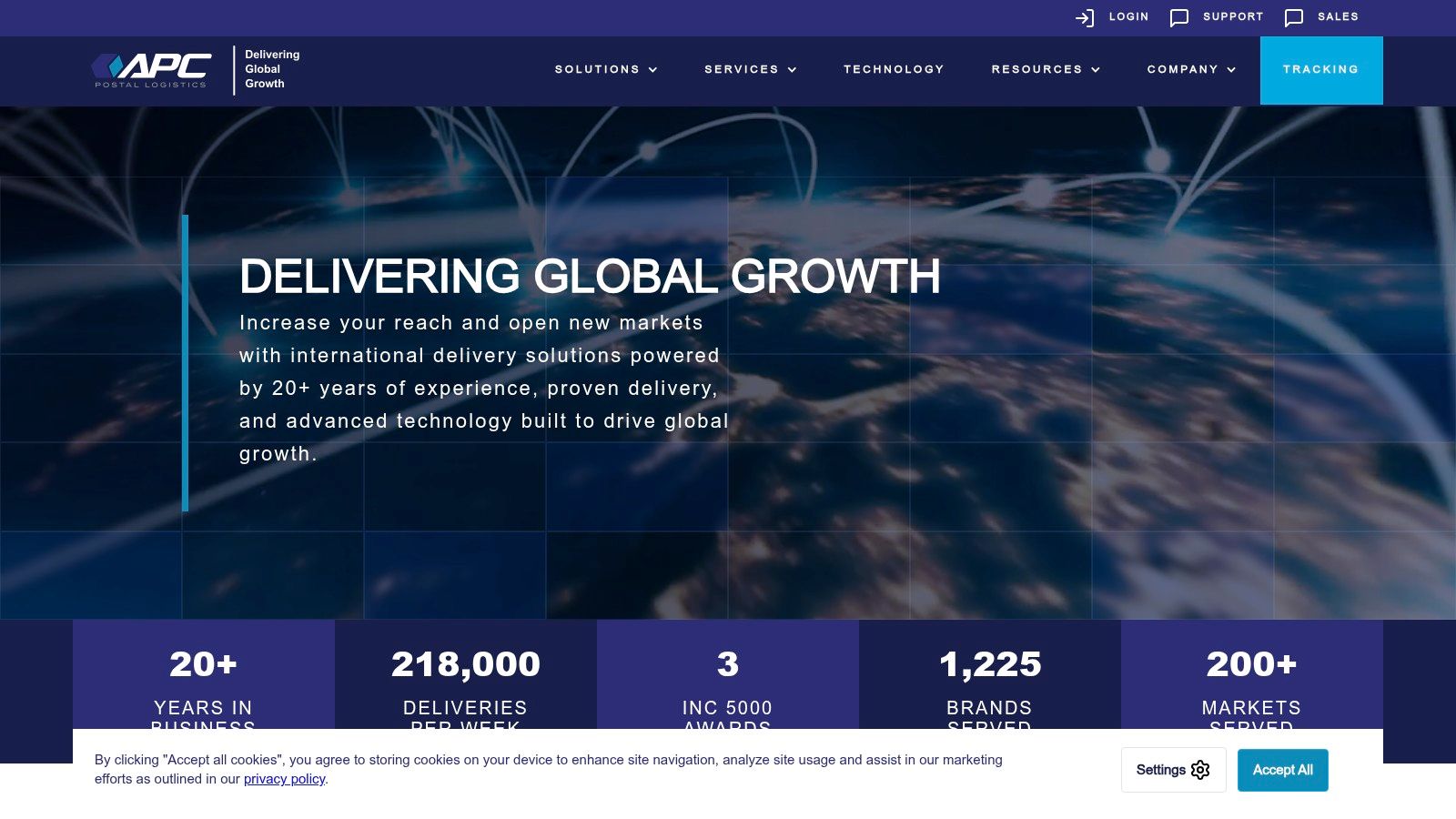
The company’s main strength is providing competitive rates for lightweight, low-value parcels. Its services include customs enablement and e-commerce integrations, which simplifies the process for brands that prioritize broad reach over express speed. APC provides a tracked postal model that gives customers visibility without the premium price tag of an express courier, filling a crucial gap in the market for budget-conscious international expansion.
However, merchants should be aware that transit times are generally longer than those of express carriers. Because APC relies on a network of last-mile partners, the final delivery experience can vary by destination country. This makes it a better fit for non-urgent goods where customers are willing to wait a bit longer in exchange for more affordable shipping.
Website: https://www.apc-pli.com/
Top 12 Cross-Border Logistics Providers Comparison
| Provider | Core Features ✨ | User Experience ★ | Value / Price 💰 | Target Audience 👥 | Unique Strengths 🏆 |
|---|---|---|---|---|---|
| DHL eCommerce / DHL Express | Cross‑border parcel (DDU/DDP), deferred → express, customs | ★★★★ Reliable tracking; Express strong | 💰 Mid‑to‑high; best rates with contracts | 👥 Brands needing global lanes & speed options | 🏆 Massive global network & Express reliability |
| UPS | Trade Direct Cross Border, DDP, Worldwide Economy, brokerage | ★★★★ Predictable transit & robust tracking | 💰 Mid; surcharges/fees add complexity | 👥 Brands needing end‑to‑end brokerage & DDP | 🏆 Mature DDP tooling and customs expertise |
| FedEx | FICP (e‑commerce), Priority/Economy, customs clearance | ★★★★ Consistent day‑definite options | 💰 Mid; account/volume improves pricing | 👥 Brands wanting day‑definite international delivery | 🏆 Strong coverage & consistent service levels |
| Asendia USA | Cross‑border parcels, returns, localization, integrations | ★★★ Value‑focused; e‑commerce tools | 💰 Good value for DTC parcels | 👥 DTC brands expanding to LATAM/EU | 🏆 E‑commerce‑first with returns networks |
| Passport (Passport Global) | DDP‑first parcels, landed‑cost tools, branded tracking | ★★★★ Fewer surprises; proactive support | 💰 Competitive for DTC; scale improves economics | 👥 First‑time cross‑border DTC shippers | 🏆 DDP‑centric experience & branded tracking |
| Landmark Global (bpost) | Intl parcel, customs, returns, e‑commerce tools | ★★★ Pragmatic e‑commerce options | 💰 Competitive e‑commerce rates | 👥 US brands expanding to Canada/EU | 🏆 Postal group backing + scalable parcel reach |
| ePost Global | Multi‑carrier orchestration, US processing, compliance | ★★★ Flexible routing; merchant teams | 💰 Cost‑effective vs premium express | 👥 Fast‑growth DTC brands seeking routing options | 🏆 Intelligent routing & dedicated merchant support |
| SEKO Logistics | Cross‑border parcel, fulfillment hubs, returns, visibility | ★★★★ Tech visibility; omnichannel support | 💰 Higher (minimums/complexity) | 👥 Brands needing end‑to‑end 3PL & scale | 🏆 End‑to‑end logistics & global fulfillment hubs |
| Maersk E‑Commerce Logistics | Ocean/air + parcel, US‑MX border facilities, fulfillment | ★★★★ Global scale; integrated flows | 💰 Better for multi‑node operations; higher mins | 👥 Enterprise / multi‑node omnichannel brands | 🏆 Integrated freight → fulfillment → last‑mile |
| Flexport | Ocean/air freight, customs, fulfillment, Shopify connectivity | ★★★★ Strong visibility & trade advisory | 💰 Premium; commitments improve rates | 👥 Brands consolidating freight + last‑mile | 🏆 Tech‑forward platform and trade expertise |
| ShipBob | Global fulfillment network, DDP via partners, Shopify sync | ★★★★ Quick launch; merchant‑friendly UI | 💰 Transparent fees; storage can add up | 👥 Shopify brands needing fast fulfillment rollout | 🏆 Multi‑region fulfillment + easy integrations |
| APC Postal Logistics | Parcel consolidator to 190+ countries, tracked postal | ★★★ Economy focus; variable last‑mile | 💰 Highly cost‑effective for small parcels | 👥 Budget‑sensitive cross‑border shippers | 🏆 Wide coverage and competitive small‑parcel rates |
Making Your Final Choice and Empowering Your Customers
Choosing your logistics partner is a pivotal moment in your brand's global expansion. We've explored a wide spectrum of cross border logistics companies, from asset-heavy giants like DHL and FedEx to specialized e-commerce enablers such as Passport and Asendia. Each offers a distinct set of advantages, whether it's the broad, reliable network of an established carrier or the nimble, tech-first approach of a modern 3PL.
Your decision should not be based on a single factor. Instead, it requires a strategic assessment of your business's unique position. The ideal partner for a high-volume merchant shipping lightweight parcels to Europe will be different from one managing freight and direct-to-consumer fulfillment across North America and Asia.
A Practical Framework for Your Final Selection
To make a confident choice, move beyond comparing feature lists and begin a structured evaluation process. Your goal is to find the partner whose operational strengths align directly with your growth strategy and customer expectations.
Here are the critical steps to take:
- Audit Your Data: Start by analyzing your sales data. Pinpoint your top 2-3 existing or target international markets. What is your average order value, average shipment weight, and monthly order volume for these regions? This data is your foundation for getting accurate quotes.
- Segment the Providers: Categorize the companies from this list based on your core need. Are you looking for a simple parcel consolidator (like APC or ePost Global), a full-service fulfillment partner (like ShipBob), or a DDP specialist that simplifies customs clearance (like Passport)? This narrows the field significantly.
- Initiate Targeted Conversations: Approach 2-3 providers in your chosen category. Come to the conversation prepared with your data. Ask pointed questions about their specific service level agreements (SLAs) for your target lanes, their DDP capabilities, and their Shopify integration process. Request a detailed, all-in cost breakdown to avoid surprises with surcharges or fees.
- Evaluate the Customer Experience: Remember, your logistics partner is an extension of your brand. Consider how their tracking capabilities and delivery timelines will be perceived by your customers. A cheap shipping option with poor tracking can create more support tickets and negative reviews than it's worth.
Beyond Logistics: Perfecting the Post-Purchase Journey
Once your shipping infrastructure is in place, the work isn't over. International transactions are inherently more complex. Customers in different countries may make address format errors, need to adjust their order after placing it, or have questions about duties. These issues can quickly lead to expensive mis-shipments, customs delays, and a flooded support inbox.
This is where you can build a significant competitive advantage. By giving your international customers control over their own orders, you reduce friction and build immense trust. Implementing a self-service solution that allows customers to securely edit their own shipping address (validated in real-time) or modify their order within a defined window is crucial. This not only prevents costly errors but also delivers the modern, autonomous experience global shoppers expect. Combining a reliable logistics partner with a robust self-service portal creates a truly world-class international e-commerce operation.
Ready to eliminate costly international shipping errors and reduce customer support tickets? SelfServe empowers your Shopify customers to securely edit their own shipping addresses and manage order details post-purchase. See how you can perfect your cross-border customer experience by visiting SelfServe today.