Top guide: economy shipping vs standard shipping for 2026
At its heart, the choice between economy and standard shipping is a simple trade-off. Economy shipping is your no-frills, rock-bottom-price option. It’s the slowest service, designed for shoppers who prioritize saving money over speed. On the other hand, standard shipping hits the sweet spot between cost and delivery time, making it the go-to default for most online orders.
Understanding The Core Shipping Options
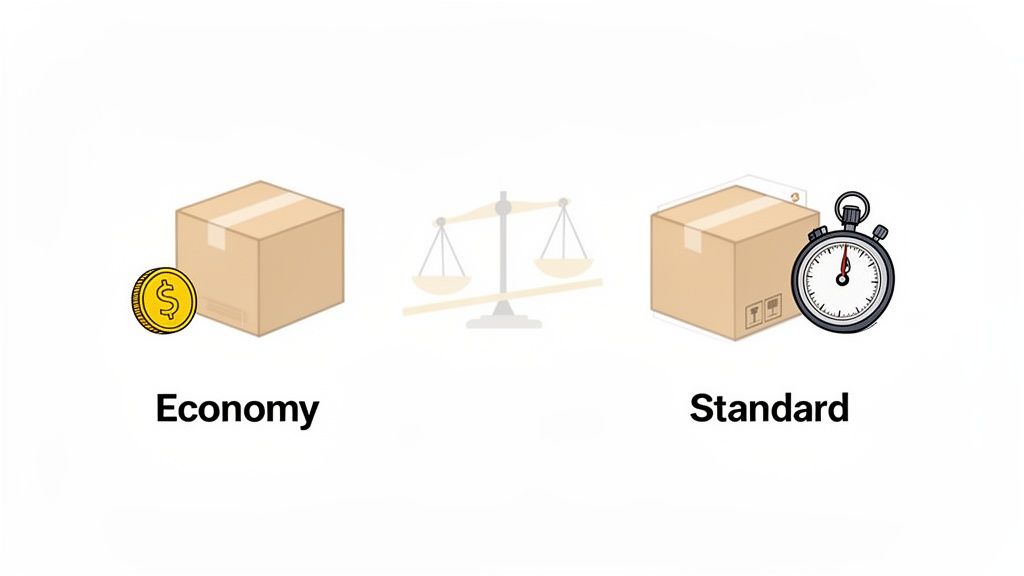
Deciding which shipping tiers to offer isn't just a logistical footnote; it’s a strategic decision that shapes your store's profitability and your customers' perception of your brand. You're balancing your own operational costs against shopper expectations, and getting it right is more important than ever.
With carrier rates always in flux and customer demands constantly evolving, a rigid shipping strategy just won't cut it anymore. The right mix of options can be the difference between a sale and an abandoned cart.
The financial impact alone is worth a close look. Consider a merchant shipping a 1 lb package. Using an economy service like USPS Ground Advantage might cost around $4.50. The standard alternative, USPS Priority Mail, could be $7.20. That’s a savings of $2.70 on a single order. For a store shipping 10,000 packages a month, that small difference adds up to over $27,000 in annual savings.
To get a clear picture, let's start with a high-level overview.
At a Glance Comparison: Economy vs. Standard Shipping
This table provides a high-level summary of the primary differences between economy and standard shipping, giving you a quick reference before we dive into the details.
Now that you have a snapshot of the core distinctions, it's important to remember that these are just general categories. The actual service levels, pricing, and transit times you get will depend entirely on the carrier. Understanding the differences between major players like UPS and USPS is the next step, as each one structures its economy and standard tiers in its own unique way.
A Detailed Comparison of Shipping Services
Once you get past the basic definitions, the real conversation around economy vs. standard shipping begins. This choice ripples through your entire business, affecting everything from profit margins to the unboxing experience your customer has. It’s never as simple as slow vs. fast; it's a strategic decision balancing cost, reliability, and what your brand promises.
To get it right, you have to look at how each service actually performs in the wild. Let’s break down the key differences that will matter most to your operations and your customers.
Cost Structures and Surcharges
The most obvious difference is price, but the savings with economy shipping go deeper than the base rate. Economy services, like USPS Ground Advantage or UPS SurePost, are built from the ground up to minimize their own operational costs. They typically do this by relying on ground transport and consolidating massive volumes of packages, and they pass those savings on to merchants.
Standard shipping, on the other hand, like USPS Priority Mail or UPS Ground, offers a more direct, expedited route. You pay a premium for that speed. These services are also more exposed to common surcharges for fuel, residential delivery, or shipping during the busy holiday season. While economy services aren't entirely immune to these fees, they tend to be less impactful.
Key Differentiator: Economy shipping is all about cost reduction through operational efficiency. Standard shipping prioritizes a solid balance of speed and service, which naturally comes with a higher price point.
Delivery Speed and Zone Variability
Here's the main trade-off everyone talks about: speed. Standard shipping generally lands packages on doorsteps within 3-5 business days. It’s the sweet spot that meets the expectations of most online shoppers. The timeline is fairly consistent, though it can stretch a bit for packages traveling across multiple shipping zones (the distance from your warehouse to the customer).
Economy shipping offers a much wider and less predictable delivery window, often anywhere from 5-10 business days—sometimes even longer. The final transit time is heavily influenced by distance and carrier logistics. A package going just one zone over might arrive almost as fast as a standard shipment. But a parcel going coast-to-coast? That could easily take the full two weeks.
Tracking Reliability and Scan Frequency
In an era where customers expect to follow their order every step of the way, tracking is non-negotiable. This is an area where standard shipping almost always comes out on top.
- Standard Shipping Tracking: Services like USPS Priority Mail give you the play-by-play. Customers see frequent, detailed scans as their package moves from your fulfillment center to their local post office and onto the truck for final delivery. It offers real peace of mind.
- Economy Shipping Tracking: The tracking for economy options is usually more basic. It's common to see a package marked as "in-transit" for several days with very few updates in between. For hybrid services like UPS SurePost, the tracking can also get a bit confusing when the handoff to USPS for the final mile occurs, unless you communicate it clearly.
That gap in visibility is a huge deal, especially when shipping higher-value products where customers need more reassurance. Nailing your store's shipping and fulfillment best practices is key to managing customer expectations, no matter which service you use.
Real-World Rate Increases and Carrier Performance
Carrier rate changes are a fact of life, and they directly hit your bottom line. Recent trends show the cost gap between economy and standard is only getting wider. For example, USPS Priority Mail, a go-to standard service, saw a 6.6% rate hike on January 18, 2026. A 2 lb parcel to Zone 4 that used to be $9.50 now runs $10.13.
In comparison, the economy alternative, USPS Ground Advantage, would only cost about $6.20 for that same package after the increase. That’s a 37% savings on just one shipment. When you multiply that by hundreds or thousands of orders, the impact is massive.
When it comes to performance, different carriers shine in different areas:
- USPS Ground Advantage has quickly become the powerhouse for economy shipping, known for being both reliable and incredibly cost-effective for domestic routes.
- UPS Ground and USPS Priority Mail remain top-tier choices for standard shipping, delivering that dependable mix of speed and detailed tracking that many customers expect.
Ultimately, the best service is completely dependent on what you’re selling and where it’s going. A thoughtful look at these details is the first step in building a shipping strategy that actually works for your business.
Choosing the Right Service for Different Scenarios
The truth is, a one-size-fits-all shipping strategy is a relic of the past. The best choice between economy and standard shipping really comes down to the product you're selling, what your customer expects, and the context of the sale. Moving away from a rigid, single-option policy lets you meet a wider range of customer needs without torpedoing your profit margins.
At its core, the decision is a simple trade-off. This flowchart breaks it down to the fundamental choice: when speed is the priority, go with standard; when saving money is the goal, economy is your best bet.
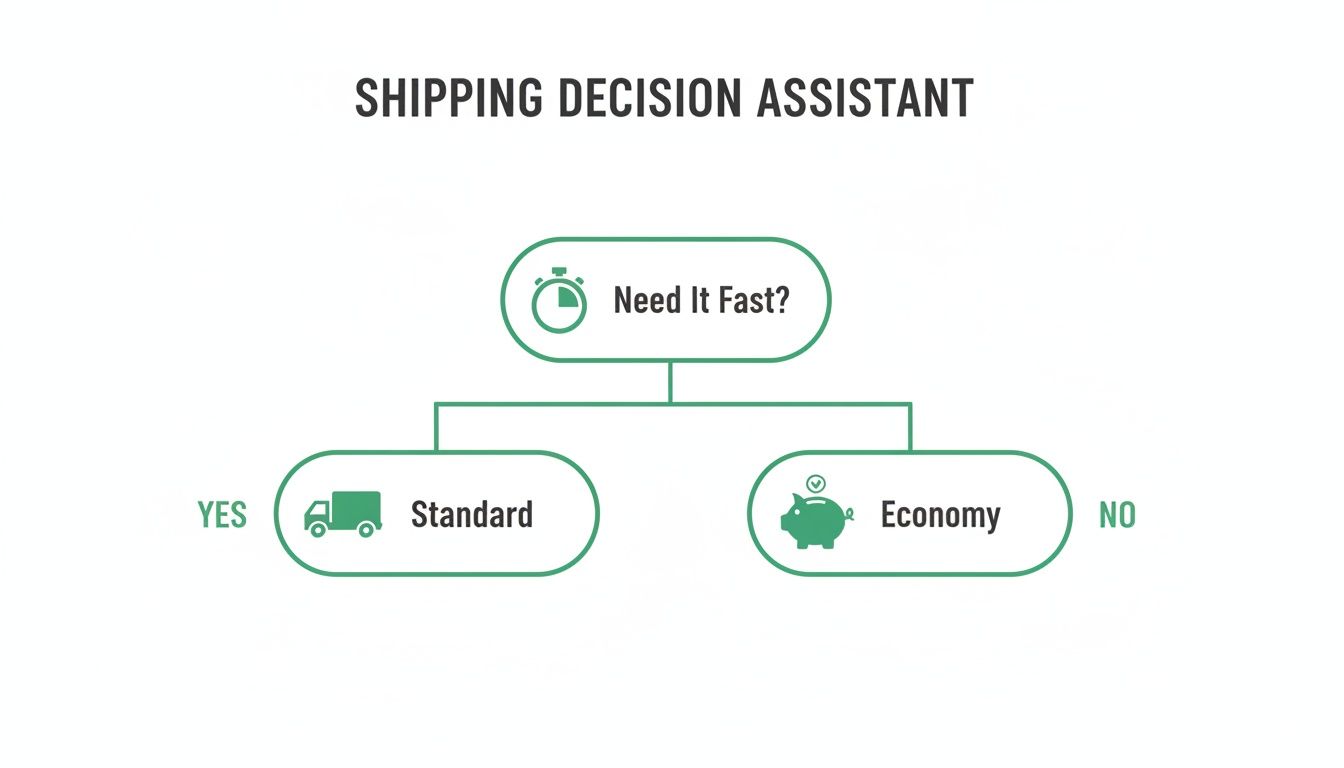
While this visual simplifies the main conflict, knowing exactly when to deploy each option is where smart strategy comes into play.
When to Make Economy Shipping Your Default
Economy shipping is the workhorse for any cost-conscious fulfillment operation. It’s the engine that makes some of the most popular ecommerce offers possible, and it should be your go-to option in a few key situations.
Lean on economy shipping for:
- Free Shipping Promotions: Let's be honest, offering "free shipping" isn't free for you. The lower cost of economy services is what makes this powerful marketing tool financially sustainable. You absorb a much smaller fee, which can be the difference-maker for customers sensitive to high delivery costs.
- Subscription Boxes: Customers who sign up for recurring shipments are usually more interested in the product's value and the convenience of getting it regularly. A longer transit time is an easy trade-off for a better subscription price.
- Non-Urgent Orders: For things like apparel, books, or home decor, most shoppers are perfectly happy to wait an extra few days to save some cash. Offering an economy option directly serves this huge, price-conscious segment of the market.
When you match your shipping offer to the customer's sense of urgency, you capture sales you might have otherwise lost. For a subscription box member, consistent, reliable delivery is far more important than raw speed.
When Standard Shipping is Non-Negotiable
While economy shipping is great for managing costs, there are times when it’s simply the wrong tool for the job. Forcing a customer into a slow shipping lane for a time-sensitive purchase can do real damage to your brand and lead to a flood of bad reviews.
Standard shipping is absolutely essential for:
- Time-Sensitive Gifts: Think birthdays, holidays, or anniversaries. Hitting that delivery deadline is everything. Standard shipping offers a more predictable and faster transit time, giving your customers peace of mind that their gift will actually show up on time.
- Perishable or High-Value Goods: When you're shipping gourmet food, sensitive cosmetics, or expensive electronics, you want to minimize the time they spend in transit. The faster delivery and better tracking of standard services protect both the product's quality and your investment.
- Meeting Marketplace Requirements: If you sell on platforms like Amazon or Walmart, you're playing by their rules. Using standard shipping is often the only way to meet their strict delivery windows and keep your seller account in good standing.
Deciding between economy and standard shipping is about much more than just the price tag. The choice you make has a direct knock-on effect, influencing everything from your customer's happiness to your team's day-to-day workload.
From the customer’s perspective, the biggest hurdle with slower economy services is managing their expectations. If you don't paint a clear, honest picture of the delivery timeline upfront, you're practically asking for a flood of "Where Is My Order?" (WISMO) support tickets.
Your best defense is simply being proactive. Make sure your estimated delivery dates—like "5-10 business days"—are impossible to miss. Show them on product pages, at checkout, and in your confirmation emails. That kind of transparency goes a long way in building trust and keeping customers calm, even when their package is taking the scenic route.
Offering an economy shipping option isn't just about saving money. It’s a commitment to carefully managing the entire post-purchase experience. Success hinges on keeping your customers in the loop from the moment they check out until that box lands on their doorstep.
The Operational Impact of Shipping Tiers
For your operations team, the choice of shipping tier is just as critical. It shapes how you manage inventory, how you schedule your warehouse staff, and how smoothly the entire fulfillment process runs.
Standard shipping, with its quicker and more reliable transit times, usually makes for a much smoother operation. Inventory moves faster, and that shorter delivery window can even lower your return rate since customers get their products before any buyer's remorse has a chance to kick in. This speed is particularly important if you're dealing with high order volumes or international shipments, where a small delay can quickly snowball.
Economy shipping, on the other hand, introduces its own set of challenges. Sure, it cuts down on freight costs, but it also means your cash is tied up for longer in inventory that's sitting on a truck. For merchants shipping internationally, this is a real double-edged sword. With consumer spending getting tighter, economy shipping helps protect your margins. It also creates a perfect opportunity to increase average order value (AOV) by offering upsells on the order status page. As highlighted in a recent analysis of USPS rate changes, this strategy is crucial for businesses juggling volatile tariffs and high inventory. You can learn more about how rate changes impact shipping strategy on fenixcommerce.com.
To make it all work, warehouse efficiency has to be a top priority. Here’s how each option directly impacts your team on the floor:
- Standard Shipping: This option demands a fast pick-and-pack process to hit those daily carrier cutoffs. It forces you to have a highly organized system ready to handle a consistent, rapid pace.
- Economy Shipping: This gives you more breathing room to batch orders together. You can group shipments over a day or two, which can help optimize labor costs but also means you need more space to store all those pending orders.
Ultimately, your shipping strategy is a balancing act between keeping customers happy and keeping your operations healthy. The smartest approach usually involves offering both services and strategically applying them based on the product, where the customer lives, and the context of the sale itself.
Crafting a Smart and Profitable Shipping Strategy
Forget the old one-size-fits-all shipping policy. In today's ecommerce world, that's a recipe for lost sales. The smartest play is to build a hybrid strategy, one that artfully blends economy and standard shipping to give you—and your customers—the best of both worlds. It all starts by laying out a clear, tiered shipping menu right at checkout.
When you let shoppers choose, you empower them. They get to make the call: save a few bucks with economy and wait a bit longer, or pay a little more for the convenience of standard shipping. Simply offering this choice is a powerful way to keep both bargain hunters and need-it-now buyers from abandoning their carts.
Beyond the Initial Checkout
But here's a dose of reality: customers often change their minds. And that’s not a problem; it's an opportunity. This is where modern post-purchase management tools change the entire game, turning what used to be a support headache into a win for both revenue and customer happiness.
Think about the classic economy shipping vs standard shipping dilemma from the customer's perspective. Someone might choose free economy shipping to save money, only to realize two hours later that they need the order for a birthday party this weekend.
Here’s what that moment of empowerment looks like for a customer. A simple, clean interface lets them upgrade shipping or fix a typo in their address on their own terms.

This kind of self-service puts the customer in control, letting them solve their own problems instantly without ever having to contact your support team.
Instead of submitting a support ticket and anxiously waiting for a manual change, they just click "Upgrade Shipping," pay the difference, and relax. This isn't just great service; it’s a new, frictionless revenue stream for your business.
Turning Operations into Opportunities
This kind of post-purchase flexibility is about more than just shipping upgrades. When you let customers edit their own shipping addresses within a specific time window, you dramatically cut down on failed deliveries and the costly, frustrating process of reshipment. And when you allow them to add another item to their already-completed order? You can watch your average order value (AOV) climb.
By giving customers the power to manage their own orders post-purchase, you transform a cost center—customer support tickets and operational errors—into a driver of both revenue and loyalty.
This is precisely where platforms like SelfServe shine. We've seen merchants using these tools achieve incredible results, with smart, multilingual widgets empowering customers around the globe to manage their own orders. The result? A reduction in support workload by up to 40%. In a world of port delays and tariff surprises, that kind of agility is a massive competitive advantage. To get a feel for the landscape, take a look at our breakdown of the best Shopify shipping apps on the market.
By weaving in upsell opportunities during this post-purchase window, merchants can increase AOV while delivering a service that customers genuinely love. It's a modern approach that proves you can give customers amazing flexibility without creating chaos for your fulfillment team.
Frequently Asked Questions
When you're sorting out the details of economy vs. standard shipping, a lot of the same questions tend to pop up. Let's tackle some of the most common ones that merchants wrestle with when trying to find that sweet spot between cost and customer happiness.
Can I Offer Free Shipping with an Economy Service?
Absolutely. In fact, this is the secret behind most successful "free shipping" offers you see online. Economy shipping’s lower price point is what makes offering free delivery financially possible for many businesses.
You can absorb that smaller shipping cost into your product's price, letting you dangle one of the most powerful carrots in e-commerce. It works beautifully for non-urgent purchases where your customers are more than willing to wait a few extra days to save money on delivery. To make this work even harder for you, tie free shipping to a minimum order value. It's a proven way to increase your average order value (AOV) while ensuring your costs are covered.
How Does My Shipping Choice Affect Cart Abandonment?
Your shipping options (or lack thereof) have a massive impact on cart abandonment. We all know that surprise shipping fees are a conversion killer, but not giving customers a choice can be just as bad.
If a shopper only sees a pricey standard or expedited option at checkout, the deal-hunters will walk away. On the flip side, if the only choice is a slow economy service, anyone on a deadline will go find it somewhere else.
The best defense is to give customers a clear choice. Show them a free (or very cheap) economy option right next to a reasonably priced standard one. This simple move caters to both budget-conscious shoppers and those who need their items faster, drastically cutting down on abandoned carts.
Is Standard Shipping Always More Reliable Than Economy?
It really depends on how you define "reliable." If you're talking about detailed tracking and extra peace of mind, then standard shipping often has the edge. Services like USPS Priority Mail typically provide more frequent tracking updates and often include some built-in insurance, which is great for higher-value items.
But if reliability simply means "Will the package get there?", then economy services from major carriers are workhorses. They get the job done. The real difference is the time it takes and how much visibility you have along the way. For most everyday products, economy shipping is a dependable and incredibly cost-effective option. The trick is to be upfront about the delivery window so your customers know exactly what to expect.
Ready to stop losing sales to shipping friction and reduce your support workload? SelfServe empowers your customers to edit their own orders post-purchase, upgrade shipping, and even add more items—all on their own. See how it works and start your free trial.