Unlocking Loyalty With Your Post Purchase Customer Experience
The post-purchase customer experience is everything that happens after a customer clicks that “buy” button. It’s the order confirmation email, the shipping updates, the moment they unbox their order, and even how you handle a return.
This isn’t just about logistics; it’s the make-or-break phase that determines if you’ve earned a one-time sale or a loyal customer for life.
Why Your Post-Purchase Experience Matters More Than You Think
Think about the last time you bought something online. The moment you paid wasn't the end of the story, was it? It was the start of a whole new chapter where your excitement and anxiety were at their peak. This is where a brand truly shows its colors, either building trust or completely breaking it.
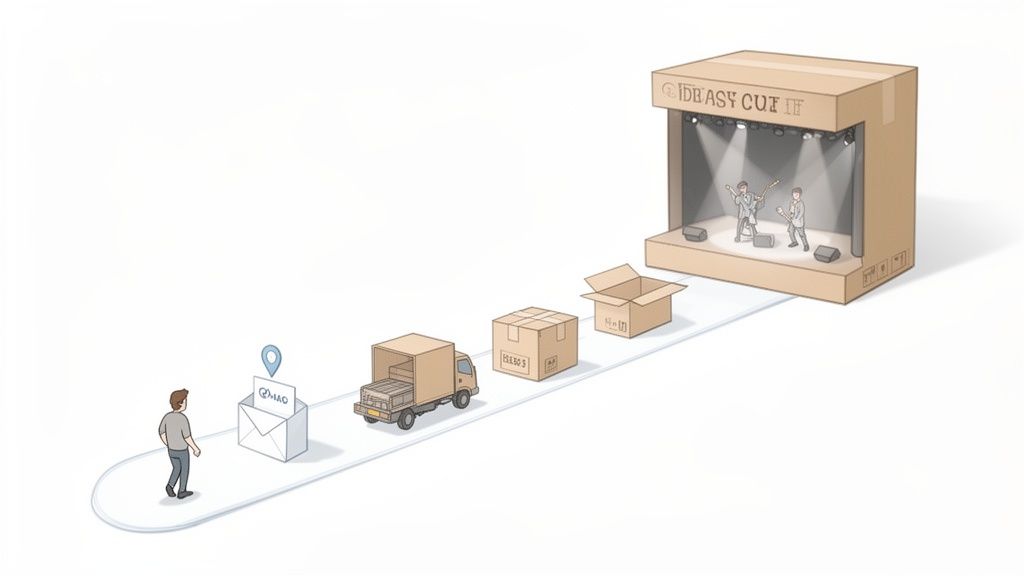
I like to use a concert analogy. The performance (your product) might be fantastic, but if getting out of the venue is a nightmare—confusing signs, a chaotic parking lot, zero help from staff—what do you remember most? That frustrating exit often sours the whole memory. A bad post-purchase experience works the same way, overshadowing a great product.
The Growing Gap Between Brands and Buyers
So many merchants pour their heart and soul into customer acquisition. They spend a fortune on ads and marketing to get that first sale, only to drop the ball the second the payment goes through. This is a huge, costly mistake. A reassuring and smooth post-purchase journey doesn't just prevent headaches; it actively builds the kind of loyalty that brings people back again and again.
For Shopify merchants, ignoring this phase is like leaving money on the table. It leads directly to frustrated customers, negative reviews, and soaring support costs that eat into your profit margins. A thoughtful post-purchase journey, however, transforms a single transaction into a long-term relationship.
This journey has a few critical touchpoints that every customer goes through.
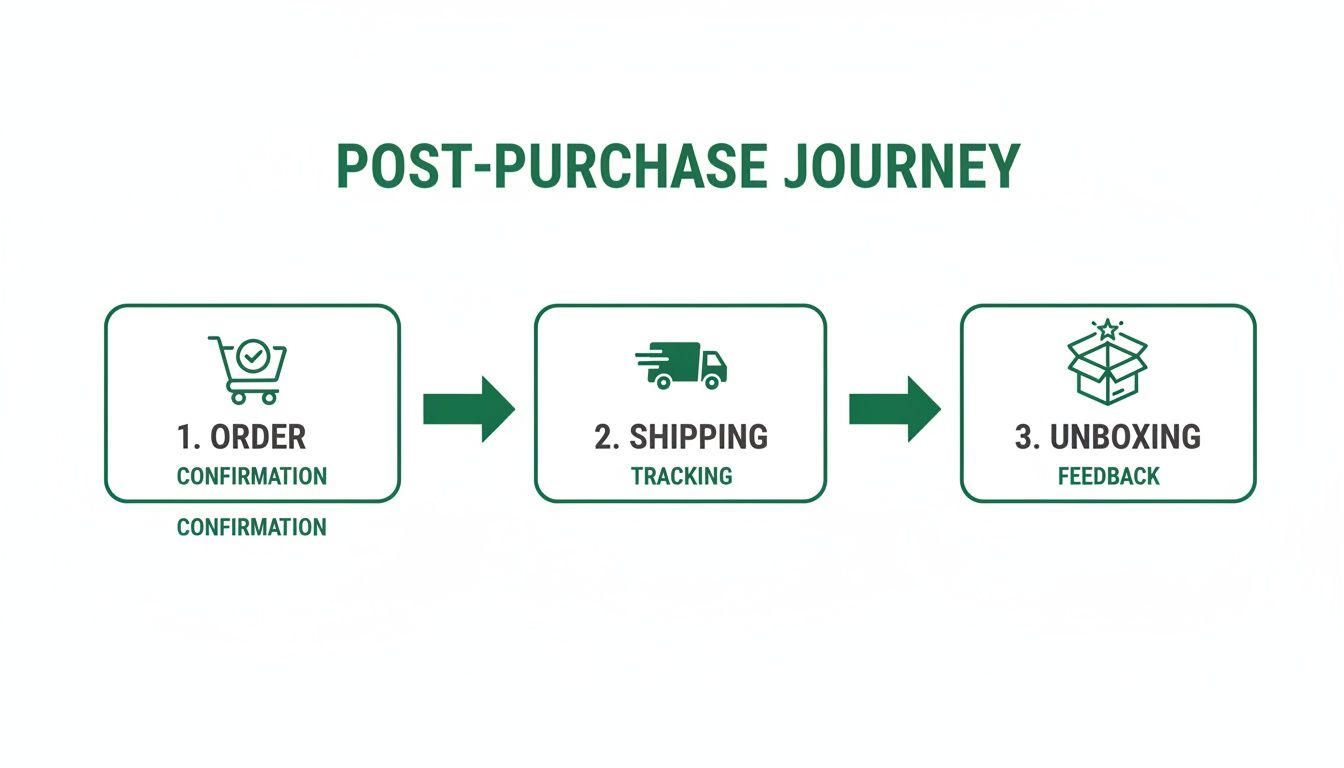
From that first confirmation email to the final unboxing, each step is another opportunity to prove they made the right choice in trusting you.
Let's break down exactly what's happening at each of these moments.
Key Stages Of The Post Purchase Journey
This table unpacks what customers are feeling and what your business stands to gain (or lose) at every key moment after the sale.
Getting these stages right isn't just "good customer service"—it's a powerful retention strategy.
The High Stakes of Getting It Wrong
The numbers don't lie. When the post-purchase process feels broken, customers bolt.
A staggering 79% of consumers say they won't buy from a brand again after just one bad post-purchase experience. What's even more telling is that while 83% of shoppers feel this part of the journey needs serious improvement, only 18% of retail leaders seem to agree. That’s a massive gap in perception. This disconnect, highlighted in Radial's research on the consumer-brand divide, costs brands a fortune in lost revenue and a damaged reputation.
Ultimately, the post-purchase experience isn't just a checklist of operational tasks. It’s a direct reflection of your brand promise. It's how you prove that you value your customers beyond their wallets. By investing in these touchpoints, you'll see a drop in support tickets, a boost in positive reviews, and a growing base of loyal fans who do your marketing for you.
The True Cost Of A Broken Post-Purchase Journey
Let's move past theory. What's the real, tangible damage of a flawed post-purchase journey? For any high-volume Shopify store, what seems like a tiny hiccup—a customer’s typo in their shipping address that they can’t fix themselves—never stays small. It quickly snowballs into a costly operational mess that bleeds resources and erodes customer goodwill.
The immediate financial hits are the easiest to see. Every single preventable "Where Is My Order?" (WISMO) ticket ties up one of your support agents. Every package returned because of a simple address error means you're paying for shipping twice. These are the direct costs you can track—the ones that eat directly into your profit margins and can turn a good sale into a net loss.
But the most dangerous costs are the ones that don't show up on a spreadsheet. They're the silent killers of brand growth.
The Financial Drain You Can See
The clearest sign of a broken post-purchase experience is the immediate strain on your support team and your bottom line. When customers can't find answers or solve simple problems on their own, they have no choice but to reach out, triggering a cascade of expensive issues.
This financial bleeding shows up in a few key areas:
- Skyrocketing Support Tickets: More tickets mean more agent hours, which translates directly to higher payroll. A simple, self-service fix for an address typo could save an agent 5-10 minutes per incident. That time adds up fast.
- Wasted Shipping Costs: When a package is sent to the wrong address, you often end up paying for the return shipment and then paying again to reship it to the correct one. These fees can easily wipe out the entire profit from that order.
- Higher Return Processing Fees: Handling returns isn't free. It involves labor for inspection, restocking, and processing refunds, all of which chip away at your revenue, especially at scale.
These direct costs are a flashing red light, signaling that your post-purchase journey is failing. But they're only the tip of the iceberg.
The Hidden Costs That Erode Your Brand
The real, long-term damage comes from the hidden costs that silently undermine your business. A single bad experience creates ripples that can harm your brand for years.
Imagine a customer who orders a gift for a loved one's birthday. If it arrives late because of a preventable shipping issue, their frustration isn't just about the product; it's about a ruined celebration. That customer probably isn't coming back. Even worse, they're likely to tell people about it.
The stakes are incredibly high. According to recent findings, one in five consumers will ditch a brand after just a single negative experience. That's especially damaging when you realize that repeat customers can generate 300% more revenue than first-time buyers. You can find more insights in Klaviyo's report on building customer loyalty.
This is where the hidden costs really start to bite:
- Damaged Brand Reputation: Negative reviews and bad word-of-mouth spread like wildfire. A few poor experiences can tarnish the brand image you've worked so hard to build.
- Plummeting Customer Lifetime Value (LTV): When a customer leaves after one bad experience, you lose all their potential future revenue. The money you spent to acquire them in the first place? Completely wasted.
- Lost Brand Advocates: Every unhappy customer is a lost opportunity. They could have been a loyal fan who recommends you to friends and family. Instead, they might become a vocal critic.
Ultimately, neglecting the post-purchase experience isn't just bad service; it's a financially unsustainable business model. It actively pushes away your most valuable customers, inflates your operational costs, and puts a hard ceiling on your growth. Investing in a smooth, empowering post-purchase journey isn't a cost—it's an investment that pays for itself by preventing these expensive breakdowns.
Building A Winning Post-Purchase Strategy
A world-class post-purchase experience doesn’t just happen. It’s not about luck or just having a great product. It’s the direct result of a smart, intentional strategy that sees the time after the sale as an opportunity, not an afterthought.
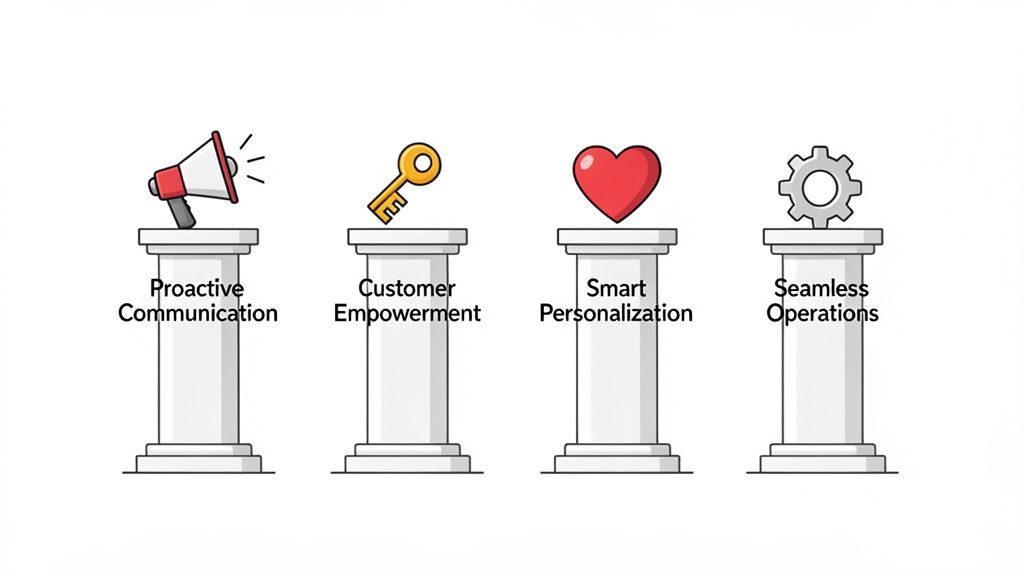
Instead of just reacting to support tickets and shipping delays, a winning strategy is proactive. It’s built on a framework designed to build trust and lock in loyalty from the second a customer clicks "buy." This framework rests on four core pillars that work in harmony to create a journey that feels smooth, reassuring, and genuinely valuable.
Pillar 1: Proactive Communication
That gap between purchase and delivery? For the customer, it's a mix of excitement and a little bit of anxiety. Proactive communication is all about filling that silence with helpful, on-brand information. It's about answering their biggest question—"Where is my order?"—before they even have to ask.
This means going way beyond those generic, cryptic emails from the shipping carrier. A solid communication plan includes:
- Branded Tracking Pages: Don't send your customers off to a bland UPS or FedEx site. Bring them back to a beautiful tracking page that lives on your domain. It keeps them in your world and reinforces your brand.
- Real-Time Updates: Keep them in the loop. Send notifications for key milestones like "shipped," "out for delivery," and "delivered." And if there's a delay? Be honest and tell them immediately. Transparency builds far more trust than silence ever will.
- Clear Next Steps: Let them know what to do if something goes wrong with the delivery or how to start a return. Making the whole process feel clear and under control is a huge confidence booster.
Pillar 2: Customer Empowerment
Today’s shoppers don’t want to feel helpless. They expect to have control over their orders and solve simple problems themselves. Giving them self-service tools isn't just a great way to improve their experience; it also drastically cuts down on your support team's workload.
Customer empowerment isn't about losing control. It's about giving customers the tools to fix minor issues themselves, which frees up your team to handle the really complex problems. This simple shift can be a game-changer for both customer satisfaction and operational efficiency.
Here’s what empowering your customers looks like in practice:
- Self-Service Portals: Let customers update their own shipping address, fix a typo in their email, or even cancel an order—all within a time window that you define.
- Easy Access to Information: A well-stocked FAQ or help center, linked right from the order status page, can instantly answer the most common questions without anyone needing to create a ticket.
- A Painless Returns Process: A clear, easy-to-use returns portal lets customers manage the entire process on their own. This turns a potential negative into a surprisingly hassle-free experience.
Pillar 3: Smart Personalization
Personalization shouldn't stop at checkout. The post-purchase window is a golden opportunity to show customers you get them by offering relevant, valuable add-ons that actually improve their experience. This deepens the relationship and is a powerful way to increase customer lifetime value. For more on this, check out our guide on how to increase repeat purchases without discounting.
Smart personalization at this stage means:
- Targeted Upsells: Use the Thank You and Order Status pages to offer relevant one-click upsells. Someone bought a camera? Offer them a compatible memory card or a carrying case. It just makes sense.
- Localized Experiences: For your international customers, providing order updates and support in their own language is a massive trust-builder. It shows you truly value their business.
- Helpful Content: Follow up with content that helps them enjoy their purchase more, like setup guides, user tips, or care instructions. You’re not just a seller; you’re an expert resource.
Pillar 4: Seamless Operations
At the end of the day, none of this works without a rock-solid operational foundation. This is all the behind-the-scenes work that makes the entire post-purchase journey run like a well-oiled machine. It’s about integrating your tools, automating tedious tasks, and creating crystal-clear workflows for your team.
A seamless backend ensures that when a customer updates their address through a self-service portal, that change is instantly pushed to your fulfillment system, preventing costly shipping mistakes. It means that an upsell added after the initial purchase is correctly processed and packed with the original order without any manual headaches. This pillar is the connective tissue holding everything together, ensuring a consistent and reliable experience, every single time.
4 Actionable Tactics To Elevate Your Customer Journey
Turning strategy into action is where the real magic happens. A great post-purchase experience isn’t built on abstract ideas but on concrete, high-impact tactics deployed at critical moments.
The best places to start are your Thank You and Order Status pages. Why? Because they're the two digital touchpoints customers visit most frequently after they've already trusted you with their money.
By embedding smart, helpful features directly into these pages, you can transform them from simple receipts into dynamic, value-adding hubs that boost satisfaction and drive more revenue. These aren't complicated overhauls; they're targeted enhancements that deliver immediate results.
Let's break down four powerful tactics you can implement right away to make your customer journey smoother and more profitable.
1. Let Customers Help Themselves with a Self-Service Portal
We've all had that mini-panic attack moments after clicking "buy"—a typo in the shipping address or the wrong apartment number. Without an easy fix, this small error quickly spirals into a support ticket, a shipping delay, and a frustrated customer.
A self-service portal directly on the order status page changes everything. It empowers customers to correct their own shipping and contact information within a specific time window that you control. This isn’t just convenient for them; it's a massive win for your operations team, preventing costly mis-shipments and shrinking the support queue. You can see how this philosophy applies to other areas by checking out our guide on managing returns and refunds smoothly on Shopify.
This simple tool transforms a moment of panic ("Oh no, I used the wrong address!") into a moment of relief ("Phew, I fixed it myself!"). That shift in feeling is what builds lasting brand loyalty.
By giving customers this control, you dramatically cut down on preventable headaches, saving time and money while making your customers feel far more confident in their purchase.
2. Get Ahead of Problems with Real-Time Address Validation
Prevention is always better than a cure, especially when it comes to logistics. An invalid shipping address is a ticking time bomb for your fulfillment process, virtually guaranteeing a failed delivery and a disappointed customer. Integrating real-time address validation defuses this problem before it even starts.
Using technology like Google Maps, an address validation tool can:
- Auto-complete addresses as the customer types, minimizing typos from the get-go.
- Verify the address against a global database to confirm it's a real, deliverable location.
- Flag potential issues like missing apartment numbers before the order is even finalized.
This small, proactive check ensures every order you ship has the best possible chance of arriving on the first attempt, safeguarding your profit margins and your brand’s reputation for reliability.
3. Add Value (and Revenue) with Curated One-Click Upsells
The post-purchase phase is prime real estate for increasing your average order value without being pushy. Your customer is already in a buying mindset and feeling good about their purchase. Offering a relevant, one-click upsell on the Thank You or Order Status page feels less like a sales pitch and more like a helpful suggestion.
The key word here is curation. Don't just throw random products at them. Instead, offer items that perfectly complement what they just bought. For instance, if someone just bought a new coffee machine, offering a bag of your best-selling espresso beans or a set of matching mugs is a natural next step. It's a strategy that not only drives incremental revenue but also genuinely enhances the customer's overall experience with your brand.
4. Speak Their Language with Multilingual Support
In a global marketplace, a one-size-fits-all approach means a subpar experience for many. For international shoppers, seeing order updates and support options in their native language is a powerful signal that you respect and value their business. It shows you’ve actually considered their needs.
Many brands completely miss this. Recent research reveals that only 57.9% of retailers personalize recommendations in their shipping communications, leaving a huge opportunity on the table. When you consider that 52% of consumers will abandon a brand after just one poor experience, the risk of inaction becomes crystal clear.
The reward for getting it right is huge: three in four consumers say they will spend more with brands that provide a great customer experience. Making your brand feel accessible and trustworthy to a global audience directly impacts both conversion and loyalty.
High-Impact Post Purchase Tactics Compared
To help you prioritize, here’s a quick comparison of the tactics we just covered. Each one targets a specific pain point while improving a key area of your business.
While each tactic is strong on its own, they work even better together. Implementing them creates a cohesive, customer-centric journey that not only solves problems but also builds the kind of loyalty that turns one-time buyers into lifelong fans.
Getting Your Modern Post-Purchase System Live on Shopify
Alright, let's move from theory to reality. Getting a modern post-purchase system up and running on your Shopify store is where the magic really happens. For anyone managing operations or leading a support team, this is the point where a smart tool can completely change the game. The key is to find a system that’s simple enough to set up quickly but powerful enough to handle the chaos of a growing business.
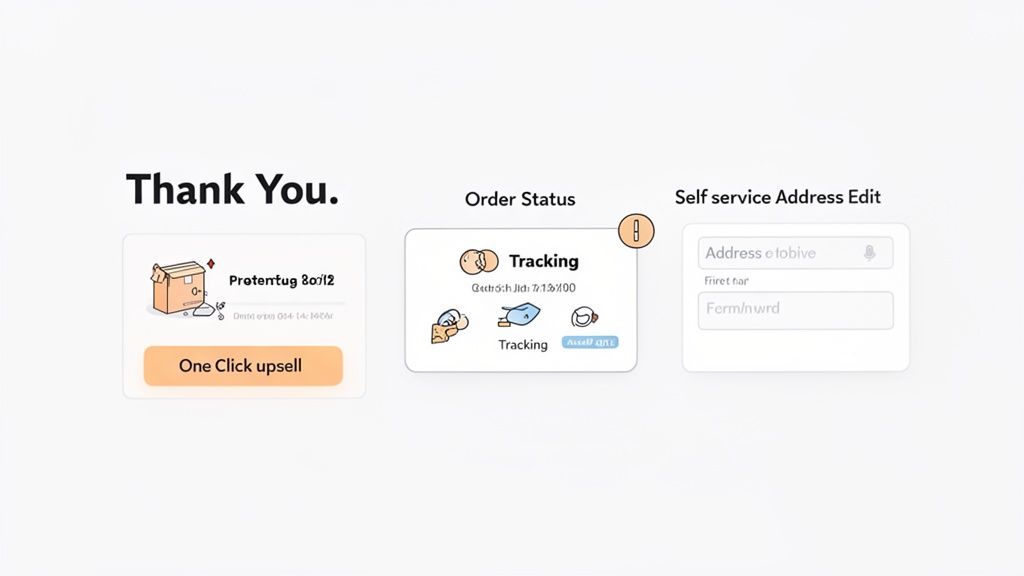
The real goal here is to give customers the power to help themselves without causing a headache for your fulfillment crew. It's a balancing act—giving shoppers flexibility while keeping your operations in control. So, let's break down how you can get a robust system like SelfServe configured and working for you.
H3: Phase 1: Installation and Core Configuration
First things first, you need to lay the groundwork. This initial phase is all about setting the rules of the road for your new post-purchase workflow. This isn't just about flipping a switch; it's about fine-tuning the system to fit your specific fulfillment process so you don't accidentally create more work.
Here’s what your initial setup checklist should cover:
Install the App: Head to the Shopify App Store and get the application installed. A well-built system should plug right into your existing theme and checkout without needing a developer on standby.
Set Customer Permission Windows: This is your most critical control. You need to decide how long a customer has to make changes after they click "buy." You can—and should—set different time limits for different actions. Maybe they get 30 minutes to edit a shipping address but only 10 minutes to cancel an order, all based on your fulfillment SLAs.
Define Editable Fields: Lock down what customers can and can’t touch. It makes perfect sense to let them fix a typo in their street address or update a phone number. But you’ll likely want to block changes to their name or email to head off any potential fraud.
Getting this foundation right ensures that empowering your customers doesn't undermine your operational integrity. Once these guardrails are in place, you can start adding the features that really elevate the experience.
H3: Phase 2: Activating Experience-Enhancing Features
With the basic framework set, it's time to turn on the features that will actively improve the customer journey and protect your profit margins. These tools are designed to proactively solve common problems before your team has to get involved.
A non-negotiable feature is real-time address validation. By plugging into a service like Google Maps, the system can spot potential address errors and suggest corrections while the customer is still on the page. This one feature alone can slash the number of failed deliveries, saving you a fortune in reshipment costs and keeping customers happy. You can learn more about the power of a self-service customer portal that includes these kinds of smart, preventative tools.
Validating addresses before an order hits your fulfillment queue fundamentally changes how you manage the post-purchase experience. You're no longer reacting to mistakes after the fact; you're preventing them from ever happening.
You should also activate features like automated order tagging. This lets you set up rules that automatically tag orders in Shopify whenever a customer makes an edit. It's a simple way to give your fulfillment team a clear heads-up, ensuring no last-minute changes get missed.
H3: Phase 3: Customizing the Front-End and Upsells
The final piece of the puzzle is all about branding and revenue. A generic, out-of-the-box widget can feel clunky and erode the trust you’ve worked so hard to build.
Start by styling the front-end widget that appears on your Thank You and Order Status pages. Match the colors, fonts, and button styles to your store's branding for a completely seamless look. It should feel like a natural part of your store, not a bolted-on afterthought.
Next, get strategic with upsells. This isn't about throwing random products at people. It's about curating relevant offers that make sense. For example, you could create a rule that only offers a special shoe cleaning kit to customers who just bought a pair of leather boots. By making these offers smart and easy to add with a single click, you create a genuinely helpful moment that also boosts your average order value. This is how you turn a traditional cost center into a new profit center.
Frequently Asked Questions
Making the leap to a modern, customer-first post-purchase model can feel like a big shift. It's only natural to have questions. Here are some of the most common ones we hear from operations managers and support leaders who are looking to overhaul their post-purchase experience.
What Are The Most Important Metrics For Post-Purchase Success?
When you invest time and resources into improving the post-purchase journey, you need to know if it's actually working. While every business has its own unique goals, a few key performance indicators (KPIs) will give you a clear picture of your progress.
The first and most immediate sign of success is a drop in "Where Is My Order?" (WISMO) support tickets. This is your canary in the coal mine. When customers can find answers on their own through a self-service portal, they simply don't need to contact your team.
Next, you'll want to keep a close eye on your Customer Satisfaction (CSAT) scores. A quick survey sent after an order is delivered is the perfect way to get a pulse on how customers feel about the entire experience, from the moment they clicked "buy" to the second they unboxed their product. A steady climb in CSAT is a sure sign you're building healthier customer relationships.
Finally, a few financial metrics will tell the rest of the story:
- A drop in reshipment costs: This is a direct reflection of tools like real-time address validation. Fewer typos mean fewer failed deliveries and less money spent sending out replacement packages.
- Customer Lifetime Value (LTV): This one is a long-term play, but a fantastic post-purchase experience is one of the most powerful drivers of repeat business. When LTV starts to tick upward, you know you're turning one-time buyers into loyal fans.
- Post-purchase upsell revenue: If you’re offering relevant add-ons on your order status page, tracking the revenue they generate is crucial. It’s a direct measure of how well you're anticipating your customers' needs.
How Can I Offer Self-Service Without Losing Control?
This is a huge—and totally valid—concern. The thought of letting customers edit live orders can conjure images of operational chaos. But a modern self-service system isn't about giving up control; it's about empowerment within smart guardrails. You are always in the driver's seat.
The magic lies in using a tool that allows for specific, rule-based permissions. For instance, you could set a 30-minute window after an order is placed where a customer can edit their shipping address. Once that time is up, the option vanishes. This ensures any correction happens long before your fulfillment team even sees the order.
You're not giving customers free rein over your operations. You're giving them a very specific, time-limited ability to fix their own mistakes, which prevents a much bigger, more expensive problem for your team down the line.
You can also get incredibly specific about what they can edit. Maybe you allow changes to the street address and apartment number but lock the customer's name and country to prevent potential fraud. This strategic approach gives customers the autonomy they crave without ever compromising your operational workflow.
Will Adding Upsells On My Order Status Page Annoy Customers?
The fear of bugging customers with more offers is completely understandable. But it usually comes from a misread of the customer's mindset at that moment. Think about it: they just put a huge amount of trust in your brand and are excited about their purchase. As long as your offers are genuinely relevant, they come across as helpful suggestions, not pushy sales tactics.
The secret is thoughtful curation. Don't just throw your best-sellers at them. Instead, offer products that truly complement what they just bought.
- Example: A customer buys a new pair of leather boots. Offering a specialized leather care kit on the order status page is a perfectly logical and helpful next step.
- Example: Someone just purchased a complex piece of electronics. Offering an extended warranty or a white-glove setup service adds real value; it's not a nuisance.
According to a study by Zendesk, 75% of consumers are willing to spend more with companies that provide a great customer experience. When done right, these upsells become part of that great experience, showing you truly understand their needs. By making it a simple, one-click addition, you eliminate friction and make it feel like a natural extension of your service.
SelfServe empowers Shopify merchants to create a world-class post purchase customer experience that reduces support tickets and increases revenue. With self-service editing, real-time address validation, and one-click upsells, you can give customers control while keeping your operations smooth. See how it works at https://getselfserve.com.