Shipping Address Verification for Shopify Stores
A customer checks out on your Shopify store, then spots the mistake. The apartment number is missing. The saved address uses an old postcode. A rural route was entered in the wrong field. By the time your team notices, the order may already be packed, labelled, and in the carrier network.
That's why shipping address verification shouldn't be treated as a checkout-only feature. It's an operational loop that starts with buyer input, continues through post-purchase edits and fulfillment, and ends with what you learn from failed deliveries and returns. The right process catches errors while they're still cheap to fix, then uses delivery outcomes to improve the next order.
The Cost of a Bad Address on a Real Shopify Store
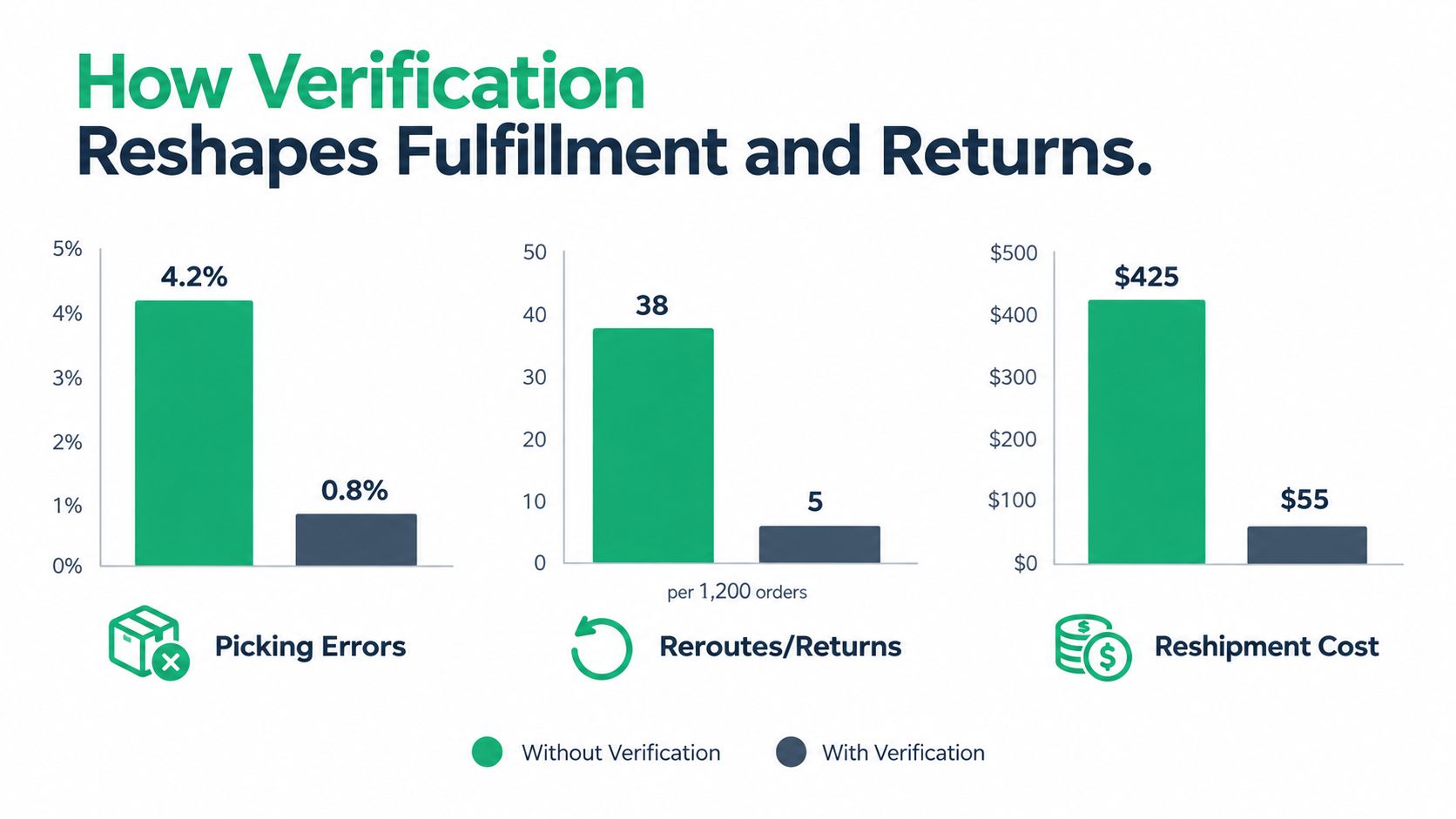
A mid-size direct-to-consumer apparel brand finishes a busy weekend with 1,200 Shopify orders. Two weeks later, the non-deliverable report contains 38 shipments. One customer left out an apartment number, another entered a former address, and several records looked tidy but didn't match the carrier's reference data.
The first failed delivery creates more than a shipping problem. The carrier may apply a non-delivery or rerouting charge. Support opens a ticket, the warehouse checks the original pick and pack record, and someone has to arrange a return or reshipment. The customer waits longer, asks for updates, and may request a refund or start a payment dispute when the package still hasn't arrived.
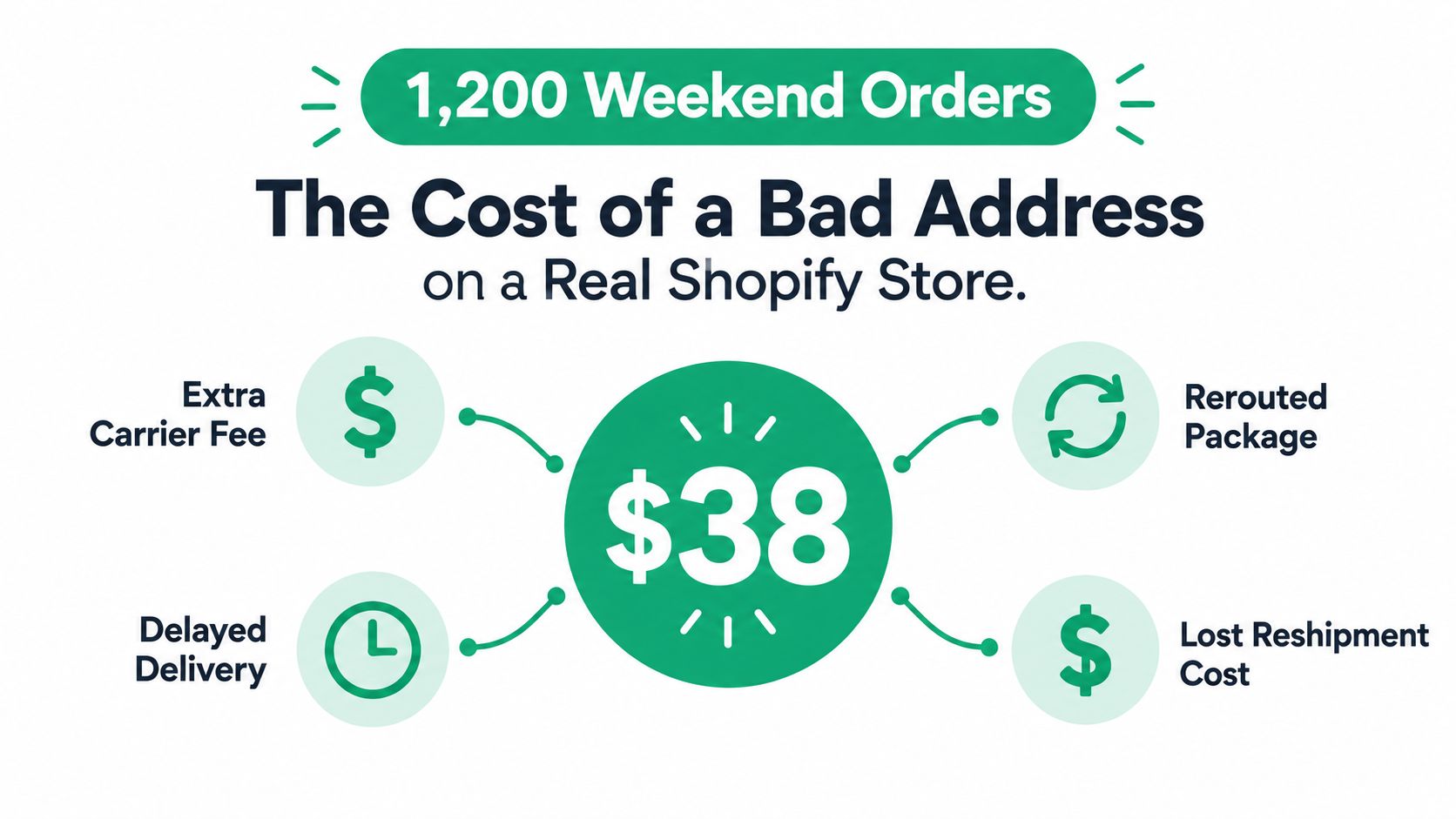
The direct operational expense often includes carrier handling, extra warehouse work, packaging, and a replacement shipment. A practical planning range is $8 to $25 per incident, but that range isn't a universal tariff or a guaranteed total. It excludes the harder-to-measure cost of a damaged customer relationship and the future orders that customer may never place.
One missing field can trigger several work queues
The warehouse might need to stop a shipment, reprint a label, or locate an order that has already moved to a 3PL. Support agents have to explain what happened without blaming the buyer, while finance reviews whether the failed shipment should count against a carrier claim, a refund policy, or a chargeback response.
Operational rule: Treat an address error as an upstream fulfillment exception, not as an isolated customer-service ticket.
Baymard's ecommerce UX benchmark found that 47% of sites didn't provide an address validator at checkout, a market-level indication that address verification was still a late-adopted safeguard rather than a universal standard. The benchmark finding and its implications for ecommerce address quality help explain why many stores still discover missing units and non-deliverable details only after fulfillment begins.
Merchants also need to account for addresses that can't support a particular delivery or identity workflow. A resource on what addresses can't be used can help teams separate residential, commercial, temporary, and other address-use questions when policies require more than a deliverable destination.
The control point is simple. Verify the address before a label is printed, give the buyer a chance to correct it, and hold ambiguous orders for review instead of allowing bad data to flow into picking, carrier handoff, and returns.
What Shipping Address Verification Actually Means
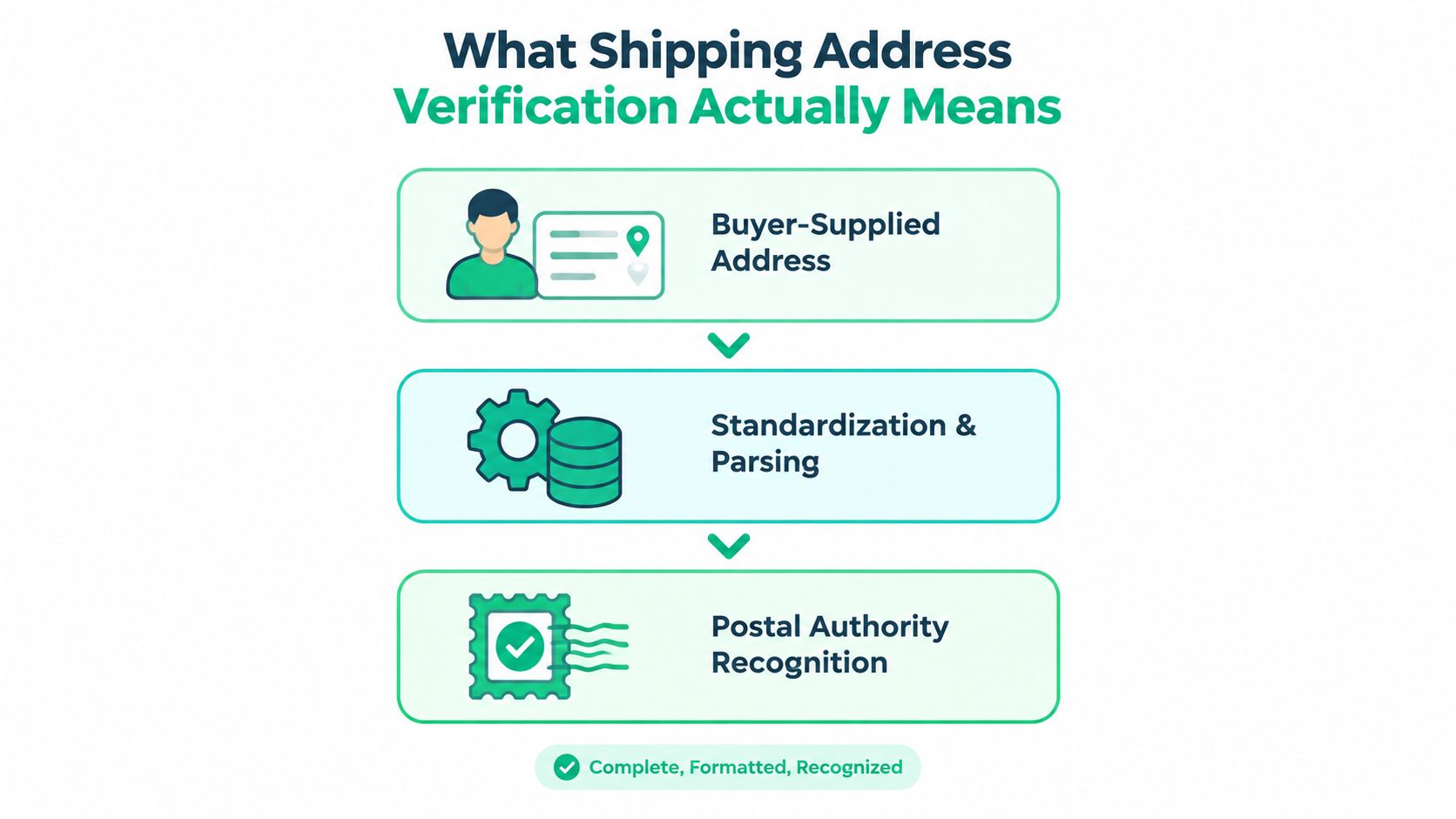
Shipping address verification means checking whether a buyer's address is complete, consistently formatted, and recognized by the relevant postal or carrier data before fulfillment. It's more demanding than checking whether the address field is non-empty or whether a postcode has the expected number of characters.
A form can accept 12 Main St, New York, 10001 because every field looks plausible. That doesn't prove the house number exists, that the postcode matches the street, or that the destination includes an apartment or unit needed for delivery. Postal-authority validation generally requires the submitted address to match an authoritative database record, and mismatches can come from an incorrect house number, postcode conflict, missing unit data, or formatting differences. USPS address acceptance guidance illustrates why simple format checks aren't enough.
Four layers catch different failures
Syntax validation checks whether required fields exist and whether the input uses acceptable characters. It can flag a missing country, an empty locality, or a postal field containing invalid symbols. It won't confirm that the destination exists.
Normalization makes equivalent inputs consistent. The system can standardize casing, punctuation, street abbreviations, directional terms, and unit designators.
Apartment 4BandApt 4Bmay become a common representation for downstream systems.Postal database matching compares the normalized address with authoritative reference data. The system can identify a house number that doesn't exist, a postcode mismatch, or an address that needs an apartment number before it's deliverable.
Geocode confirmation checks whether the address can be associated with a geographic location and helps identify ambiguity. A geocode result can support routing and map-based review, but it shouldn't replace postal recognition when deliverability is the decision.
The order matters. A transliterated address, a right-to-left script, or a missing secondary line can pass a basic regular-expression check while still failing at carrier handoff. Strong verification combines these layers and returns a clear outcome, such as accepted, corrected suggestion, ambiguous, or rejected.
Methods That Power Modern Address Verification
Shopify merchants don't have to choose one technique and abandon the others. Each method operates at a different point in the order lifecycle and protects against a different kind of address failure.
| Method | Lifecycle stage | Catches | Conversion impact | Best for |
|---|---|---|---|---|
| Real-time field validation | During checkout | Missing fields, malformed input, incompatible characters | Can reduce friction when feedback is clear, but intrusive blocking can interrupt checkout | Immediate error prevention |
| Address auto-complete | During address entry | Typing mistakes, incomplete street names, inconsistent formatting | Usually makes entry faster by presenting recognized suggestions | Mobile checkout and first-time buyers |
| Post-submission verification | After checkout, before fulfillment | Ambiguous or unresolved addresses that entry tools missed | Protects the completed order while giving operations a review path | High-value, international, or exception-prone orders |
| Batch cleansing | Before campaigns, migrations, or reactivation | Legacy records, duplicate formats, stale or incomplete customer data | Doesn't affect the original checkout, but improves later outreach and fulfillment preparation | Historical customer databases |
Match the method to the failure point
Real-time validation is useful when the buyer is still typing. It can require a country, identify an absent unit, and prevent a customer from progressing with an obviously incomplete destination. Auto-complete goes further by reducing keystrokes and letting the buyer select a recognized address rather than constructing one from memory.
Neither method resolves every case. Customers may paste an address, choose an outdated suggestion, or enter information that becomes ambiguous after the order reaches your fulfillment system. Post-submission verification is the safety net. It can place an order into a review queue before the warehouse creates a label, which is safer than accepting a low-confidence match without intervention.
Batch cleansing serves a different purpose. Suppose you're migrating from another commerce platform, launching a re-engagement campaign, or preparing customer records for a new 3PL. Scrubbing old records in bulk lets you identify obsolete formats and unresolved destinations before they become active shipping jobs.
The technical connection between Shopify and a verification provider matters too. Review how an address validation API works in an ecommerce workflow, including when the result is returned, how corrections are presented, and whether your order or fulfillment status can use the response. A fast suggestion tool with no exception queue may leave operations exposed, while a strict blocker can create unnecessary checkout friction.
Use real-time tools for prevention, post-submission checks for control, and batch cleansing for data maintenance. They're complementary controls, not interchangeable products.
International Address Formats and Cross-Border Reality
International verification isn't a translation problem. It's a structural data problem because countries organize addresses differently, use different scripts, and expect different fields in different positions.
The Universal Postal Union began work on international address elements and electronic name-and-address exchange in 2001. Standard S42 was approved in 2002, then split into a generic Part A and country-specific Part B in 2006. Work on an exchange format led to standard S53, approved for status 0 in February 2009. This overview of UPU address-standardization milestones shows how postal interoperability developed beyond local formatting conventions.
An international checkout should account for UTF-8 characters, transliteration, script direction, secondary address lines, locality names, and country-specific ordering. One industry source identifies 240+ distinct address formats, so a single global regular-expression rule can easily reject valid input or accept data that a destination carrier can't use. International address standardization guidance explains why locale-aware parsing and country-specific output are essential.
| Country | Postal code format | Required fields | Common pitfall |
|---|---|---|---|
| United Kingdom | Country-specific alphanumeric structure | Post town, postcode, street and delivery details | Treating the postcode like a numeric ZIP code |
| Japan | Country-specific numeric structure | Prefecture, municipality, district, building or unit details where applicable | Reordering fields into a domestic template |
| Brazil | CEP-based structure | State, municipality, street and delivery details | Accepting a CEP without reconciling the locality |
| Australia | Numeric postcode structure | State or territory identifier, locality, street details | Omitting or misclassifying the state or territory |
Carrier rules add another layer. Rural routes, delivery points, apartment identifiers, and commercial invoice data can affect whether a package moves smoothly across borders. A verified destination still needs a label and customs record that downstream systems can interpret correctly.
Merchants should also separate address quality from duties and delivery terms. A practical guide to DDP vs DDU for merch can help teams understand how shipping terms affect the customer's cross-border experience, while international address validation workflows provide a useful framework for handling country-specific parsing and carrier output.
Store both the buyer's original input and the standardized result. That audit trail lets support explain a correction, lets operations investigate a carrier rejection, and prevents a normalization rule from becoming an invisible source of confusion.
How Verification Reshapes Fulfillment and Returns
A verified address changes the warehouse task before it changes the customer experience. The picker sees a destination that matches the order record, the label system receives a structured address, and the carrier gets information in the format it expects. Those controls reduce the number of shipments that need manual intervention after handoff.
Measure the effect through operational KPIs rather than through checkout completion alone. Useful Shopify and 3PL metrics include NDR rate, reshipment cost per order, return-to-sender percentage, customer-service tickets per 1,000 orders, and cost per failed delivery. Track the reason code as well, because an address-related failure should be separated from damage, theft, carrier delay, or an incorrectly picked item.
Put the same definition into every system
A warehouse may call an order “address corrected,” while a carrier calls it “rerouted” and support records it as “customer unavailable.” Those labels make reporting difficult. Create a shared exception taxonomy that distinguishes incomplete address, invalid destination, customer-requested edit, carrier correction, and return-to-sender.
The result should feed carrier scorecards and 3PL reviews. If one service repeatedly flags a particular type of address, you can adjust routing rules, packaging instructions, or customer messaging. If a 3PL bills manual handling for address corrections, the cost belongs in the fulfillment analysis rather than being buried inside general support expense.
Measurement rule: Compare address-related exceptions with the order stage where the correction happened. A correction at checkout and a correction after carrier handoff aren't equivalent events.
The margin benefit comes from avoiding several small tasks at once. A correct address can prevent a manual pick note, a second label, an extra package, a support exchange, and a refund review. Even without assigning a universal savings figure, the operational logic is clear. Fixing data before fulfillment costs less than repairing a shipment after it enters the network.
Review these KPIs monthly by country, carrier, sales channel, and fulfillment location. That breakdown shows whether the problem starts with checkout design, a particular market's address structure, a carrier mapping, or warehouse execution.
Why Post-Purchase Address Edits Change the Picture
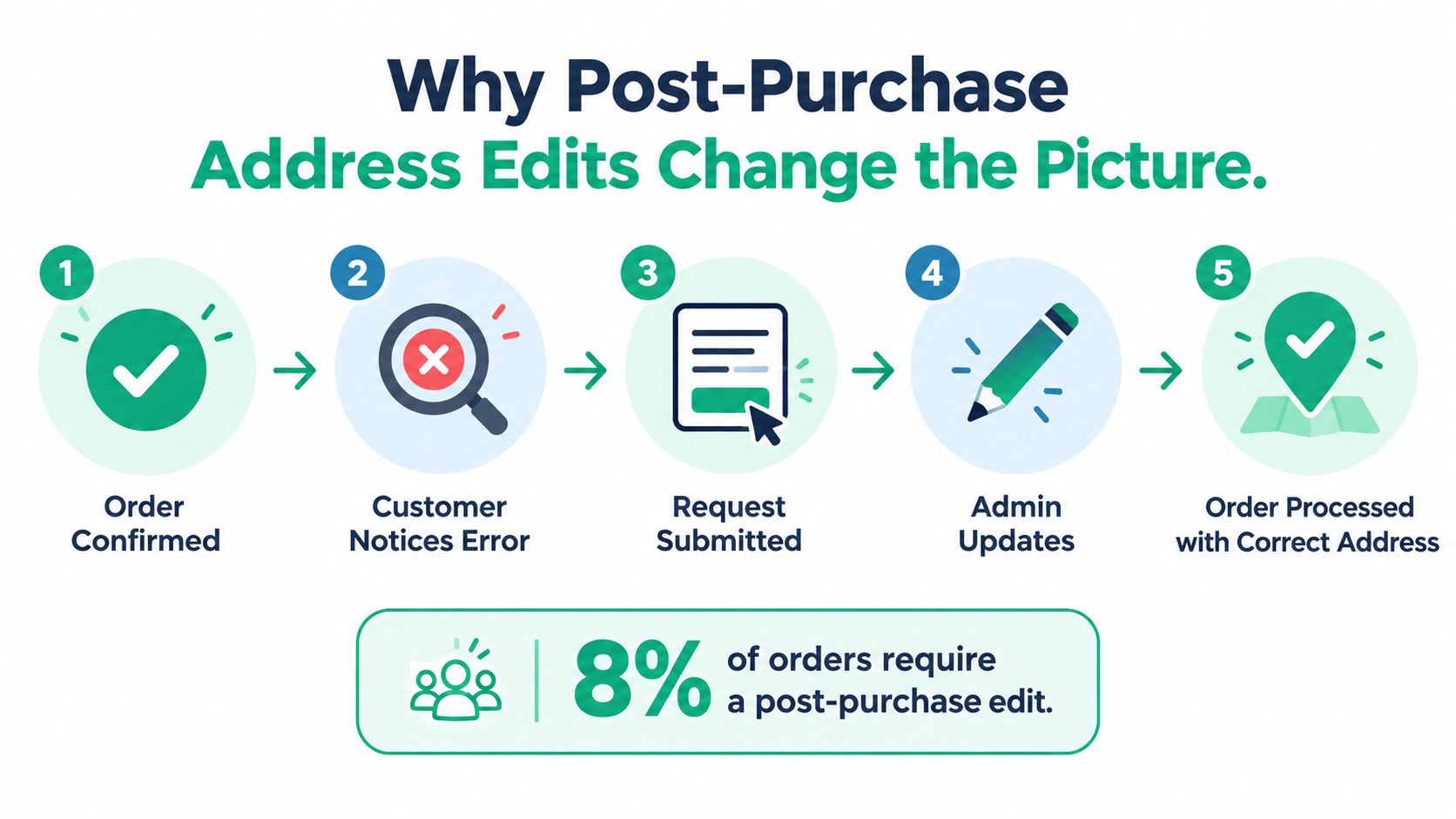
Customers often notice an address mistake only after the confirmation email arrives. They may see that Shopify used an old saved address, realize that a unit number was omitted, or spot a typo after the payment step. If the only remedy is contacting support, the correction may sit in a shared inbox while the warehouse processes the order.
A controlled post-purchase edit window changes the economics of the fix. The buyer submits the correction directly, the system validates the new address, and the merchant applies permissions based on fulfillment status, payment risk, and order type. A correction before picking is a manageable data update. A correction after carrier handoff can require a reroute, a replacement shipment, or a return.
Give customers a safe path, not unlimited control
A useful design separates three workflows:
- Self-serve edits: Let the customer correct permitted shipping fields while the order remains eligible for change.
- Support-assisted updates: Route complex cases, high-risk changes, or orders already in fulfillment to an agent.
- Automated detection: Flag unresolved, ambiguous, or high-risk addresses after submission before the label is generated.
The edit flow should show the current address, request the replacement, validate the result, and notify the customer when the update is accepted. It should also preserve the original value in an audit record so your team can answer questions without guessing.
A post-purchase experience can protect revenue as well as operations. Once the address is confirmed, the order becomes a cleaner signal for delivery notifications, customer segmentation, re-engagement, and location-sensitive offers. A shopper who can fix a mistake without opening a ticket is less likely to interpret a shipping problem as a reason to abandon the brand.
For implementation details, review how editing a shipping address after purchase can fit into order permissions and fulfillment timing. The key principle is that verification isn't a gate that closes at payment. It's a loop that gives the customer one clear opportunity to repair the record before your team incurs downstream cost.
Best Practices for Shopify Merchants
Start with the checkpoints your team already owns. You don't need to redesign every fulfillment process at once. Add a clear control at checkout, define the post-purchase edit policy, protect the label workflow, and review exceptions as an operating rhythm.
Checkout
- Validate as the buyer types: Use field-level checks for required country, locality, postal, and street information. Show the problem beside the field instead of forcing the shopper to search for it.
- Offer recognized suggestions: Auto-complete can reduce typing mistakes and standardize the selected result. Keep manual entry available for addresses that don't appear immediately.
- Use geography intelligently: Set the country from shipping-market context where appropriate, but let the buyer correct it. Don't force every destination into one domestic field structure.
- Protect the unit line: Ask for apartment, suite, floor, or building details when the selected address indicates they may be necessary.
Post-purchase
Give shoppers a defined edit window and state exactly what they can change. Lock edits when picking, fulfillment, or carrier handoff begins, then route late requests to support with an explicit exception status.
Send a confirmation after a successful change. Add throttling and review controls for unusual edits, especially when the destination changes substantially or the order contains high-value goods. If you need a specialist to assess related identity or address documents, find your verification service rather than asking warehouse staff to make an unsupported judgment.
Fulfillment
Before label creation, run the final address through the carrier or postal validation path used by your shipping stack. Keep the standardized output, the verification result, and the original buyer input available to support and operations.
Monitor NDRs and return-to-sender events by carrier and reason. Ask your 3PL to expose address-correction fees, manual handling, relabeling, and reroute events separately from ordinary fulfillment charges. Clean label data also helps the picker avoid relying on free-text notes that aren't visible in the shipping system.
Analytics
Create a monthly address-error review with owners from ecommerce, support, fulfillment, and finance. Track:
- NDR rate: Address-related non-delivery events divided by shipped orders.
- Reshipment cost per order: Replacement shipping and handling tied to address failures.
- Return-to-sender percentage: Shipments returned because delivery couldn't be completed.
- Support tickets per 1,000 orders: Address questions and correction requests by order volume.
- Cost per failed delivery: Carrier, labor, packaging, refund, and reshipment expense assigned to the event.
Record the correction stage as well. A checkout correction, a post-purchase edit, and a carrier exception reveal different process weaknesses. Review the top failure patterns, update the relevant rule or message, and then check whether the next reporting cycle reflects the change.
SelfServe is one Shopify option for this loop. It lets customers manage permitted post-purchase shipping and contact changes within defined windows, applies real-time address validation powered by Google Maps, supports multilingual experiences, and includes order-page upsell modules. Evaluate it alongside your checkout, fulfillment, and 3PL tools so the edit result reaches the system that creates the label.
Treat the checklist as a continuous operating loop, not a one-time checkout project. If you want to reduce support-driven address corrections while giving customers a controlled way to update orders, visit SelfServe to review its Shopify post-purchase editing, address validation, permissions, and upsell workflows. Install it in a test store, define your edit rules, and measure address-related exceptions before expanding the process.