7 Top Companies with Subscription Models to Inspire You

Most articles about companies with subscription models ask the wrong question. They ask who's winning with subscriptions, then stop at branding, product, or price. That misses the operational part that keeps subscribers around after the first order.
The subscription economy is already large enough that nobody should treat it like a side tactic. Grand View Research estimated the global subscription economy at USD 492.34 billion in 2024 and projected USD 1.512 trillion by 2033, with a 13.3% compound annual growth rate from 2025 to 2033, according to its subscription economy market report. But scale alone doesn't make a model durable. Retention does.
That's why the most useful lessons from leading brands aren't about “monthly recurring revenue” in the abstract. They're about how the offer is structured, how easy it is to customize, and what happens when a customer wants to skip, swap, delay, or fix something after checkout. If you sell on Shopify, those details decide whether your subscription becomes a growth engine or a support burden.
If you want a broader look at industries changed by subscription models, the pattern is the same across categories. The winners design for repeat behavior, not just repeat billing.
1. ButcherBox

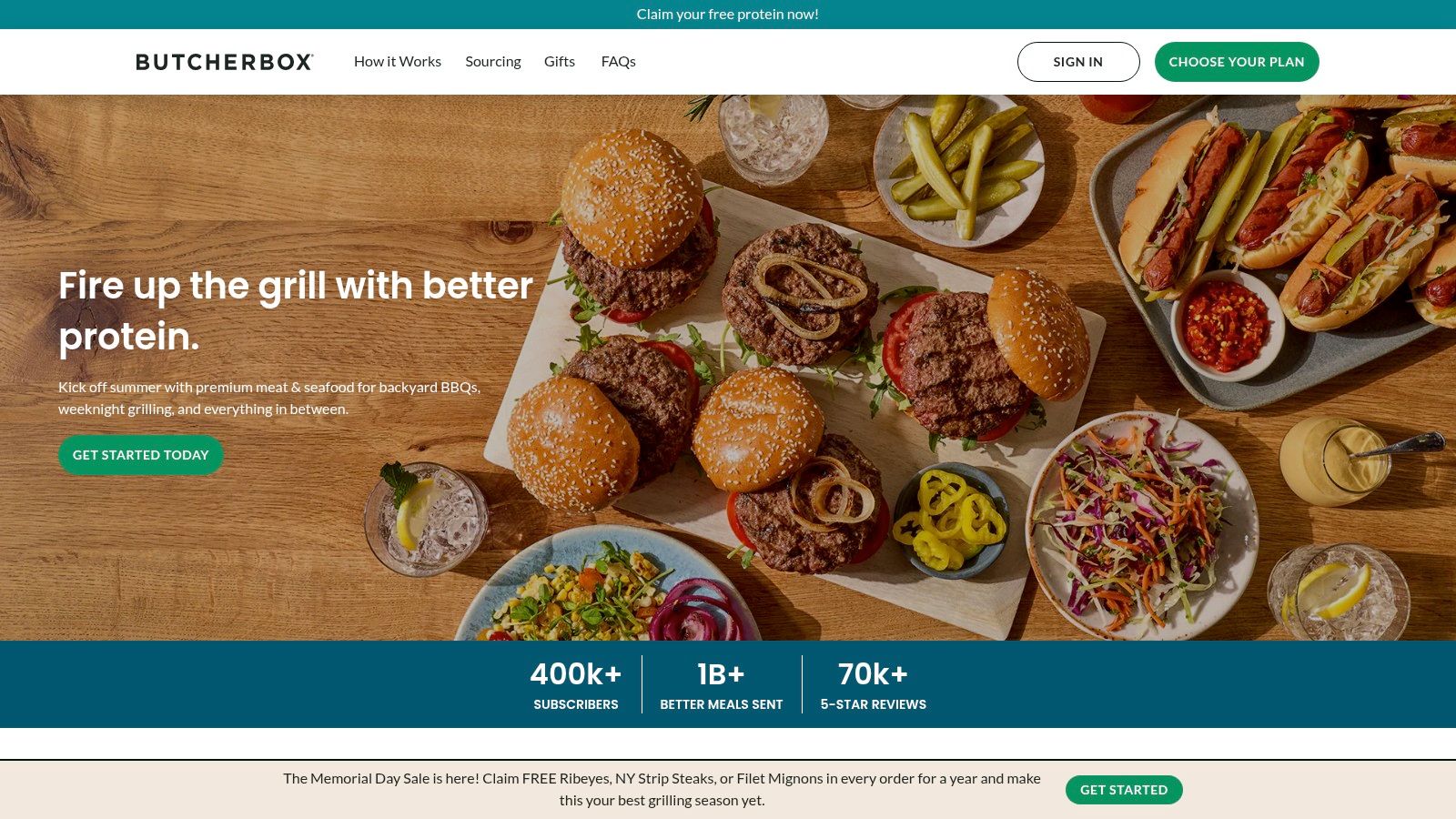
ButcherBox is one of the cleaner examples of a physical-goods subscription that doesn't overwhelm the customer. It sells recurring meat and seafood boxes, but its strength lies in how it frames choice. Customers can pick from broader “Signature” style variety or narrower “Essentials” style options, then choose a delivery rhythm that feels manageable instead of aggressive.
That matters because food subscriptions fail when the box arrives before the freezer has room or after the customer's routine changed. ButcherBox reduces that friction with straightforward cadence options and a build-your-box approach that feels more like planning than gambling.
What Shopify merchants should copy
Two things stand out.
- Menu-based customization: Customers don't need to decode the plan. They can see the cuts, understand what's coming, and make decisions before checkout.
- Stable pricing logic: Per-box pricing creates predictability, even if it makes pound-for-pound comparison less obvious than a grocery run.
Practical rule: If your subscription includes variety, show the customer exactly where control begins and ends. “Curated” is appealing. “Unclear” is not.
For Shopify merchants, this is a strong model for consumables, frozen goods, pantry bundles, wellness kits, and giftable boxes. The lesson isn't just “sell a box.” It's to limit the number of meaningful choices so people feel in control without doing too much work.
A lot of merchants get this wrong by adding endless product permutations. That usually creates decision fatigue and more support tickets. A tighter menu with clear add-ons works better.
If you're building a boxed offer from scratch, this guide on how to start a subscription box business is a useful operational starting point.
2. BarkBox
BarkBox sells a monthly dog box, but what it's really selling is anticipation. The toys, treats, and chew are part of the product. The recurring theme is the retention engine.
That's the key difference between a commodity subscription and an experience subscription. BarkBox gives subscribers a reason to stay beyond basic replenishment. Each box feels collectible, seasonal, and shareable. For pet brands, that emotional layer matters because the buyer isn't only purchasing utility. They're buying enjoyment for themselves and their dog.
Why the model works
Themed merchandising gives BarkBox a natural excuse to refresh the experience every month. It also gives the brand a reason to communicate frequently without sounding repetitive. Product drops feel like events instead of reminders that another charge is coming.
The company also handles segmentation well. A tougher-chew variant recognizes that one subscriber's “perfect box” is another's destroyed toy in ten minutes.
The best curation subscriptions don't rely on surprise alone. They pair novelty with a clear fit signal.
For Shopify merchants, BarkBox is a good benchmark if you sell in categories where taste, personality, gifting, fandom, or household identity affect buying behavior. That includes pets, beauty, snacks, kids, stationery, and hobby products.
A few practical takeaways:
- Build around a narrative: Themes create memory. Generic monthly assortments don't.
- Segment for usage reality: Separate plans for heavy users, sensitive users, or premium users prevent mismatch.
- Show commitment value carefully: If long-term savings exist, surface them clearly before checkout. Hiding the best economics too late in the funnel can create hesitation.
This model works best when the customer wants discovery and delight. It works less well when they only want a basic refill at the lowest effort level.
3. Scentbird
Scentbird is a strong example of discovery-based subscription done with a simple promise. Instead of forcing customers into a full-bottle fragrance purchase, it offers a monthly travel-size spray from a large scent library. That changes the risk calculation immediately. The subscriber isn't deciding whether a perfume deserves permanent shelf space. They're deciding whether they want to explore.
That framing is useful because a lot of companies with subscription models make the mistake of asking for too much commitment too early. Scentbird lowers the emotional and financial friction by turning the offer into guided experimentation.
The tactic behind the appeal
Queue planning does a lot of work here. Customers can line up what they want next, which creates a sense of control while preserving the recurring habit. Premium scent surcharges add monetization flexibility without breaking the core model.
The reusable atomizer case is also smart. It gives the shipment a durable system, not just a disposable sample feel. That small design choice reinforces continuity from one month to the next.
For Shopify merchants, Scentbird is relevant far beyond fragrance. The same model can work for coffee, skincare, supplements, makeup shades, niche snacks, stationery, fishing gear, or any category where discovery drives repeat purchase.
- Lead with low-risk trial value: A smaller recurring unit can outperform a big commitment.
- Use queues, not just shipments: Let customers feel they're shaping the next order.
- Reserve premium upgrades for true standouts: Optional surcharges work when the base offer already feels complete.
If you're comparing formats, this breakdown of ecommerce subscription models is useful because it helps merchants choose between replenishment, curation, membership, and hybrid approaches.
The trade-off is margin clarity. Once premium picks enter the mix, customer value can feel less predictable. That's manageable, but only if the merchandising stays transparent.
4. Billie
Billie is a good example of a replenishment subscription built around a product with a clear replacement cycle. Customers do not need education on why blades need refills. They need a setup that gets the timing right, keeps pricing understandable, and makes account changes easy.
That sounds simple, but a lot of Shopify brands get this wrong. They add too many variants, hide subscription controls, or force customers into a cadence that does not match real usage. Billie avoids much of that by keeping the core offer focused. Buy the starter kit. Get refill blades on a recurring schedule. Manage it without friction.
Why the model holds up
The strength of Billie's model is operational discipline. The subscription is tied to a practical household routine, so the brand can focus on retention details instead of inventing novelty. That means the core work happens after signup. Frequency options need to be flexible, skips need to be easy, and the customer should never feel trapped in a shipment they did not want.
This is the lesson Shopify merchants should take from Billie. Replenishment performs best when the subscription feels like a service layer on top of a product people already use consistently.
A strong setup usually includes three parts:
- One clear refill anchor: Start with the product customers are most likely to reorder on schedule.
- Visible self-management: Let subscribers change cadence, pause, skip, or cancel from the customer portal without support tickets.
- A starter-to-refill path that makes sense: The first purchase should naturally lead into the recurring order, not force it.
If I were applying this model on Shopify, I would keep the assortment narrow at launch and spend more time on post-purchase flexibility than on front-end merchandising. Tools like SelfServe are useful here because they help merchants give customers direct control over timing and subscription changes, which is often where retention is won or lost.
The trade-off is limited expansion room. A focused refill program is easier to run and easier to understand, but it can also cap average order value if adjacent products are weak or irrelevant. Billie works because it stays disciplined. For merchants selling consumables, that is often the better bet.
5. quip
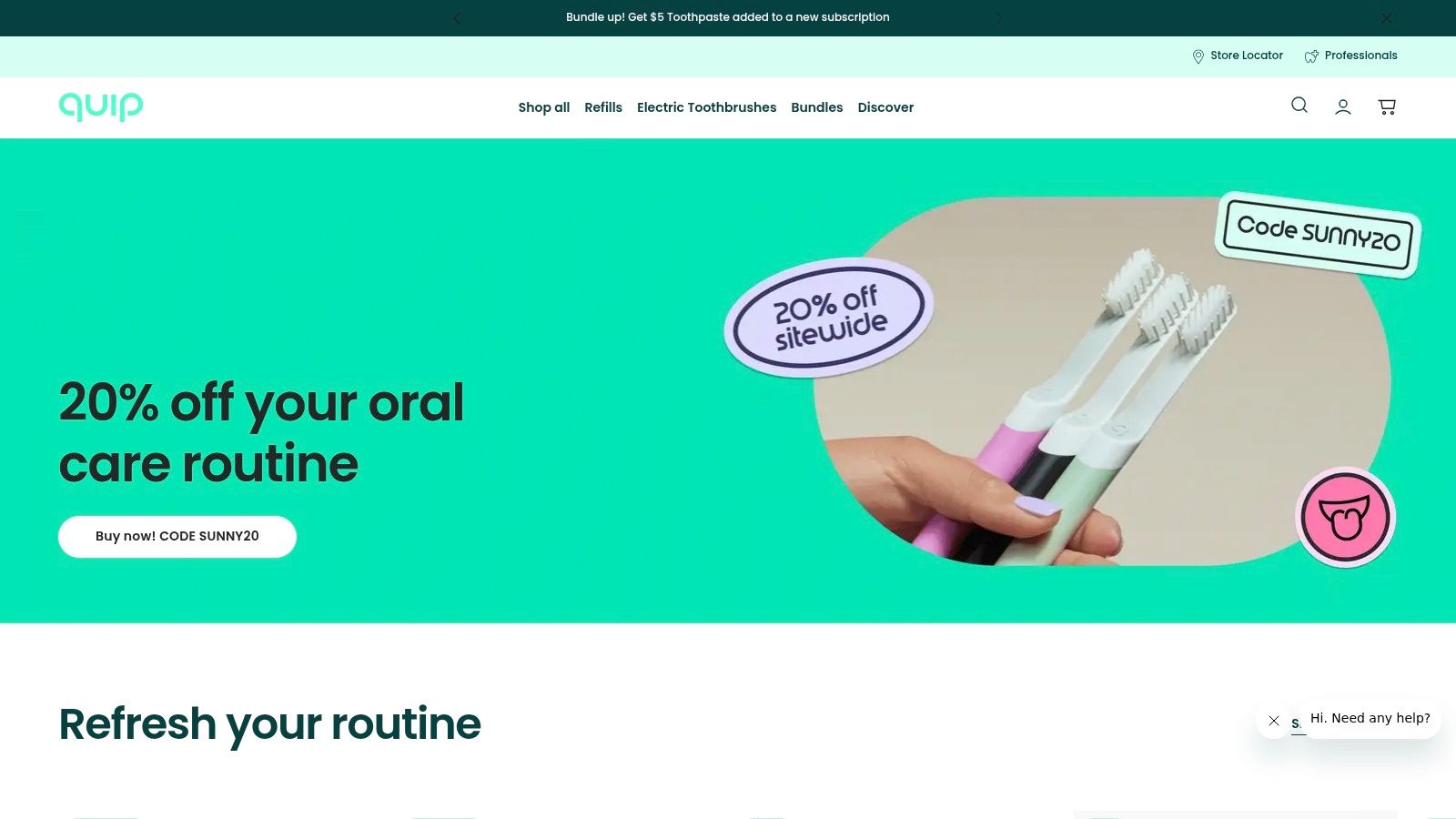
quip is a smart subscription business because it attaches recurring shipments to a real-world habit customers already recognize. Brush heads need replacing. Toothpaste runs out. Floss gets used. The subscription doesn't need to manufacture a new behavior. It reinforces one that dentists and consumers already accept.
That makes quip different from a novelty box. This isn't about surprise. It's about habit reinforcement and convenience, with a bit of accountability built in.
The retention layer most brands miss
quip adds loyalty mechanics on top of refill behavior. That's a stronger move than relying on recurring shipments alone because it gives the customer another reason to stay in the ecosystem. Refill activity becomes tied to perks, which deepens the relationship beyond the physical product.
Amazon Prime offers a broader benchmark for this idea. A case study summary notes that Prime launched in 2005 as a free-shipping program and evolved into a multi-service subscription spanning streaming video, music, e-books, and more. The lesson isn't that every brand should build a media empire. It's that bundled value can make a subscription harder to leave.
For Shopify merchants, quip's model is useful if your products connect to routine, maintenance, or health-related cadence.
- Anchor the cadence to an accepted replacement rhythm: That makes the schedule feel legitimate.
- Layer in rewards that reinforce continuity: Loyalty should reward staying active, not just spending more.
- Bundle adjacent refills carefully: Add-ons should support the core habit, not distract from it.
The risk is price comparison. Any refill subscription gets pressure from lower-cost alternatives. Brands overcome that by making the experience easier, more coherent, and more trustworthy than the generic option.
6. Thrive Market
What if the subscription is not the box, but the buying advantage?
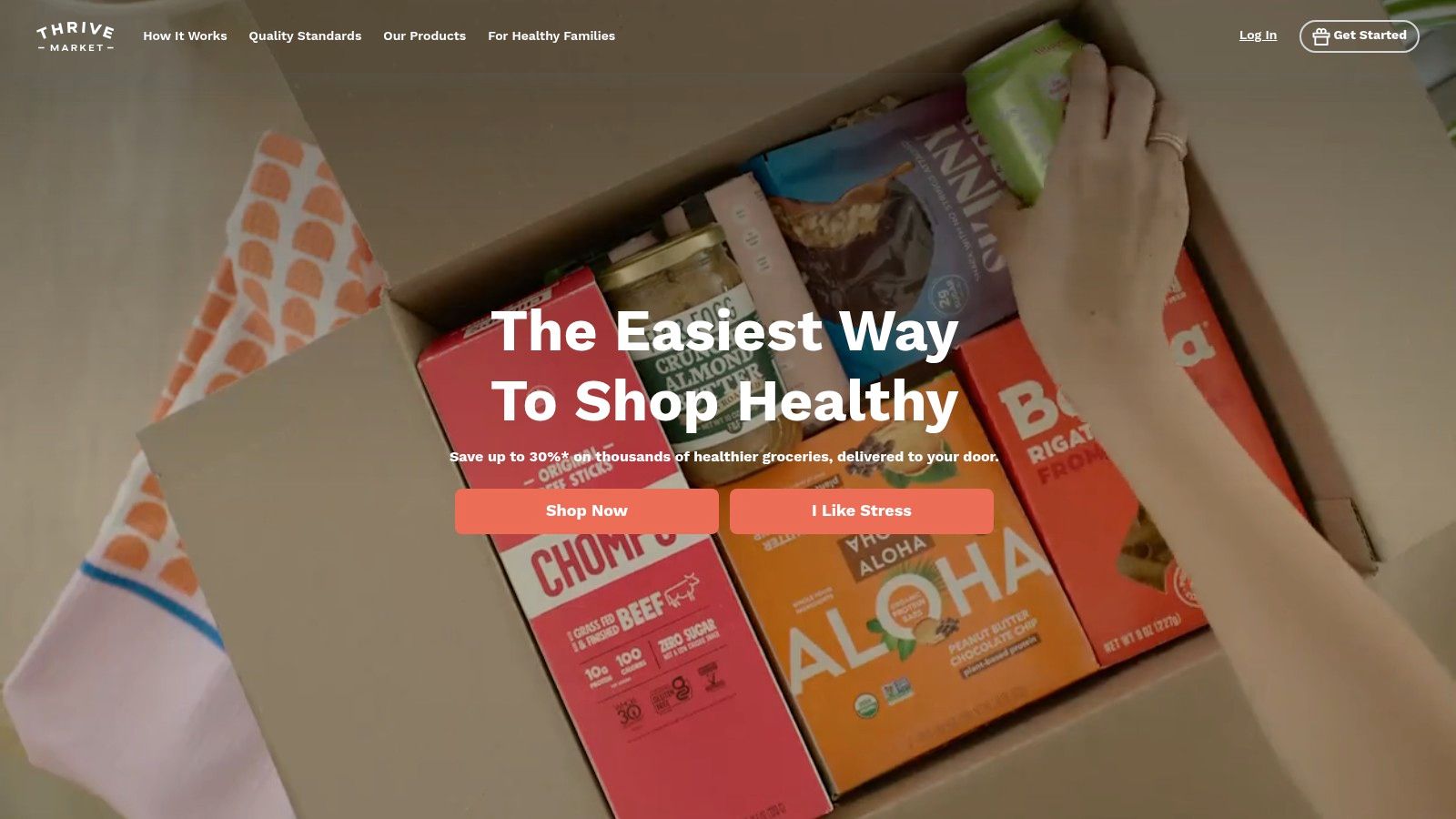
Thrive Market runs on that idea. Customers pay for membership, then use that membership to shop a large catalog at better prices. For Shopify merchants, that matters because the recurring revenue comes from access, while the order value comes from flexible, customer-built baskets.
That structure solves a common problem with traditional subscription boxes. Households do not need the same products in the same quantities every month. Thrive Market gives customers room to reorder when it makes sense, stock up when they want, and shop based on diet, budget, or family needs. The model feels less restrictive, which can reduce fatigue.
Why the model works
Access subscriptions work when the value is obvious each time someone logs in. The customer should quickly see what they get for paying the fee. Lower member pricing helps, but it is only part of the offer. Discovery, filtering, and reorder convenience do real retention work here too.
For a Shopify brand, this approach fits best when buying patterns vary across the catalog. A fixed cadence can create friction in that situation. A membership layer gives you another option. Instead of forcing every product into a monthly subscription, you can reward repeat customers with perks that make reordering easier.
Use this model if your store has:
- Enough assortment to support repeat discovery: Members need reasons to come back beyond one hero SKU.
- Clear merchandising paths: Filters by lifestyle, need state, or product type help customers build baskets fast.
- Benefits customers can use repeatedly: Member pricing, early access, exclusive bundles, or faster support all strengthen the case.
There is a real trade-off. Membership revenue looks attractive, but customers will question the fee if they do not use it often enough. That means the post-purchase experience matters as much as the sign-up page. Brands that win with this model make account management easy, surface relevant replenishment opportunities, and remove friction after checkout. A self-service customer portal helps support that by letting subscribers manage orders and details without opening a ticket.
The practical lesson is simple. If your catalog is broad and reorder timing is uneven, do not force a box model onto the business. Build a membership offer that improves the shopping experience, then support it with flexible post-purchase tools that keep the value visible.
7. SelfServe
SelfServe isn't a consumer subscription brand like the others on this list. It's the operational layer many subscription merchants need once order volume rises and support friction starts eating margin. That makes it one of the most practical tools here for Shopify teams.
A lot of subscription advice focuses on acquisition and offer design. The mess usually starts after checkout. Customers entered the wrong address, want a different size, need to swap a variant, want to add another item, or try to cancel because fixing the order seems harder than abandoning it. If your team handles all of that manually, subscription growth creates ticket growth.
Why this matters in subscription commerce
Ordway's guide to subscription business models emphasizes that recurring revenue only works when businesses manage the full lifecycle of acquisition, value delivery, and retention, and that subscription models are more resilient when companies continuously adapt products and services to customer needs, as explained in its subscription business model guide. That lines up with what operators see every day. The post-purchase experience is retention infrastructure.
SelfServe gives merchants a branded self-service portal on the Thank You page, Order Status page, and account area so customers can edit shipping details, update contact info, swap products, cancel within rules you control, or add items to an existing order. Real-time Shopify sync keeps inventory, payment changes, and shipping calculations aligned, while Google Maps address validation helps prevent bad deliveries before fulfillment catches fire.
What it does well in practice
The strongest part of SelfServe is the combination of customer autonomy and merchant controls.
- Rule-based permissions: You decide what can be edited, by whom, and within what window.
- Revenue recovery: Built-in upsell modules let customers add products during the edit flow instead of ending the interaction with a refund or cancellation.
- Operational guardrails: Automated tagging, approval queues for cancellations, payment collection or refunds, and activity logs reduce the manual back-and-forth.
The multilingual widget also matters for international stores. If your support team serves multiple markets, self-service in the shopper's language can remove a lot of preventable friction before it turns into tickets.
SelfServe also publishes concrete merchant outcomes. Its case studies cite examples including 102 order changes handled with zero support emails for F3 Gear Store, 91 tickets eliminated for Naked Cashmere, 2,234 upsell conversions generating $3,991 for Emma & Noah, and $17,308 in upsell revenue for Grooby Shop. The company also says merchants can cut support tickets by roughly 50%. Those examples are part of the product story, and they point to the same operational truth: when customers can fix orders themselves, the business keeps more revenue and the support team gets breathing room.
For teams evaluating self-service infrastructure, SelfServe's self-service customer portal overview is the best starting point.
The main drawback is pricing transparency. Public monthly tiers aren't listed, so merchants need to start a trial or talk to sales. Very custom themes or complex fulfillment setups may also need review. Still, for Shopify and Shopify Plus brands, this solves a problem most subscription stacks leave untouched.
7 Subscription Brands Comparison
| Product | Implementation Complexity 🔄 | Resource Requirements ⚡ | Expected Outcomes 📊 | Ideal Use Cases 💡 | Key Advantages ⭐ |
|---|---|---|---|---|---|
| ButcherBox | Moderate, requires supplier relationships, cold‑chain and cadence management | High, cold storage, predictable inventory, shipping logistics | Predictable recurring revenue and higher AOV; steady retention from quality | Premium meat subscription for customers valuing sourcing and customization | Clear box customization, transparent per‑box pricing, high‑quality sourcing |
| BarkBox (by BARK) | Low–Moderate, curated themes and SKU rotation each month | Moderate, sourcing toys/treats, themed packaging, monthly fulfillment | Strong retention via novelty and collectibility; subscription upgrades with multi‑month commits | Pet brands seeking engagement and retention through playful merchandising | Themed experiences, satisfaction guarantee, simple visible pricing |
| Scentbird | Low, simple fulfillment of travel vials and queue/catalog management | Low–Moderate, relationships with many brands, fulfillment of small units | Discovery-driven retention; variable margin due to premium surcharges | Fragrance discovery and try‑before‑you‑buy for niche/designer scents | Low‑friction discovery model and deep rotating catalog |
| Billie | Low, straightforward replenishment subscription and simple UX controls | Low, steady refill inventory, simple shipping, minimal SKUs | Predictable recurring revenue and low churn from transparent pricing | Replenishment CPG (razors/body‑care) for convenience‑seeking customers | Transparent pricing, easy subscription controls, strong product‑market fit |
| quip | Low–Moderate, subscription cadence tied to dental guidance and loyalty integration | Moderate, refill inventory, loyalty program operations, bundles | Long‑term retention via habit cadence; increased LTV with loyalty credits | Oral‑care replenishment where health cadence and loyalty matter | Dentist‑recommended cadence, loyalty credits, predictable refill timing |
| Thrive Market | Moderate, membership platform, pricing engine and personalized filters | High, large catalog management, member support, marketing spend | Membership revenue plus basket‑dependent savings; higher CLV for frequent buyers | Online membership grocery for health/lifestyle shoppers seeking savings | Wide assortment, member‑only pricing, explicit savings guarantees |
| SelfServe | Low–Moderate, Shopify app install with rule configuration; enterprise options may add complexity | Low (SaaS), integration, setup & higher‑tier integration resources for enterprise | Reduce support tickets, recover revenue via upsells, measurable lift in AOV | Shopify merchants needing order‑edit automation, high‑volume or Plus stores | Order‑edit self‑service, automated upsells, granular rules and proven case studies ⭐ |
Your Roadmap to a Profitable Subscription Model
What makes a subscription model profitable after the launch hype fades?
It is rarely the billing cadence by itself. The brands in this list work because they reduce a specific kind of customer friction and keep proving their value after the first order. ButcherBox makes choice manageable. BarkBox turns delivery into anticipation. Scentbird keeps commitment low while discovery stays high. Billie and quip fit into routines people already have. Thrive Market gives members a clear reason to come back because the savings and assortment keep paying off.
That distinction matters for Shopify merchants. A recurring charge does not create retention. A repeatable customer experience does.
Blue Apron is a useful reference point here. A case study summary says the company reached over 1 million subscribers by 2015 after launching in 2012, helped by weekly meal choice and preference-based fulfillment that gave customers more control without making the service harder to use. That is the pattern worth copying. Keep the offer structured, but leave enough room for customers to adjust it.
Strong subscription businesses also create second-order growth channels around retention. That is one reason affiliate interest in recurring revenue companies stays high, especially among SaaS recurring commission programs built around products with long customer lifecycles.
The practical question is straightforward. What is the customer agreeing to continue, and how easy is it to manage when life changes? Frequency edits, product swaps, address updates, skip options, and cancellation rules all shape retention. If those actions require a support ticket every time, margin drops and churn rises. If customers can handle them on their own within clear guardrails, the subscription feels flexible instead of restrictive.
Subscription is also not the right model for every catalog. Elastic Path explains in its commerce subscriptions analysis that recurring revenue now shows up across retail, automotive, and industrial services, but the structure has to match the product. High-frequency replenishment works differently from paid access. Curated discovery works differently from commodity refill. Merchants usually get better results when they start with the job the customer wants done, then choose the subscription structure that supports it.
Start smaller than you think.
Pick one repeat purchase behavior. Make the next order easier to keep than to cancel. Then add flexibility where customers need it, not where the team assumes they do.
If your Shopify store is growing and post-purchase changes are turning into support drag, SelfServe is worth a close look. It gives customers a branded way to edit orders, update addresses, swap products, cancel within your rules, and add items after checkout, while your team keeps control over windows, permissions, and approvals. For subscription merchants, that makes support load lighter and retention easier to protect.