10 Cross Sell Strategies to Boost Ecommerce Revenue
Cross-selling can account for 10% to 30% of eCommerce revenue in businesses that execute it well, according to industry research summarized by OpenSend. That's not a rounding error. For a merchant with meaningful volume, it can represent a material slice of top-line revenue without adding more acquisition spend.
Too many brands still treat cross sell strategies as a minor merchandising tactic. They focus on paid media, landing pages, and conversion rate, then leave easy expansion revenue untouched after the customer has already decided to buy. That's backwards. The customer who just purchased has already cleared the hardest hurdle: trust.
Good cross-selling isn't about cramming random add-ons into the cart. It works when the offer feels useful, timely, and tightly connected to the original purchase. A lens coating after frames. A care kit after leather boots. A refill plan after a consumable product. The best offers reduce future friction for the customer while increasing order value for the merchant.
That's why post-purchase matters so much. Thank You pages and Order Status pages are often ignored, even though they sit inside a high-intent window where shoppers are still engaged with the order. For Shopify brands, tools like SelfServe make those surfaces operationally practical, not just theoretically attractive. You can pair upsells with order editing, address validation, and fulfillment controls instead of bolting on a disconnected offer.
Below are ten cross sell strategies that work in ecommerce, with a heavy focus on what most stores miss after checkout.
1. Post-Purchase Upsell on Thank You Pages
The Thank You page is one of the cleanest places to cross-sell because the primary purchase is already complete. You're no longer competing with checkout anxiety. You're presenting a helpful next item to someone who just told you exactly what they want.
Relevance matters more than creativity. If a customer buys frames, offer lens coatings. If they buy skincare, offer the matching moisturizer or travel-size companion product. Amazon has trained shoppers to expect “frequently bought together” logic, and Shopify brands can apply the same principle with a tighter brand experience using post-purchase upsell flows for Shopify.
What works on the Thank You page
Keep the page focused. Most stores hurt performance by showing too many products, too many messages, or too much discount language at once.
- Limit the choice set: Show a small number of highly compatible offers so the customer doesn't have to browse again.
- Tie the item to the original purchase: Sephora-style shade matching or accessory matching works because it feels like service, not selling.
- Use the existing order context: A SelfServe flow can let shoppers review the order, update details if needed, and add a curated item in the same post-purchase session.
Practical rule: If the offer needs a long explanation, it probably isn't a good Thank You page cross-sell.
High-margin accessories often do well here, but margin alone shouldn't drive selection. The strongest Thank You page offers solve a near-term need. A warranty after electronics. Filters after an appliance. A refill pouch after a starter kit.
Track this separately from core storefront conversion. If you lump post-purchase results into your main checkout reporting, you won't know which pairings are doing the work.
2. Order Status Page Upsells
Most merchants underuse the Order Status page even though customers revisit it during the fulfillment window. That repeat attention is valuable. Unlike the Thank You page, this isn't a single glance. It's an owned touchpoint customers often check multiple times.
That changes how you should merchandise it. The best Order Status page offers aren't urgent impulse buys. They're practical follow-ons that become more relevant as delivery approaches. Best Buy-style accessories, REI-style maintenance products, or beauty items that complete a routine are all strong fits.
Why this page behaves differently
The shopper is in monitoring mode, not checkout mode. They care about timing, delivery confidence, and what happens next. Cross-sells perform better when they fit that mindset.
A strong setup with SelfServe is to combine order tracking with useful actions. Let the shopper confirm address accuracy, review order details, and then see a complementary product module that feels connected to the order experience rather than pasted on top of it.
A useful framing is simple:
- Offer products that support immediate use: Shoe care with footwear, cables with electronics, supplements that pair with an initial wellness product.
- Match fulfillment reality: Promote items you can ship quickly or add cleanly to the customer journey.
- Keep copy operational: “Add before your order locks” is stronger than generic promotional language when the shopper is already thinking about fulfillment.
Customers are more receptive when the offer appears inside a task they already initiated, like checking shipment progress or confirming an address.
That's one reason post-purchase cross-sells often work better when tied to customer-initiated moments. Current guidance around cross-selling emphasizes relevance and avoiding pushiness, and the underused service-recovery window after purchase is especially useful when the offer solves a real need rather than interrupting the experience, as noted in Squarespace's overview of cross-selling strategies.
3. Intelligent Product Bundling and Kits
Some products shouldn't be sold one by one. They should be sold as a complete solution. That's where bundling earns its place in a cross-sell program.
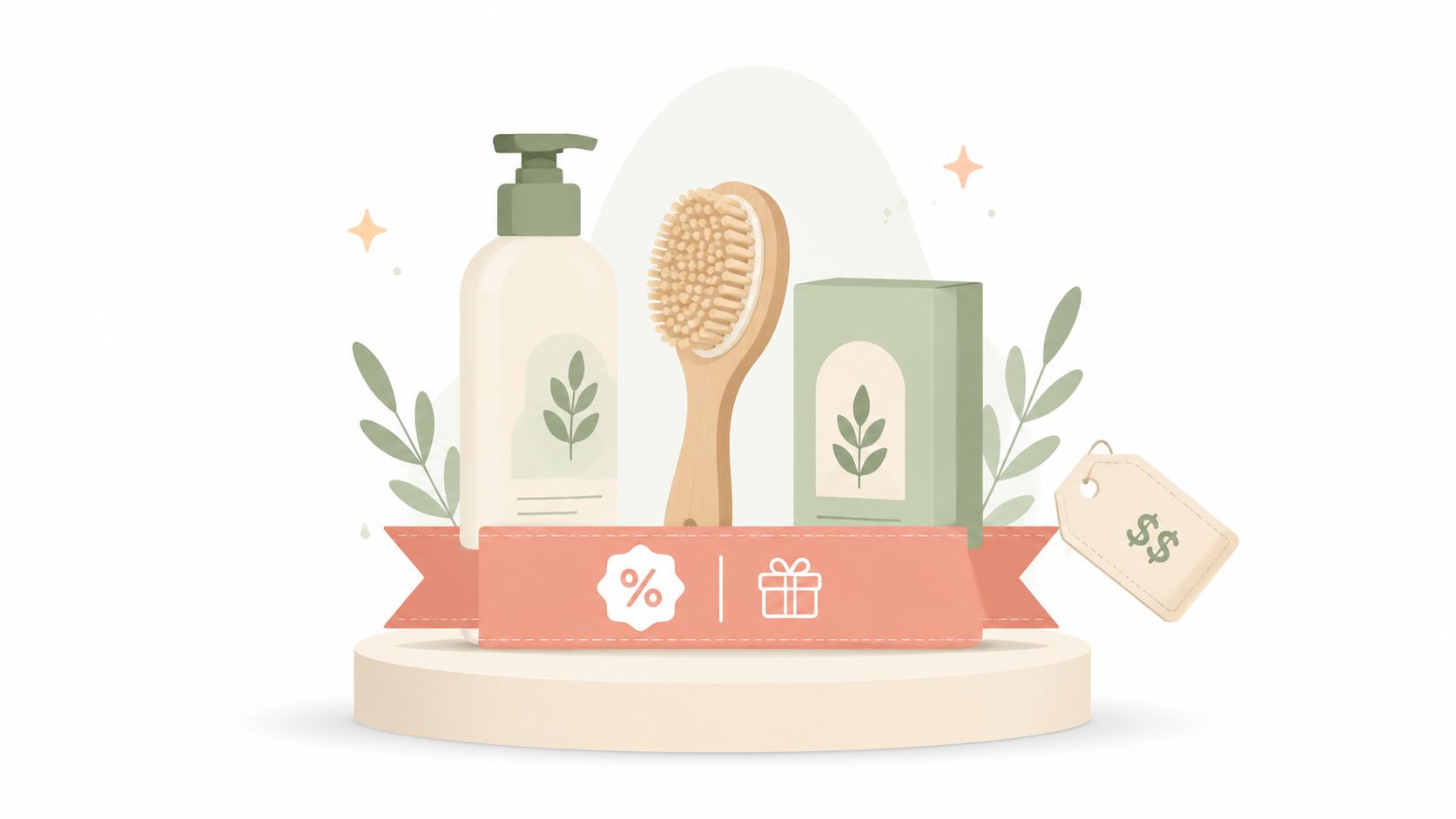
Sephora's routine-based sets are a good example. The customer doesn't want “a serum and maybe something else.” They want a regimen that makes sense together. Apple has built an ecosystem on the same instinct. The bundle tells the customer, “This combination works.”
Build bundles around problems, not SKUs
Bad bundles are inventory bundles. Good bundles are customer-need bundles.
A shaving kit, travel skincare kit, or home office starter pack works because it removes decision friction. The customer doesn't have to assemble the answer manually. That convenience is the product.
Merchants usually get better results when they build bundles around a few clear patterns:
- Routine bundles: Primer plus foundation, cleanser plus moisturizer, razor plus cream.
- Setup bundles: Device plus charger plus case, camera plus memory card.
- Recovery bundles: Product plus refill plus care item, especially for categories where usage extends beyond day one.
SelfServe is useful here because you can test bundles after checkout as well, not only before it. That matters when a shopper buys the hero SKU first and only then realizes they also need the surrounding products. You can also use product restrictions so the bundle logic doesn't cannibalize items you'd rather keep separate.
The best bundle programs also help inventory discipline. Pairing a bestseller with a slower-moving but useful companion can increase basket depth without making the offer feel forced.
4. Personalized Recommendations and Video or Live Shopping
Personalization gets overhyped when merchants jump straight to complex automation. In practice, the best cross-sell recommendation engines usually start with simple rules that are obviously useful.
If someone buys running shoes, recommend socks, insoles, or weather-specific gear. If someone buys a foundation shade, recommend the matching concealer family. That's still personalization. It's just understandable, controllable personalization.
For stores that want to go deeper, customer-data activation matters. DinMo recommends enriching the customer database with product recommendations, segmenting audiences, and sending those audiences into execution tools through Reverse ETL in its cross-selling data activation guide. That setup is especially helpful when recommendation timing should reflect purchase journey, engagement, or satisfaction signals rather than static product affinity.
Where video fits
Video and live shopping can make recommendations feel more confident and more human. Uniqlo-style live sessions, Sephora-style virtual try-on logic, or short product demos can work well when the item benefits from demonstration.
The mistake is forcing high-production content where a clear recommendation card would do the job faster. Video is best when it clarifies usage, fit, or compatibility.
A practical rollout often looks like this:
- Start with rule-based logic: Build pairings from category, product type, and prior orders before chasing machine learning.
- Use richer recommendation systems when your catalog justifies it: A product recommendation engine for Shopify can help centralize that logic.
- Reserve video for products that need explanation: Cosmetics, apparel styling, electronics accessories, and technical add-ons often benefit most.
Personalization fails when the algorithm is clever but the pairing is wrong.
If the recommendation surprises the customer in a bad way, it doesn't matter how advanced the system is. Relevance still wins.
5. Subscription and Replenishment Upsells
If you sell consumables, one of the strongest cross sell strategies is turning a one-time order into a repeat purchase system. Not every product should become a subscription, but the right products should make replenishment easy.
Think about razor blades, supplements, pet products, skincare refills, coffee, or household staples. The customer already told you they want the product. Your job is to remove the need to remember buying it again.
Use repurchase logic, not wishful thinking
Merchants get into trouble when they push subscriptions on products that don't have a natural replenishment rhythm. Customers see through that immediately. A solid subscription upsell should feel like convenience.
You can present that offer on post-purchase pages, in lifecycle email, or through the customer account area. SelfServe is especially useful when the post-purchase flow includes order modification and ongoing account management, which lowers friction for customers who want control rather than lock-in. For brands exploring this model, this guide to building an ecommerce subscription business is a practical starting point.
There's also a merchandising lesson here from larger marketplaces. Amazon Subscribe & Save deals work because the value proposition is immediate and familiar: convenience plus recurring benefit.
A few principles help:
- Lead with convenience: “Never run out” is stronger than “join our subscription program.”
- Set expectations clearly: Let customers manage frequency, skips, and pauses without contacting support.
- Offer the upgrade after trust is established: Post-purchase is often better than pre-purchase for first-time shoppers who aren't ready for commitment.
If cancellation feels hard, adoption will stall. Flexible control is part of the offer.
6. Service and Protection Plan Upsells
Protection plans are one of the cleanest examples of a high-fit cross-sell. The shopper just bought something they care about. You're offering a way to protect it, maintain it, or reduce risk around ownership.
That works best in categories where replacement, repair, or performance anxiety is real. AppleCare+ is effective because it's attached to an expensive device customers intend to keep. Best Buy's protection plans work for similar reasons. The emotional trigger isn't excitement. It's reassurance.
Keep the pitch grounded
Protection offers fail when the copy sounds abstract or legalistic. Customers don't care about plan architecture. They care about what happens if the product breaks, gets damaged, or stops performing as expected.
The most effective positioning is usually plain language:
- Protect the purchase: Explain what's covered in everyday terms.
- Reduce post-purchase anxiety: Tell customers how claims or support work.
- Present it while ownership is top of mind: Thank You pages are usually stronger than burying the offer later.
A common mistake is offering a protection plan on low-risk, low-consideration products where the upsell feels disproportionate. Another is suggesting a plan that's too expensive relative to the item. Cross-sells work best when the add-on feels like a natural extension of the original decision, not a second major buying process. That aligns with Leadfeeder's broader advice that cross-selling to existing customers is more successful than selling to new prospects, and that price increases should stay modest, as explained in its cross-selling and upselling tactics guide.
When in doubt, sell peace of mind, not policy complexity.
7. Complementary Category Cross-Selling
Some of the best cross-sell opportunities sit across category lines, not within them. A customer buying a dress may need shoes, jewelry, or a handbag. A customer buying hiking boots may need socks, insoles, or care products. The key is that the second item completes the first.
Nordstrom and REI both do this well because they think in use cases. They don't just recommend adjacent products. They recommend what the customer is likely to need to wear, use, maintain, or enjoy the original purchase.
How to map cross-category pairings
Start with your catalog, but don't stop there. Returns, support tickets, and product reviews often reveal which products belong together from the customer's point of view.
Useful pairings tend to fall into a few groups:
- Completion items: Belts with trousers, side tables with sofas, cables with devices.
- Care items: Leather conditioner, wash bags, cleaning tools.
- Use-case extensions: Gym bag with activewear, travel pouch with skincare, desk lamp with office furniture.
The trap is forcing too much aspiration into the recommendation. “Complete the look” works in fashion because the customer expects styling help. In other categories, overly styled pairings can feel disconnected from function.
SelfServe can make these recommendations practical after checkout because you can filter what appears and avoid promoting products that create inventory or fulfillment headaches. That matters for high-volume stores. The best cross-category cross-sells aren't just relevant. They're operationally easy to fulfill.
8. Gift Messaging and Gift Wrap Upsells
Gift services are one of the simplest ways to add incremental revenue without changing the core product. They also improve the customer experience when the buyer isn't the end recipient.
This works especially well during holidays, life events, and categories where presentation matters. Etsy sellers have long understood this. So have premium brands that treat packaging as part of the value, not just a shipping necessity.

Make the add-on visual
Gift wrap is hard to sell with plain text. Customers want to see what they're paying for. A mockup, sample photo, or packaging preview usually does more than a paragraph of copy.
Operationally, this is also one of the easier upsells to deploy because it doesn't require deep product logic. The offer can be triggered by season, product type, shipping behavior, or simple customer intent signals like sending to a different address.
A good gift-service cross-sell usually includes:
- A clear presentation image: Show the box, card, ribbon, or wrap style.
- A simple selection path: Message only, gift wrap only, or a combined package.
- Language that focuses on the recipient experience: Unboxing matters more than the packaging spec sheet.
A gift add-on works best when it removes one more task from the customer's list.
That's why it performs well post-purchase too. If someone realizes after checkout that the item is going directly to a recipient, a Thank You page or post-purchase portal is a natural place to offer gift messaging before fulfillment proceeds.
9. Loyalty Program and VIP Tier Upsells
Loyalty isn't only a retention strategy. It can also be a cross-sell. When you invite a shopper into a membership or VIP tier, you're selling a broader relationship with your store.
Amazon Prime, Sephora's tiered rewards, and Costco's membership model all make the same basic move. They turn repeat purchase behavior into a structured value exchange. The customer gets benefits. The merchant gets higher repeat engagement and more opportunities to cross-sell over time.
Sell the program through the next benefit
Loyalty offers flop when the pitch is too abstract. “Join our rewards program” is weak. “Enjoy free shipping, earlier access, and richer rewards on your next order” is much clearer.
These offers often work best after the first purchase, when the shopper already understands your brand and has a reason to believe future orders are likely. Thank You pages and Order Status pages are both strong surfaces for that invitation because they sit in an active customer moment.
A few practical rules help:
- Keep the first tier compelling: The customer should understand the near-term payoff immediately.
- Show the path forward: Explain how future purchases get better, not just how points accumulate.
- Make status visible: If the customer joins, show benefits in the account or post-purchase portal so the membership feels real.
This is also where cross-selling becomes ecosystem design. Once the customer identifies as a member, it gets easier to recommend adjacent products, exclusives, bundles, and replenishment items without starting from zero each time.
10. Strategic Affiliate and Influencer Cross-Promotion
Not all cross-sells have to happen on your own site. Sometimes the most effective recommendation comes from a trusted creator, niche publisher, or affiliate partner whose audience already overlaps with your customers.
Beauty, wellness, apparel, and lifestyle brands use this constantly. A creator doesn't just promote a hero product. They show the routine around it. That routine is the cross-sell.
Focus on fit, not reach
Merchants often choose affiliates based on audience size, then wonder why conversions are shallow. A smaller partner with strong category credibility usually produces better cross-sell behavior than a broad partner with weak alignment.
The strongest programs give creators enough structure to sell combinations well:
- Provide pairings, not single products: Help affiliates recommend a kit, routine, or setup.
- Give them a landing experience that matches the content: Don't send bundle traffic to a generic collection page.
- Track value quality: The goal isn't just more orders. It's better baskets and stronger repeat potential.
This approach also works well for post-purchase email and loyalty environments. If a customer already bought from you, a creator-led recommendation can feel like guidance rather than advertising, especially when it introduces a complementary item they may not have noticed on their first order.
The trade-off is margin control. Affiliate economics can get messy if you're paying commissions on items customers might have bought anyway. Keep the program focused on genuinely incremental pairings and audience segments where outside trust adds value.
10 Cross-Sell Strategies Compared
| Strategy | 🔄 Implementation complexity | ⚡ Resource requirements | ⭐ Expected effectiveness/quality | 📊 Expected outcomes/impact | 💡 Ideal use cases & key advantage |
|---|---|---|---|---|---|
| Post-Purchase Upsell on Thank You Pages | Low–Medium, checkout integration and simple UI | Low, small dev/design effort; inventory sync | ⭐⭐⭐ High (10–30% uplift typical) | Immediate incremental revenue; high conversion; low CAC | Best for small high-margin add-ons; fast revenue with low friction |
| Order Status Page Upsells | Low, widget/timing logic on tracking pages | Low, minimal dev; timing and inventory checks | ⭐⭐ Moderate | Multiple touchpoints yield steady conversions; lower CAC | Good for accessories or last-minute add-ons that benefit from repeat visits |
| Intelligent Product Bundling & Kits | Medium, curation, pricing, bundle logic | Medium, merchandising, analytics, inventory rules | ⭐⭐⭐ High | Raises AOV ~20–40%; simplifies purchase decisions | Ideal for solution-focused offers, seasonal sets, and SKU-turn improvement |
| Personalized Recommendations & Video/Live Shopping | High, ML models + live/video production/integration | High, data engineering, content production, ops | ⭐⭐⭐⭐ Very high (when data+production quality exist) | Increased engagement; LTV +15–30%; best long-term ROI | Best for data-rich catalogs, premium brands, and high-engagement campaigns |
| Subscription & Replenishment Upsells | Medium, subscription billing and cadence logic | Medium, reliable fulfillment, subscription management | ⭐⭐⭐ High | Predictable recurring revenue; 3–5x LTV; improved forecasting | Optimal for consumables and repeat-purchase categories |
| Service & Protection Plan Upsells | Low–Medium, UI + partner/legal integration | Low, digital service delivery; claims ops | ⭐⭐⭐ High (very high margin) | High-margin uplift; increases purchase confidence; potential recurring revenue | Fits electronics/high-ticket items where risk mitigation sells well |
| Complementary Category Cross-Selling | Low, category mapping and simple rules | Low–Medium, merchandising and catalog mapping | ⭐⭐⭐ Moderate–High | Boosts AOV; feels organic; can reduce returns | Works well for fashion, home, and multi-category catalogs to “complete the look” |
| Gift Messaging & Gift Wrap Upsells | Low, simple add-on UI and fulfillment steps | Low, packaging materials and fulfillment adjustments | ⭐⭐⭐ High for gift purchases | High margin; strong conversion for gifts; enhances brand perception | Best for holidays, gift purchases, and premium presentation moments |
| Loyalty Program & VIP Tier Upsells | Medium–High, membership infrastructure and benefit tracking | Medium, benefit costs, program management | ⭐⭐⭐ High | Recurring membership revenue; members 3–5x LTV; improved retention | Suited to brands with repeat buyers and ability to deliver ongoing benefits |
| Strategic Affiliate & Influencer Cross-Promotion | Medium, partner/onboarding and attribution setup | Low–Medium, commission costs and relationship mgmt | ⭐⭐ Moderate | Extends reach with performance-based spend; variable ROI | Useful for customer acquisition, niche audiences, and authentic endorsements |
Start Your Cross-Sell Strategy Today
The strongest cross sell strategies don't feel like extra selling. They feel like better merchandising, better service, and better timing. That's the difference between a store that throws random add-ons at shoppers and a store that consistently increases order value without hurting trust.
For most merchants, relevance matters more than aggression. A great cross-sell answers a practical question the customer is about to have anyway. What goes with this? How do I use it? How do I protect it? What will I need next month? When you answer those questions well, the revenue follows.
That's also why existing customers matter so much. Selling again to someone who already bought from you is fundamentally easier than persuading a stranger to trust you for the first time. Modern cross-sell execution has evolved around that reality. It's less about generic “you may also like” widgets and more about pairing data, timing, segmentation, and customer context.
If you want to run this with discipline, measure more than revenue. Simon Data recommends tracking attachment rate on initial purchases, time to complementary purchase, and complete solution adoption rate in its overview of top cross-selling strategies. Those metrics tell you whether customers are expanding the basket immediately, coming back later for the logical add-on, or buying into a fuller product ecosystem over time. That's much more actionable than looking at blended sales lift and guessing.
In practice, not every strategy belongs in every store. Bundles are strong for curated categories. Protection plans fit higher-consideration purchases. Replenishment works for consumables. Loyalty tiers make sense when repeat behavior is already present. Influencer cross-promotion is best when a creator can credibly explain how products fit together.
But if you want the highest-impact starting point for a Shopify store, I'd begin after checkout. The Thank You page and Order Status page are too valuable to leave blank or treat as utility pages. They sit in a window where purchase intent is proven, customer attention is still active, and the next-best offer can feel helpful instead of disruptive.
That's where SelfServe stands out for merchants who care about both revenue and operations. Instead of treating post-purchase as a support problem only, it turns that same moment into a controlled experience. Customers can manage approved order changes, correct shipping details, and see curated upsell modules in the same flow. For high-volume stores, that combination matters. It reduces ticket pressure while opening a practical cross-sell channel that doesn't depend on buying more traffic.
You don't need all ten strategies live at once. Pick one that fits your catalog and your current maturity. For many Shopify brands, the fastest win is activating post-purchase offers first, learning which pairings customers want, and expanding from there.
SelfServe helps Shopify merchants turn post-purchase moments into revenue and operational wins. If you want to add curated upsells to Thank You and Order Status pages while giving customers controlled order editing, multilingual support, and real-time address validation, explore SelfServe.