Shipping to India: A Merchant's Complete Guide for 2026

A customer in Indore places an order, then emails support two hours later. The street name is right, but the locality is wrong. Your team updates the address in Shopify, the warehouse has already manifested the shipment, and the parcel moves anyway. It clears export, lands in India, hits a delivery exception, then starts a string of expensive decisions. Hold it, reship it, refund it, or argue with the customer.
That scenario is common enough that it should shape how you think about shipping to india from the start. The problem usually isn't a single dramatic customs failure. It's the accumulation of small operational misses. A loose HS code, an invoice mismatch, a weak carrier handoff, an address that looked fine to a US support rep but made no sense to a local last-mile driver.
India is worth the effort. It's a major destination with serious trade volume, multiple routing options, and customers who will buy cross-border if the experience feels predictable. But “predictable” doesn't happen by accident. It comes from getting four things right at once: documentation, carrier strategy, landed cost, and post-purchase control.
Most guides stop at checkout and label creation. That's where the actual work starts. If you want fewer support tickets, fewer failed deliveries, and better margins, you need a workflow that covers both the pre-shipment plan and the messy reality after the order is placed.
Navigating the Promise and Peril of the Indian Market
A common mistake is treating India like any other international shipping zone in your tech stack. That approach usually holds until orders start moving in volume, then small data problems turn into delivery exceptions, support backlog, and margin leakage.
The opportunity is real. India has the customer demand, port capacity, and carrier coverage to support serious cross-border growth. But growth into India is rarely limited by whether you can print a label. It is limited by whether your operation can stay accurate after the order is placed, after the parcel is manifested, and after the customer asks for a change.
That is the gap many teams miss. They plan the shipment, but they do not build for what happens next.
A parcel can be fully sellable and still fail for operational reasons. The consignee name may not line up cleanly with the paperwork. The product description may be too vague. The address may look complete to a support rep in the US but still confuse local delivery teams. By the time those issues show up, the problem is no longer a checkout problem. It is a post-purchase operations problem.
What makes India rewarding and difficult
India's shipping network gives merchants real routing flexibility across major gateways and regional delivery paths. That helps with market access, but it also creates more choices that need to be made correctly from the start. Gateway selection, brokerage quality, service level, and final-mile coverage all affect whether the shipment arrives on time and whether the customer experience stays under control.
Scale exposes weak process fast. A workflow that works at ten orders a week often breaks at one hundred because manual address checks, inbox-based support updates, and spreadsheet exception tracking do not keep pace with order volume.
The playbook that actually holds up
Teams that ship to India successfully usually share a few operating habits:
- Treat customs data like core catalog data: HS codes, declared values, and product descriptions should be maintained with the same discipline as SKUs and pricing.
- Choose carriers based on execution quality: Brokerage performance, exception handling, and last-mile visibility matter as much as the freight rate.
- Model margin beyond the label cost: Duties, surcharges, returns, reshipments, and support time all affect what the order is worth.
- Prepare for post-purchase intervention: Address fixes, contact updates, delivery coordination, and returns need a controlled workflow, not ad hoc support work.
Successful merchants understand that the most sensitive stage of the journey begins after the parcel leaves the warehouse. That is where address errors surface, customer expectations shift, and missed delivery attempts turn into refunds or lost revenue.
The practical fix is to connect pre-shipment planning with post-shipment control. That means setting up clean shipment data before dispatch, then giving your team tools to manage edits, exceptions, and recovery once the parcel is in motion. Platforms like SelfServe matter here because they reduce the manual work between support, ops, and the customer. That is often the difference between a recoverable exception and an expensive failed order.
Mastering Indian Customs and Documentation
Indian customs isn't hard because it's mysterious. It's hard because it punishes inconsistency.
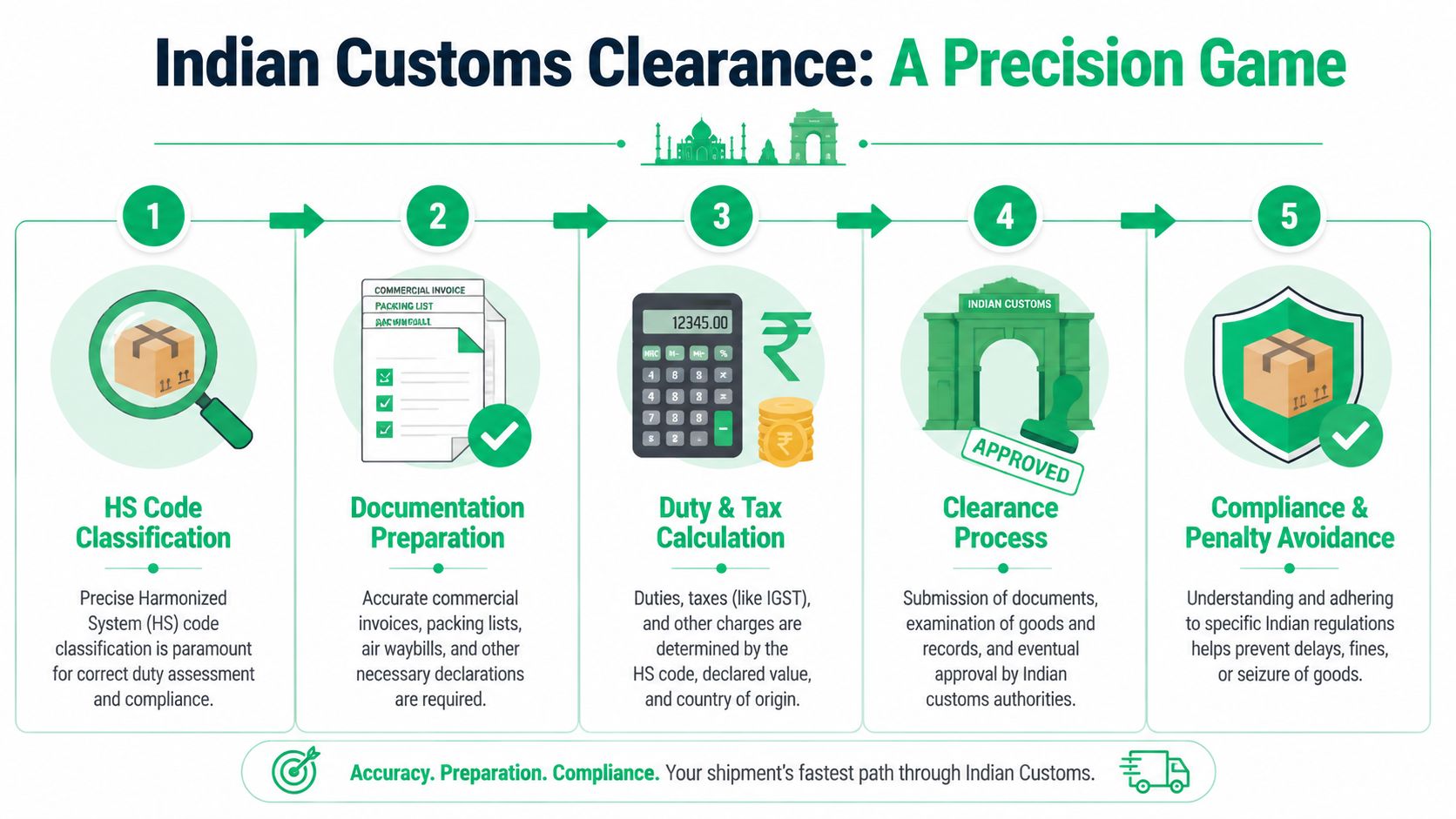
If your commercial invoice, product classification, and declared value don't align, the issue rarely stays small. One discrepancy can trigger review, inspection, and downstream delay. That's why teams that ship successfully into India treat customs documents like controlled operational records, not admin paperwork.
The non-negotiable documents
At minimum, your shipment file should be internally consistent across the core records your carrier or freight partner will use. That usually includes:
- Commercial invoice: Product description, value, seller details, buyer details, and country of origin need to match the rest of the shipment data.
- Packing list: Quantities, weights, and carton-level contents should support what customs sees if the shipment is opened.
- Transport document: Air waybill or bill of lading data must line up with consignee and shipment details.
- Classification details: Your HS code drives duty assessment and should reflect the actual item, not a broad shortcut category.
- Customer identification support: If your carrier asks for consignee KYC-related details, gather them cleanly and early.
Think of these as a digital passport for the parcel. Customs doesn't infer your intent. Officers and systems compare fields. If values, descriptions, or codes don't reconcile, your shipment starts losing time.
Why minor errors become expensive
In Indian freight forwarding, customs delays at major ports like JNPT and Chennai stem primarily from document discrepancies, mandatory inspections, and ICEGATE or EDI outages. The bigger warning is the rejection rate. Deccan Trans notes a 20-30% rejection rate for electronic filings due to mismatched HS codes or invoice variances, and those issues can trigger physical examinations that extend dwell times by 3-7 days on average in its guide to overcoming freight forwarding challenges in India.
That's the part many merchants underestimate. A filing issue isn't just a customs issue. It turns into a customer service issue, a planning issue, and often a profitability issue.
If the invoice says one thing, the HS code suggests another, and the parcel contents suggest a third, customs won't solve the puzzle for you. They'll stop the shipment.
A working standard for clean clearance
The best way to manage customs is to remove ambiguity before label creation. I'd use a standard like this:
Lock classification at the SKU level
Don't let teams choose HS codes manually for every order. Create approved mappings by SKU and review edge cases centrally.Write product descriptions for customs, not marketing
“Premium wellness essential” is useless. “Stainless steel water bottle” is clear. Specific beats branded language.Validate invoice math before dispatch
Unit value, total value, currency, and discounts need to reconcile. Small invoice variances can create outsized problems.Create exception rules for risky orders
High-value orders, mixed-SKU bundles, and items with more scrutiny should get manual review before manifest.Keep document ownership clear
One team should own the final shipment file. Shared ownership usually means no ownership.
What works and what doesn't
Here's what consistently works:
- Pre-clearance checks inside your order workflow
- Approved HS code libraries
- Consistent commercial invoice templates
- Early customer outreach when KYC or consignee details look incomplete
What doesn't work:
- Generic product titles copied from the storefront
- Support teams editing values ad hoc
- Relying on the carrier to “fix it at customs”
- Treating customs holds as random bad luck
The merchants with the fewest India delays usually aren't lucky. They're disciplined. They assume the filing will be scrutinized and build the order workflow accordingly.
Choosing Your Carrier and Understanding Transit Times
A customer in Delhi places an order on Monday, sees a four-day delivery estimate at checkout, then opens a support ticket on Friday because tracking has not updated since export. In most cases, the problem is not one bad scan. It is a carrier decision made too early, with no plan for brokerage delays, local handoff gaps, address clarification, or failed delivery recovery.
That is why carrier selection for India should sit between pre-shipment planning and post-shipment operations. The carrier does not just affect transit speed. It affects how often your team has to chase missing scans, request KYC, correct addresses, manage returns, and protect revenue after the parcel lands.
Rate cards matter, but they are rarely the deciding factor once volume grows. I judge carriers on four things: tracking consistency, brokerage performance, final-mile coverage, and how easy it is to intervene when an order starts drifting off plan.
What transit times really mean in India
Published transit times are best-case service targets, not customer promises. India has strong import infrastructure and reliable express lanes into major metros, but actual delivery performance still depends on customs release, destination city, local holidays, weather, and the quality of the final-mile partner.
Express services are usually the right fit for premium DTC orders because they give your team better visibility and faster intervention options. Postal and hybrid routes can work for lower-margin shipments, but they create more blind spots after arrival. Those blind spots become expensive when a customer enters the wrong apartment number, misses a delivery attempt, or stops responding during the hold window.
I have seen brands save a few dollars on freight, then lose that gain through support tickets, reships, and avoidable refunds.
How I'd compare the main options
| Carrier | Avg. Transit Time (Express) | Cost (Relative) | Tracking Quality | Customs Brokerage | Best For |
|---|---|---|---|---|---|
| DHL Express | Fast | High | Strong | Strong | Premium DTC orders, urgent shipments |
| FedEx | Fast | High | Strong | Strong | Brands needing broad international infrastructure |
| UPS | Fast | High | Strong | Strong | Higher-value parcels with tight control needs |
| Postal service route | Slower | Lower | Limited | Limited | Low-urgency orders where margin matters most |
| Consolidator or hybrid service | Mixed | Mid to lower | Mixed | Varies by partner | Stores optimizing cost across larger volumes |
Use this as a decision framework, not a fixed ranking. Carrier performance changes by origin warehouse, product mix, service level, and destination city inside India.
A useful comparison of major premium couriers is this DHL vs FedEx breakdown for ecommerce teams. Review it before you choose a default express service.
What to prioritize when you choose
- For high-value orders: Choose the carrier with the better exception handling process, not just the faster quoted transit time.
- For launch drops and promotional peaks: Protect the promise window with a service that maintains scan quality after customs clearance.
- For non-metro destinations: Test real deliveries outside Mumbai, Delhi, and Bengaluru before you roll out nationally.
- For scale: Keep a backup carrier live in your system so you can reroute volume when one lane slips.
- For operational control: Confirm who handles address issues, failed attempts, return-to-origin flows, and consignee outreach after the parcel arrives.
This last point gets ignored in a lot of India shipping guides. A parcel can clear customs on time and still become an operational mess if the address is incomplete or the customer misses the handoff. That is where post-shipment tooling matters. Teams that connect carrier events to automated customer outreach, address correction workflows, and self-serve resolution paths recover more deliveries and lose less revenue.
Good carrier strategy reduces preventable chaos after dispatch. It gives support fewer mystery tickets, gives ops earlier warning on exceptions, and gives customers clearer recovery paths when something goes wrong.
If you're building broader cross-border operations, some of the thinking in Zaro's guidance for South African export leaders applies here too. The country changes, but the operating principle stays the same. Resilient supply chains rely on redundancy, visibility, and realistic customer promises.
Calculating Total Landed Cost and Pricing Strategy
A lot of merchants think they know their shipping cost to India because they have a courier quote. They don't. They know one line item.
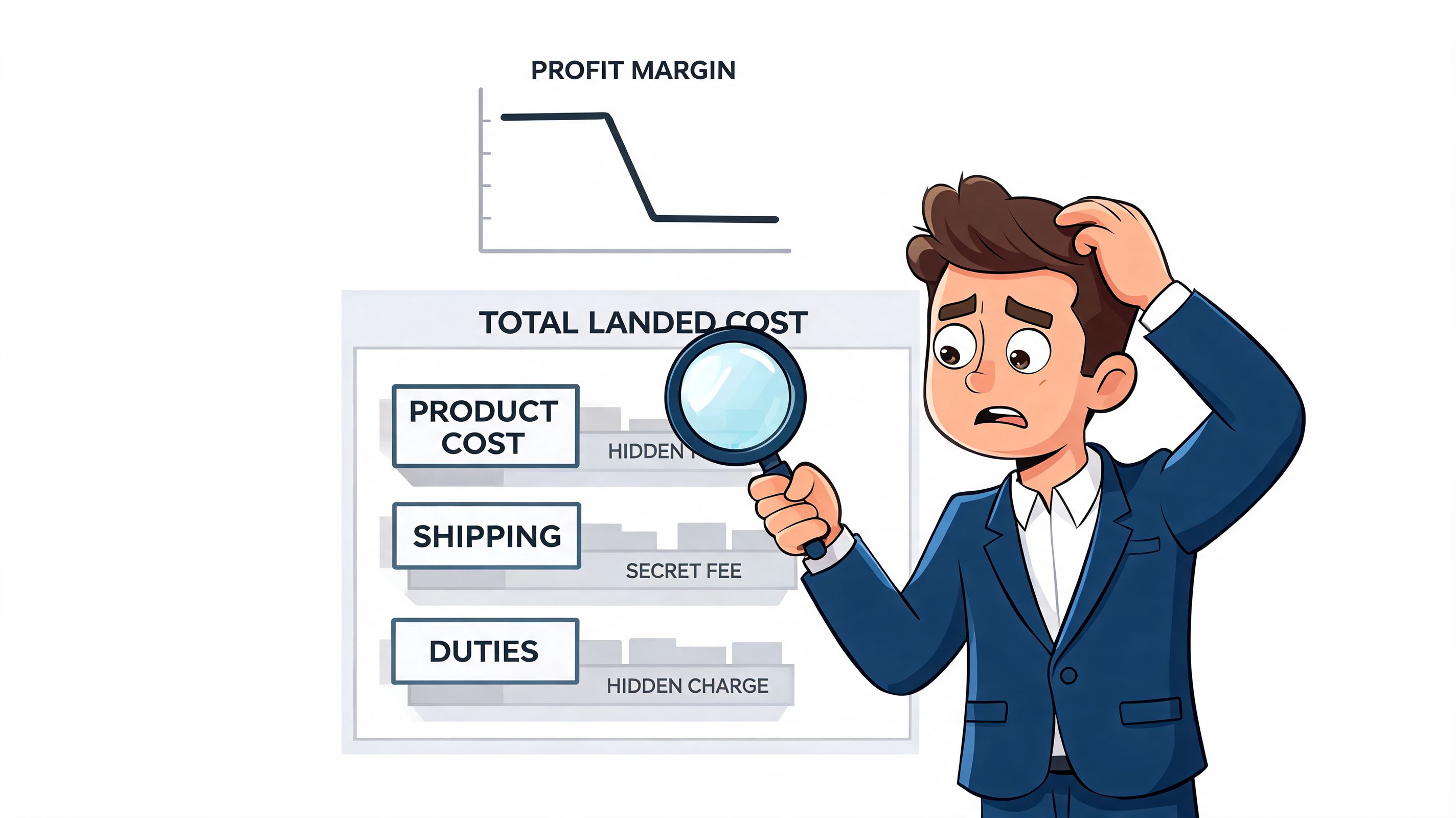
Your real cost is the total landed cost. That includes freight, duties, taxes, brokerage-related fees, surcharges, packaging, insurance if you use it, and the cost of handling exceptions when things go wrong. If you price India using only the label cost, your margin report will eventually correct you.
The landed cost components that matter
For most DTC brands, the calculation should include:
- Base transportation cost: What the carrier or freight partner charges to move the parcel.
- Import duties and taxes: These vary by product classification and declared value.
- Carrier add-ons: Fuel, remote area, handling, and other service-linked surcharges.
- Internal operations cost: Manual reviews, support intervention, and exception management.
- Failure cost: Refunds, reships, return handling, and abandoned parcels.
This is also where pricing strategy becomes a customer experience decision, not just a finance decision.
DDP usually creates fewer problems
For India, I strongly prefer a DDP approach when the economics allow it. If the customer sees a clean price and you handle duties upfront, you reduce surprise at delivery and lower the chance of refused shipments. DDU can still work for some catalogs, especially where margins are thin and buyers understand cross-border imports, but it creates friction.
The key is consistency. If you switch between models without communicating the difference clearly, support volume rises and trust drops.
For a merchant trying to benchmark rates before building a pricing model, this courier price from USA to India guide is a useful starting point. Use it to frame the market, then layer in your own duty exposure and exception costs.
The margin pressure is real
Indian customs duties on e-commerce parcels rose 10-25% in 2025, which puts pressure on contribution margin. At the same time, built-in upsell modules on order status pages can drive a 5-15% AOV lift, creating one of the more practical ways to offset higher import costs, according to Easyship's write-up on courier services to India.
That matters because price increases alone aren't always the best answer. Sometimes the cleaner play is to improve order economics after checkout rather than forcing a harder conversion at checkout.
A short explainer on cost structure helps here:
Pricing models that hold up better
Three approaches usually work better than blunt flat-rate shipping:
Build part of the cost into product pricing
Useful for hero SKUs with stable margin and predictable duty treatment.Use threshold-based shipping offers carefully
This can help lift basket size, but only if your duty and parcel profile remain manageable.Segment by service level
Offer a faster premium route and a slower lower-cost option, with honest delivery windows.
The important thing is to price India intentionally. If you don't, your finance team ends up absorbing costs that your checkout should have anticipated.
Prohibited Items and Packaging Requirements
Some India shipping failures have nothing to do with paperwork quality. The item itself is the problem. Merchants often discover this too late because the product sold fine domestically and looked harmless in the catalog.
That's why product eligibility needs its own check before you worry about labels or carrier selection.
Product categories that need extra caution
Rather than memorize a giant list, flag the categories that most often create trouble for ecommerce teams:
- Food and ingestibles: Supplements, edible products, and anything consumed internally often face added scrutiny.
- Cosmetics and personal care: Ingredient declarations, regulatory requirements, and labeling issues can complicate entry.
- Used electronics: Refurbished or previously owned devices are higher risk than new consumer goods.
- Battery-related items: Products containing lithium batteries need special handling and clear carrier acceptance.
- Medical or quasi-medical goods: If the product suggests diagnosis, treatment, or health claims, treat it cautiously.
- Items that can be interpreted as restricted materials: This includes products with chemical, agricultural, or animal-origin components.
If your assortment touches any of these categories, confirm admissibility with your carrier or customs partner before launch. Don't let the warehouse be the first team to ask whether the item can ship.
A product page can be merchant-friendly and still be customs-unfriendly. Compliance usually cares about composition, use case, and labeling, not your merchandising category.
Packaging that survives the route
International shipping to India puts pressure on packaging because the parcel may go through more handling points than a domestic order. Weak presentation becomes a damage claim fast.
Use a simple standard:
- Choose outer packaging for movement, not shelf appeal: Rigid corrugate beats thin branded mailers for fragile or premium goods.
- Stabilize the item inside: Void fill matters. Products shouldn't shift when the carton is handled.
- Protect corners and seams: Reinforce closure points. Long-haul routes expose weak tape jobs.
- Separate documentation physically: If your carrier uses an invoice pouch, attach it securely and visibly.
- Keep sender and receiver details clear: Labels should stay readable even after abrasion or moisture exposure.
Labeling discipline matters
A package can be physically intact and still become a problem if the exterior data is confusing. Make sure the consignee information matches the shipping documents, the parcel count is correct for multi-box shipments, and any required handling marks are visible.
I'd also avoid overpacking mixed-category orders if one item in the bundle is likely to trigger more scrutiny. Splitting shipments can be less elegant operationally, but sometimes it reduces the chance that one problematic line item slows the entire order.
Managing Post-Purchase Operations and Customer Experience
Most international playbooks fall apart because they treat shipping as a pre-dispatch decision, when in reality the most fragile part of the customer experience begins after payment.
India makes that gap obvious because addresses can be structurally complete and still operationally difficult. Locality names, sector references, building identifiers, and contact details all matter. A customer may realize they entered the wrong information only after seeing the confirmation email. If your process can't absorb that correction cleanly, a routine order becomes a support case.
Address errors are not a minor issue
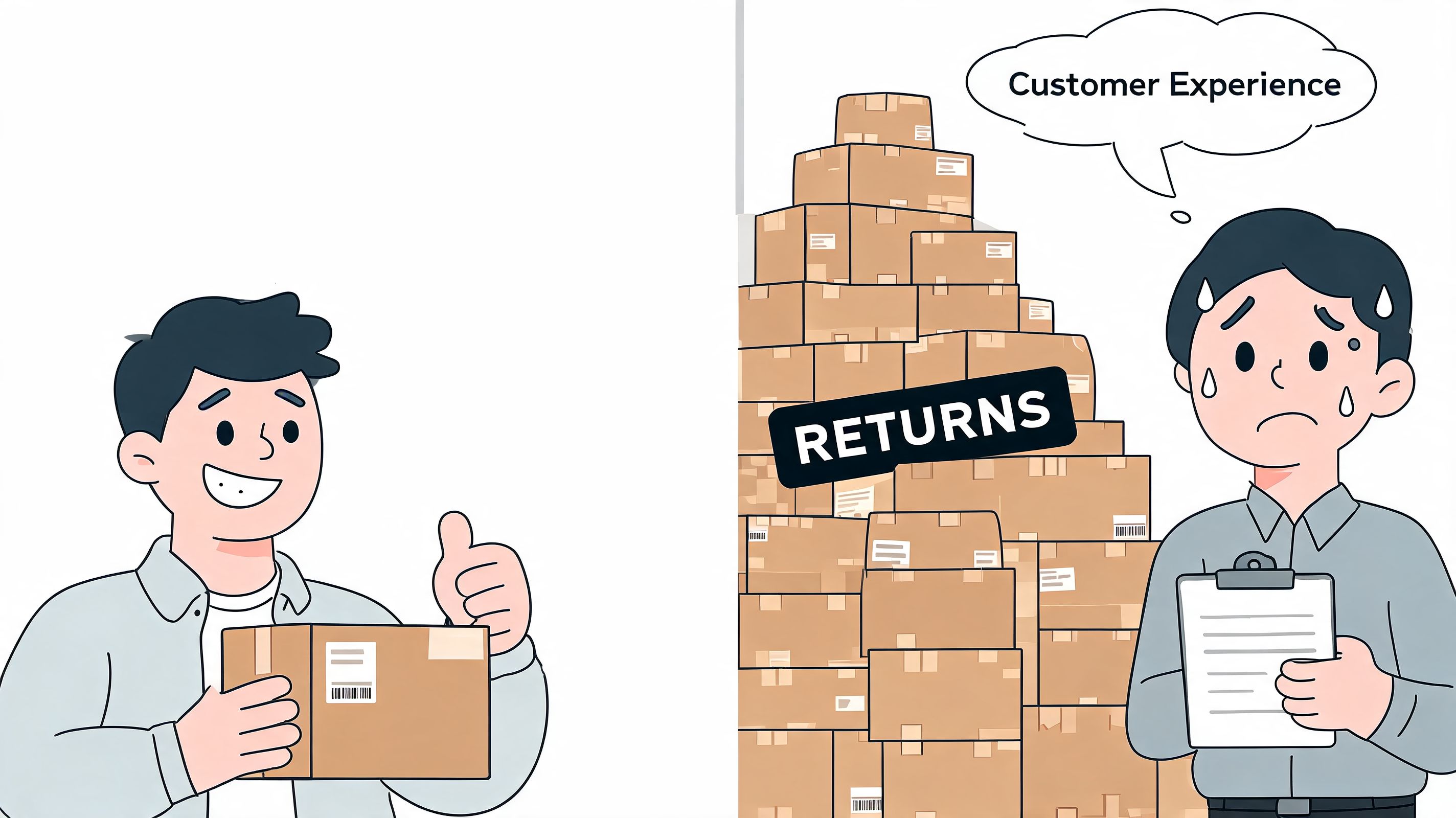
Post-purchase address editing matters in India because complex addresses contribute to high return rates. Meest notes that returns in international ecommerce can run up to 15-20%, and self-service tools that let customers edit addresses with real-time validation can reduce support workload by 30-50% for DTC brands in its delivery to India overview.
Those numbers line up with what ops teams feel day to day. Address mistakes create expensive work. Support has to verify the request, operations has to stop or adjust the shipment, and the customer becomes anxious because they know the order is moving across borders.
What breaks in a manual workflow
A typical manual process looks like this:
- Customer emails support with an address correction.
- Support asks for confirmation and order details.
- Warehouse has already picked or packed the order.
- Carrier manifest may already be created.
- Team tries to update multiple systems and hopes nothing is missed.
That process is slow even for domestic shipping. For India, it's riskier because the corrected address needs to remain consistent everywhere. If the ecommerce platform, label system, and customs documents drift out of sync, fixing one problem can create another.
The better operating model
The cleaner model is controlled self-service. Let the customer fix the issue within a defined window before the shipment crosses an irreversible point. That creates a better experience and removes repetitive support work.
The post-purchase workflow I'd want includes:
- A customer-facing edit window: Not unlimited access, but a controlled period where changes are allowed.
- Real-time address validation: Ideally using map-based validation and autocomplete so bad inputs are caught early.
- Rules by order status: A customer can edit before fulfillment lock, but not after the shipment reaches a protected stage.
- Audit visibility for ops: Every change should be logged so the team knows what happened and when.
- Clear exception routing: If an order is too far along to edit safely, move it into a review queue instead of letting support improvise.
The best post-purchase systems don't just reduce tickets. They stop preventable errors from entering the carrier and customs workflow in the first place.
Customer communication matters as much as carrier movement
When a parcel is moving cross-border, customers are watching for signs that the order is under control. Generic tracking updates aren't enough if the customer already suspects there may be an issue with address, duties, or local delivery timing.
That's why your order status experience matters. It should do more than display a tracking link. It should reassure the buyer, show what can still be changed, and keep the brand in the conversation during the wait.
For teams rethinking this part of the journey, this post-purchase customer experience guide is a useful reference. The main takeaway is simple. Customer confidence after checkout is an operational asset, not just a design concern.
Turn the waiting period into useful work
Most merchants waste the post-purchase period. They either leave it empty or use it only for passive tracking. That misses two opportunities.
First, it's your best window to catch customer-generated errors before they harden into delivery failures. Second, it's one of the few moments when the buyer is still engaged with the order.
A stronger setup can do both:
- Confirm shipping details early
- Collect missing contact information if needed
- Surface realistic delivery expectations
- Offer relevant add-ons without disrupting fulfillment
- Provide language support that feels local to the buyer
That last point matters more than many merchants realize. A multilingual post-purchase experience reduces confusion, especially when the customer is navigating cross-border delivery details.
What works versus what doesn't
Here's the blunt version.
What works:
- Giving customers a safe way to correct mistakes
- Validating addresses before fulfillment lock
- Keeping support out of repetitive low-value edits
- Using the order status page as an operational tool
What doesn't:
- Telling customers to “reply to the confirmation email” for changes
- Letting warehouse teams manually patch address fields
- Treating failed delivery as a last-mile problem only
- Waiting until the carrier flags an exception to investigate the order
For shipping to india, post-purchase control isn't a nice-to-have. It's one of the clearest operational advantages a DTC brand can build.
Your Action Plan for Shipping to India
If you want India to become a durable growth market instead of a support burden, run it like an operations program, not a shipping setting.
The brands that struggle usually launch too early with a thin process. They add India as a destination, publish a delivery estimate, and hope the carrier absorbs the complexity. The brands that do better build a tighter system first, then scale volume into it.
A practical launch sequence
Start with the product catalog.
- Review what you sell: Flag anything that may be restricted, regulated, hard to classify, or difficult to clear.
- Clean up your product descriptions: Customs-friendly naming should exist before the first international order is created.
- Assign stable classification rules: Don't leave HS code decisions to ad hoc judgment on busy days.
Then move to economics.
- Model the full landed cost: Include duty exposure, shipping charges, surcharges, and exception handling.
- Choose your customer charge model: If you can support DDP cleanly, it usually creates a better experience.
- Stress-test margin on low-AOV orders: Some products may need a different service level or a shipping threshold.
Build redundancy before scale
Once the economics work, choose your delivery stack with backup in mind.
- Pick a primary carrier: Match it to your main order profile, not your cheapest quote.
- Keep a secondary option live: If performance dips or a lane becomes unstable, you'll need an alternative.
- Document service promises internally: Support, ops, and finance should all use the same expectations.
I'd also standardize shipment documentation before volume arrives. Create approved invoice templates, naming conventions, and review rules. The more your team improvises, the more India will expose it.
India rewards merchants who remove ambiguity. Clear documents, clear promises, and clear post-purchase controls beat heroic customer support every time.
Don't separate shipping from customer experience
This is the point many teams miss. Your India launch isn't complete when the parcel leaves the building. It's complete when your post-purchase workflow can absorb the normal messiness of cross-border ecommerce without overwhelming support.
That means customers need a clean way to correct details, your team needs visibility into edits, and your order status experience needs to do real work. If you solve only the transport layer, you'll still lose margin and trust after checkout.
For merchants thinking beyond one country and into broader retention and acquisition economics, Arlo's DTC e-commerce growth strategy is a useful companion read. Growth gets more durable when operations and customer experience reinforce each other instead of living in separate teams.
India can absolutely be profitable. But it won't be profitable by accident. Audit the catalog, price for reality, choose carriers deliberately, standardize customs data, and tighten post-purchase control. That's the operating model that holds up.
If you want to reduce address-related support tickets, give customers controlled post-purchase edits, and create new revenue opportunities after checkout, SelfServe is worth a look. It helps Shopify merchants manage shipping and contact changes within defined windows, validate addresses in real time, and add upsells on the Thank You and Order Status pages without turning ops into a manual mess.