Choosing Last Mile Logistics Companies: A DTC Playbook

The email usually lands at the worst time. A customer placed a high-value order, tracking looked normal, then a delivery exception hit. Minutes later, support gets the message: “Why wasn’t this delivered?” Ops starts checking the carrier portal, the warehouse insists the label was correct, and your team burns time on a problem that now belongs to your brand, not just your carrier.
That’s the situation with the final mile for growing DTC stores. Customers don’t separate your checkout, your warehouse, and your delivery partner. They judge one experience. If the handoff breaks, they remember your logo on the box.
The High Stakes of the Final Mile
For most Shopify brands, the final mile becomes painful before it becomes visible. You notice more WISMO tickets. A few failed deliveries turn into refunds or reships. A customer who loved your product decides your brand is unreliable because the package never made it through the last handoff.
The economics are brutal. The global last mile delivery market was valued at USD 132.71 billion in 2022 and is projected to reach USD 258.68 billion by 2030, according to Grand View Research’s market analysis. More important for merchants, last-mile logistics account for 53% of total shipping costs in that same analysis. That means the part of fulfillment your customer sees last is also the part most likely to pressure your margin first.
A lot of teams approach last mile logistics companies as if they’re buying lane coverage and tracking links. They’re not. They’re outsourcing a piece of the customer experience that can create support load, reverse logistics, and repeat purchase risk in a single failed attempt.
Poor final-mile execution doesn’t stay in logistics. It shows up in finance, CX, and retention.
That’s why the best operator mindset is practical. Don’t start by asking which carrier is “best.” Start by asking which delivery failures your business can prevent, which ones your partner must own, and where your systems create avoidable risk before a driver ever leaves the depot.
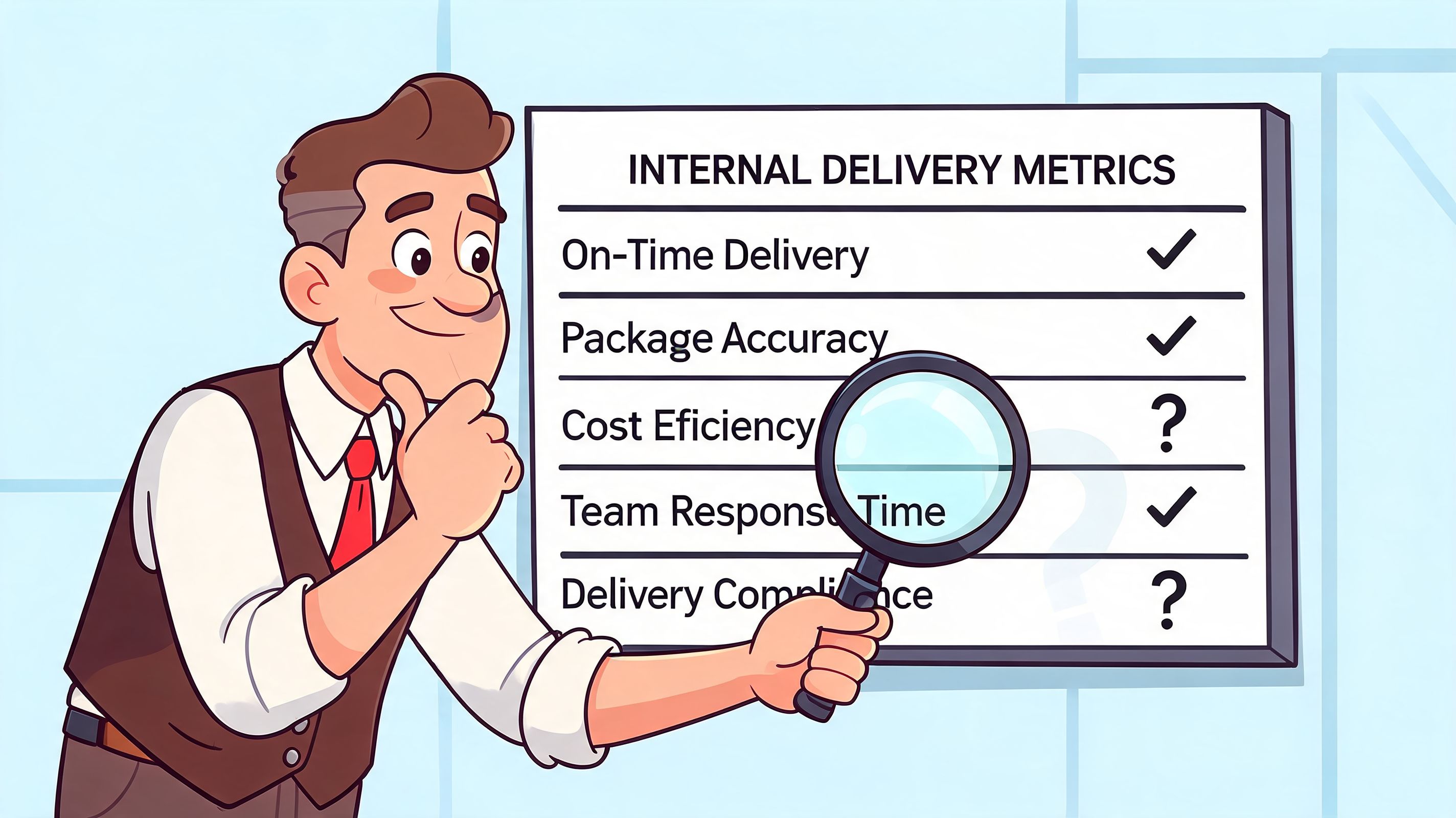
Create Your Last Mile Scorecard
Before you compare last mile logistics companies, define what success looks like for your business. If you skip this step, every sales call sounds good and every pricing sheet looks negotiable. Then peak season arrives and you realize your team never defined service requirements beyond “faster shipping.”
Start with the metrics that reveal operational reality
A useful scorecard has to do two things. It has to reflect what your customers expect, and it has to expose where your team is currently weak.
One metric matters more than most operators realize. Industry benchmarks for reliable last-mile operations call for a First-Attempt Delivery Success Rate above 98%, and rates below 97% often point to systemic issues, with incorrect addresses causing 25% to 30% of failures and customer unavailability causing 40% according to Financial Models Lab’s DSR benchmark breakdown. If your current operation is below that benchmark, the problem may not be the carrier alone.
Build your internal scorecard around a small set of practical questions:
- Delivery success expectation: What first-attempt success rate does your brand need to protect repeat purchase behavior?
- Address quality risk: How often do bad addresses, missing apartment details, or formatting issues create exceptions?
- Coverage reality: Where do your orders go? Dense urban zones, suburban spread, rural destinations, international addresses, or a mix?
- Volume variability: What happens to your order profile during launches, promos, and seasonal spikes?
- Support burden: Which delivery questions eat the most agent time?
If you need a broader view of how delivery services fit into ecommerce operations, this overview of e-commerce logistics services is a useful grounding document before you finalize carrier requirements.
Turn vague goals into non-negotiables
A scorecard works best when it separates preferences from requirements. “Good tracking” is vague. “Carrier must send usable delivery events quickly enough for customer support to act on exceptions” is measurable in practice, even if you evaluate it qualitatively during the RFP process.
Use a simple internal table before you take vendor meetings:
| Scorecard area | What to define internally |
|---|---|
| Service promise | Standard delivery, expedited delivery, appointment-based delivery, or a mix |
| Exception handling | Who owns failed attempts, address issues, rerouting, and customer communication |
| Tech needs | Tracking events, proof of delivery, order status sync, edit windows |
| Coverage | Current destination mix and where growth is likely to come from |
| Peak readiness | How much operational strain your team can absorb during surges |
| CX impact | Which events should trigger proactive support outreach |
Audit the causes, not just the symptoms
Tracking complaints is a common practice. Fewer teams track why the complaint happened. That’s a mistake.
Practical rule: If your support team can describe the top delivery problems from memory, you already have enough signal to build a scorecard.
Look for patterns like these:
Address friction at checkout
This includes formatting errors, missing unit numbers, and customer typos that pass through too easily.Post-purchase change requests
A customer notices a wrong address after placing the order, but your workflow gives them no clean way to fix it.Carrier blind spots
Tracking exists, but it isn’t detailed enough to let support answer the actual customer question.Coverage mismatch
A provider performs well in metro zones but struggles in remote or low-density areas that matter to your order mix.
When this scorecard is done properly, it stops you from shopping emotionally. You stop reacting to sales language and start evaluating fit.
How to Vet Last Mile Logistics Companies
Once your scorecard is clear, vendor conversations get sharper. You’re no longer asking “What can you do?” You’re asking, “How do you handle the exact problems that cost us time and money?”
That changes the quality of every answer.

Compare operating models, not just brand names
Not all last mile logistics companies solve the same problem. A national network may give you broader consistency and procurement advantages. A regional specialist may outperform larger brands in a concentrated geography. A gig-based service can help with urgent local delivery but may introduce more variability in execution.
Here’s the practical trade-off view:
| Provider model | Usually strongest at | Common risk |
|---|---|---|
| National carriers | Broad reach, established processes, enterprise tooling | Less flexibility for edge-case workflows |
| Regional carriers | Better local knowledge, tighter zone performance | Limited expansion coverage |
| Local courier networks | Speed in narrow service areas, hands-on account management | Harder to scale consistently across markets |
| Gig-based delivery platforms | On-demand capacity, rapid local dispatch | More brand inconsistency at the doorstep |
A lot of operators overvalue scale on paper. If most of your volume sits in a handful of regions, regional strength can matter more than national presence.
Ask questions that expose real operating discipline
Carrier decks often look similar. The useful differences come out when you push into workflows.
Ask every candidate about:
- Tracking detail: What event data do you expose, and can your team explain delivery exceptions clearly?
- Proof of delivery: Do you support photos, signatures, or both where applicable?
- Exception workflows: What happens when a driver can’t access the address, can’t find the customer, or spots an address issue?
- Driver model: Are deliveries handled by employees, contractors, or a mix?
- Escalation path: When support needs help fast, who responds and how?
- Volume elasticity: How do you handle promotional spikes without service degrading?
- System connectivity: What does implementation require from your ecommerce and operations stack?
For merchants that need to think more broadly about partner due diligence, Coreties' selection guide is worth reading. It’s freight-forwarder focused, but the core procurement logic applies well to final-mile partner evaluation too.
Technology fit matters more than sales promises
A carrier can have strong local execution and still be a poor fit if their systems create manual work for your team. In these instances, many evaluations go sideways. Ops leaders compare service maps and rates, then discover too late that integration quality is weak, tracking events are shallow, or exception handling depends on emails and spreadsheets.
If your team is already working on delivery route optimization, make sure the last-mile partner can support that effort operationally instead of forcing your team into disconnected workflows.
The best carrier for your business isn’t the one with the biggest network. It’s the one whose operating model matches your customer promise and your internal systems.
A final warning. Don’t let a pilot in one easy metro market stand in for a full evaluation. The actual test is what happens in edge cases, volume spikes, and exception-heavy orders.
Negotiating Contracts and SLAs That Protect You
Most bad last-mile contracts don’t fail because the headline rate is terrible. They fail because the accountability language is weak, the exception rules are vague, and the merchant signs before understanding what the provider controls.
Cost discipline matters here because the economics are already heavy. The final delivery leg comprises over 53% of total shipping costs, labor accounts for 50% to 60% of expenses in cities, and a single failed delivery can cost nearly USD 18 in redelivery attempts and support time according to SmartRoutes’ last-mile cost analysis. If your agreement doesn’t force clarity around failure handling, you absorb avoidable costs twice. Once in logistics, again in support.
Price structure is only half the story
Carriers usually price around a few familiar models. Per-delivery pricing is easy to compare and useful when volume is steady. Hourly or route-based structures can work when stop density varies or service windows are tight. Tiered pricing can reward growth, but only if the thresholds match your actual order profile rather than an optimistic forecast.
The contract should answer these questions in plain language:
- What counts as a billable attempt
- Which surcharges can appear later
- Who pays when an address is incomplete or changed late
- How redeliveries are billed
- What happens when capacity is constrained
- Whether peak periods trigger different service terms
The clause most merchants overlook
Service-level language often sounds strong until you read the exceptions. That’s where carriers carve out weather, access issues, customer unavailability, incomplete addresses, peak pressure, third-party handoffs, and broad operational discretion.
Your SLA is only useful if it defines what happens when delivery fails for reasons both sides can actually influence.
Push hard on exception ownership. If an issue comes from bad address data, your business may own it. If the issue comes from poor route execution or weak delivery communication, the provider should own more of the remedy. If responsibility sits in a gray area, your finance team usually loses.
Negotiate the operational protections, not just the discount
A strong SLA should spell out service behavior in detail. Not legal theater. Operational reality.
Use this checklist during review:
| SLA area | What to lock down |
|---|---|
| Delivery window commitment | Clear service expectations by service type and region |
| Failed attempt process | Required scan events, notes, and proof tied to exceptions |
| Claims and liability | Timeframes, evidence requirements, and reimbursement process |
| Escalation path | Named contacts, response expectations, and severity handling |
| Data access | What tracking and delivery event data you receive |
| Termination rights | How you exit if service quality deteriorates |
Don’t settle for “commercially reasonable efforts” without operational specifics. That phrase gives legal cover, not delivery performance.
Keep procurement, support, and ops in the same room
Contracts get weaker when one team owns the whole negotiation. Procurement chases rate. Legal tightens language. Ops worries about service. Support sees the fallout last. You need all four perspectives before signature.
A good contract protects margin, but an even better one protects workflow. It defines who acts, how fast, and with what evidence when something goes wrong.
Your Integration and Onboarding Playbook
A signed agreement doesn’t improve delivery on its own. The essential work starts when your ecommerce stack, support team, and carrier systems have to behave like one operation.
Many launches stumble at this point. The carrier is technically live, labels are generating, and tracking exists. But status updates are delayed, support doesn’t know what the events mean, and customers still have no clean way to fix mistakes after checkout.

A major gap exists in how last-mile carriers integrate with Shopify for post-purchase order modifications. Closing that gap with the right tools can slash support tickets by 30% to 50% and prevent 15% to 20% of failed deliveries caused by simple address errors, based on Merchants Fleet’s write-up on last-mile delivery trends and costs. That’s why implementation can’t be treated as an IT task alone. It’s an operations design project.
Map the handoffs before you touch production
Start with a workflow map, not an API spec. Document what happens from order placement through dispatch, delivery events, exceptions, and post-delivery support. Include who owns each handoff.
At minimum, your team should confirm:
- Order data flow: Which fields pass from Shopify into the carrier or intermediary system
- Tracking flow: Where tracking numbers and event updates appear internally and for customers
- Edit windows: When order data can still be corrected before dispatch
- Exception routing: Which statuses trigger support action and how those alerts are delivered
- Proof handling: Where photos, signatures, or failed-attempt notes are stored
Use a phased launch, not a big-bang rollout
The safest go-live plan is boring. That’s a good thing.
Sandbox first
Test label creation, address formatting, tracking events, and exception statuses before live orders are involved.Controlled pilot
Launch in a narrow geography or for a defined order segment where your team can watch performance closely.Support readiness
Build macros, help docs, and escalation rules before volume hits the new flow.Progressive expansion
Add more volume only after the pilot proves your data flow and customer communication are stable.
A short explainer like the one below can help internal teams align on what the handoff should look like.
Train support on scenarios, not systems
Support teams don’t need a lecture on integration architecture. They need to know what to do when a customer says the address is wrong, when tracking stalls, or when a delivery attempt fails for unclear reasons.
If your agents can’t explain a new delivery event in one sentence, the rollout isn’t ready.
Write scenario-based playbooks for the highest-friction moments. Include approved language, escalation contacts, and what agents can solve without waiting on ops. This is also where you decide whether customers can make limited post-purchase changes safely, and under what rules.
The difference between a smooth onboarding and a messy one usually isn’t the contract. It’s whether the merchant treated data flow, exception handling, and support readiness as one connected launch.
Slash Failures with Pre-Delivery Optimization
Most brands attack final-mile problems too late. They look at missed deliveries, complain about carriers, and try to negotiate tighter service after the package is already in motion.
The biggest gains usually come earlier. Before dispatch. Before route assignment. Before the driver inherits a bad address, a missing apartment number, or a customer who spotted an error five minutes after placing the order and had nowhere to fix it.

High-volume merchants can fall into “53% cost traps” in the final mile, but many issues are preventable. Seventy percent of support tickets related to delivery can be avoided with better pre-delivery workflows, according to Go US Pack’s discussion of final-mile dependence across industries. That should change how you think about last mile logistics companies. The carrier matters, but the software layer you control often determines whether the carrier ever gets a clean order in the first place.
Fix the inputs before you blame the outputs
Delivery execution depends on order quality. If your checkout and post-purchase workflow let bad data through, even a strong partner starts from a losing position.
Pre-delivery optimization usually comes down to three capabilities:
Address validation before dispatch
Catch incomplete, undeliverable, or suspicious address data early.Self-serve edits inside a controlled window
Let customers correct shipping details before the order becomes expensive to fix.Clear delivery status visibility
Give both customers and support enough context to act before issues snowball.
For teams refining the visibility side of that workflow, this guide to last-mile carrier tracking is useful alongside your carrier review.
The highest ROI work is often unglamorous
Operators sometimes chase advanced routing logic while basic order hygiene remains weak. That’s backwards. Routing software can’t rescue an address that should have been corrected earlier.
The same principle applies to labor planning. If your internal team is juggling manual edits, escalations, and delivery exceptions, process design matters as much as headcount. Resources on workforce management software for logistics can help ops leaders think more clearly about staffing and workflow discipline around these exception-heavy processes.
The best last-mile improvement is often the failed delivery that never gets created.
What works and what doesn’t
Here’s the candid version from an operator’s perspective.
What works:
Controlled self-service
Customers can fix obvious mistakes without waiting for an agent, but only within rules your team sets.Real address validation
Auto-complete and validation reduce ambiguity before the order reaches a carrier.Tight edit cutoffs
There has to be a clear point where the order stops being safely changeable.
What doesn’t:
- Unlimited edit freedom
That creates downstream confusion in fulfillment and carrier handoff. - Manual support triage for every address issue
It burns agent time on tasks customers can often resolve themselves. - Treating carrier replacement as the first fix
If the input data is weak, swapping providers won’t solve the root cause.
The pre-delivery layer is where merchants still have an advantage. Once the package is on the road, your options narrow fast.
If your team wants to reduce address-related failures, give customers safe post-purchase edit controls, and cut support workload before delivery issues escalate, SelfServe is built for that exact layer. It helps Shopify brands validate addresses, manage controlled self-serve changes, and clean up the order data your last-mile partner depends on.