8 Customer Satisfaction Metrics to Track in 2026

Your Monday morning probably starts the same way a lot of post-purchase operations days start. Support opens, and the queue is full of avoidable requests. “Can I fix my shipping address?” “Can I add one more item?” “Can I update my contact details?” The orders are coming in, which is good. The repetitive operational drag is piling up, which isn't.
Reviews help with merchandising and social proof, but they don't tell you where your post-purchase flow is breaking. They also don't help you prove whether a tool is reducing support pressure or improving customer loyalty. If you're trying to justify investment in a better post-purchase experience, you need customer satisfaction metrics that connect sentiment to operations.
That matters even more for brands competing on trust, delivery quality, and reputation, especially in marketplaces shaped by the scale of Amazon and Walmart brand reputation. In ecommerce, customers rarely separate the product from the fulfillment experience. If the post-purchase journey feels clumsy, the whole brand takes the hit.
The eight metrics below are the ones I'd track for a Shopify store. Some measure perception. Some measure friction. Some measure whether customers complete tasks without needing your support team. Used together, they turn post-purchase from a vague “CX initiative” into something you can manage, improve, and defend with real evidence.
1. Net Promoter Score (NPS)
Net Promoter Score measures whether customers would recommend your brand after the order is delivered, changed, or fixed. It uses one question on a 0 to 10 scale, then sorts respondents into Detractors, Passives, and Promoters. The score is the percentage of Promoters minus the percentage of Detractors, which puts it on a scale from -100 to +100, as outlined in Moxo's overview of customer satisfaction metrics.
For a Shopify merchant, NPS is useful because it captures the customer's final judgment of the post-purchase experience. That includes delivery, communication, issue handling, and whether a customer could solve a problem without waiting on support.
Used well, NPS helps answer a commercial question. Did your post-purchase workflow create enough trust that a customer would come back and tell someone else?
Where NPS helps most
NPS works best after a meaningful milestone. Good triggers include confirmed delivery, a resolved shipping problem, or a completed order edit inside a self-service customer portal for Shopify stores. Those moments reflect the quality of your operation better than a generic survey sent after every order.
That timing matters.
A customer who corrected an address in two minutes will rate your brand differently from one who had to email support, wait half a day, and hope the warehouse had not already shipped the parcel. NPS captures the overall effect of that experience. It does not diagnose the exact point of failure, but it does show whether the process strengthened or weakened trust.
Benchmark ranges can help with context, and Moxo's overview cites ecommerce NPS averages in the +35 to +45 range, with stronger brands often above +50. I would use those numbers carefully. They are directional, not a target you chase in isolation. A rising score matters more if it comes alongside lower ticket volume, faster issue resolution, or higher repeat purchase rates.
Practical rule: Send NPS after moments that represent your actual post-purchase operation, not after every order.
A few ways to make NPS useful instead of decorative:
- Segment by operational cohort: Separate first-time buyers from repeat customers, domestic from international orders, and self-service users from customers who needed support. A single blended score hides where the experience is working.
- Add a follow-up reason field: The number shows sentiment. The written response tells you whether the driver was delivery reliability, returns friction, poor communication, or a smooth self-service fix.
- Track trend lines after workflow changes: If NPS improves after you launch order editing or address correction, that gives you a clearer ROI story than a one-time survey result.
- Compare NPS with support data: If self-service adoption rises and NPS holds steady or improves, you are not just deflecting tickets. You are reducing effort without damaging trust.
NPS is the metric I would put in front of leadership when the question is whether post-purchase improvements are paying off. It is broad by design. Pair it with more operational metrics later in this list, and it becomes much more useful for proving the value of tools like SelfServe.
2. Customer Effort Score (CES)
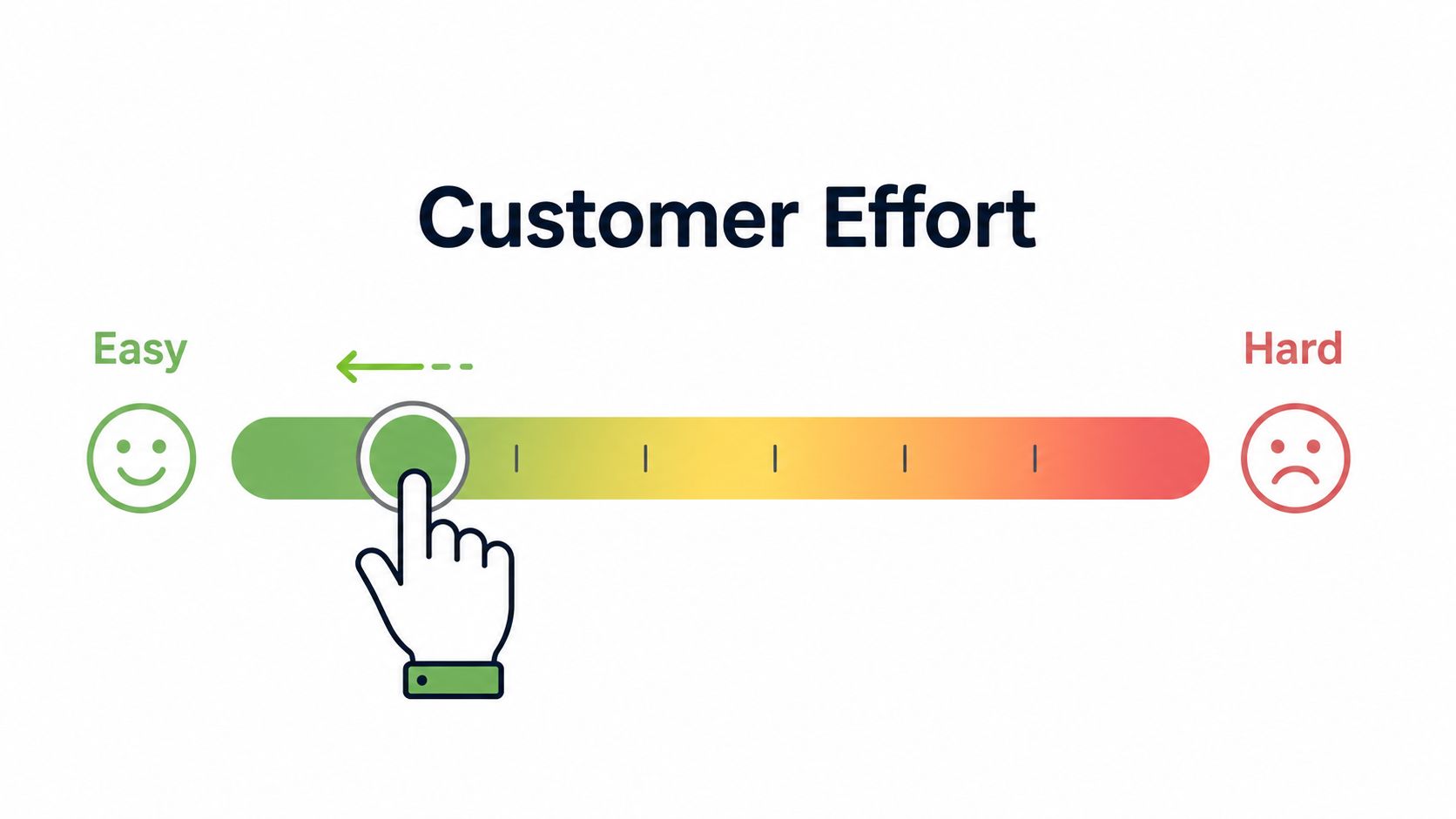
Customer Effort Score is the metric I reach for when a team says customers are “happy enough” but tickets keep coming. CES strips the question down to effort. How easy was it to complete the task?
That matters because post-purchase satisfaction often has less to do with delight and more to do with removal of friction. If a shopper can update an address, make an order change, or accept an upsell in a few clicks, effort drops. When effort drops, support demand usually follows.
A good place to apply CES is inside a self-service customer portal for Shopify stores, where customers are already trying to solve a specific problem on their own.
Use CES at the moment of action
Don't ask about effort in a weekly roundup email. Ask right after the task. Right after an address correction. Right after an order edit. Right after a customer tries to add an item to an existing order.
That timing gives you sharper operational insight than broad satisfaction surveys. It also avoids the common trap of collecting polite, delayed feedback that has nothing to do with the actual workflow.
Here's how I'd run CES in practice:
- Keep the question narrow: Ask about one action only, such as editing an order or validating an address.
- Add one follow-up prompt: Ask what made the process easy or difficult. The comments usually expose missing fields, mobile issues, or confusing policy language.
- Break results out by device and geography: A flow that feels fine on desktop in English can fail badly on mobile or in another language.
Low effort is often more valuable than high enthusiasm in post-purchase. Customers don't need to love changing an address. They need to finish it quickly and move on.
CES doesn't replace NPS or CSAT. It gives you something they often can't. A direct read on whether your workflow is making customers work too hard. For a Shopify merchant using self-service tools, that's often the fastest way to find the difference between a feature that exists and a feature that delivers value.
3. Customer Satisfaction Score (CSAT)
CSAT is the most widely adopted metric for immediate customer happiness, and it remains the most practical score for post-purchase operations. It's typically calculated by dividing satisfied responses, usually ratings of 4 or 5 on a 5-point scale, by total responses and multiplying by 100, according to Drive Research's breakdown of customer satisfaction metrics.
The reason CSAT works so well for ecommerce is simple. It answers a narrow question at the point where customers felt the friction. Was this interaction satisfactory or not?
Why CSAT works for post-purchase flows
If a customer just updated a shipping address, accepted an upsell, or completed an order edit, you don't need a philosophical survey. You need a pulse check. CSAT is built for that.
The same source notes that scores of 75% or higher are generally considered good across sectors, and that email CSAT surveys often see response rates averaging 30 to 40%. That's useful because post-purchase teams need enough volume to identify patterns quickly, especially when a change in fulfillment logic or app behavior starts hurting the experience.
In retail and ecommerce, benchmark CSAT ranges from 76% to 85%, with the higher end often tied to operational factors like shipping speed and returns ease, as described in Nextiva's customer satisfaction metrics guide. That's a strong reminder that post-purchase sentiment is operational, not just brand-driven.
Use CSAT like this:
- Survey immediately after the event: Send it after the order change is completed, not days later.
- Measure by module: Separate order editing, address validation, and upsells. A blended CSAT score hides weak links.
- Flag low scores for review: If customers are dissatisfied after a self-service action, look first for policy limits, UX confusion, or technical errors.
CSAT is your fastest warning system. If it drops, something in the workflow probably changed before your team noticed it in tickets.
CSAT won't tell you whether customers will stay loyal long term. It tells you whether the experience you just delivered felt competent. In post-purchase operations, that's often the first metric that shows whether your changes are helping or hurting.
4. First Contact Resolution (FCR) Rate
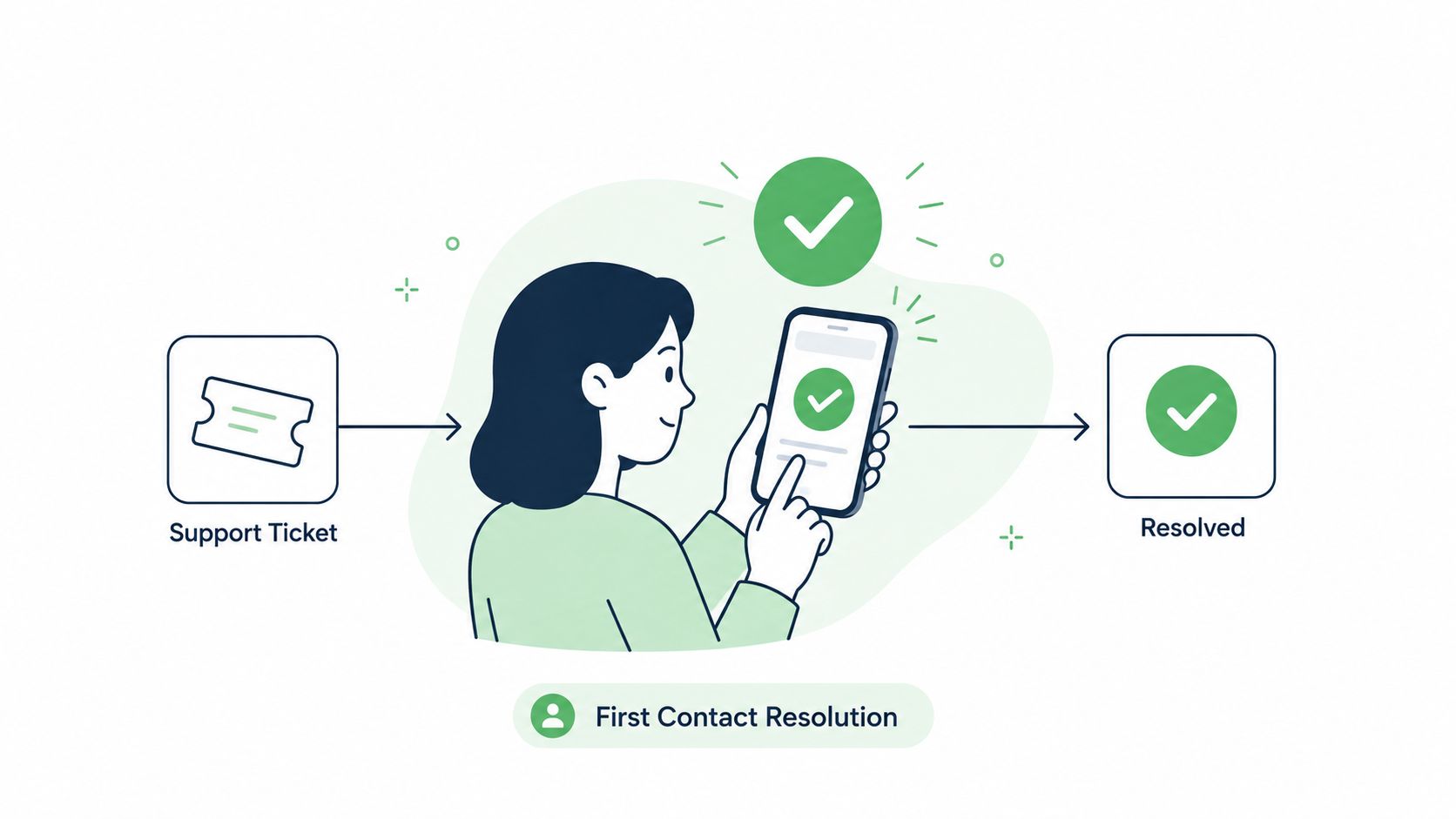
Traditional First Contact Resolution measures whether support solved the issue in one interaction. For Shopify merchants, I'd redefine it slightly for post-purchase work. Can the customer resolve the issue the first time they try, ideally without needing a human at all?
That version of FCR is far more useful when you're evaluating self-service tools. If customers can edit an order, correct an address, or cancel within the rules you set, the interaction is resolved at first contact even if no agent ever joins the conversation.
Redefine resolution around the customer
A lot of teams overstate FCR because they measure whether an agent closed a ticket, not whether the customer's real problem went away. Those aren't always the same thing. “We replied” is not the same as “the customer fixed the shipping address before fulfillment.”
For post-purchase operations, the cleaner way to think about FCR is task completion without escalation. If the customer finishes the action in one attempt, that's resolution. If they bounce from widget to help center to inbox, it isn't.
A practical setup looks like this:
- Tag preventable tickets: Mark tickets that a self-service flow should have handled, such as address edits or order modifications.
- Separate true exceptions from workflow failures: Some issues need agent review. Others only reach support because the self-service path wasn't clear.
- Track by issue type: Address changes, shipping edits, cancellations, and item additions shouldn't be lumped together.
What works is tight alignment between operations rules and storefront experience. If your policy allows edits for a certain window, the self-service interface should reflect that clearly. What doesn't work is offering “self-service” that still pushes customers into email once they click.
The best FCR improvement often comes from deleting unnecessary handoffs, not from training agents to reply faster.
FCR is one of the strongest operational customer satisfaction metrics because it connects effort, speed, and support load. When customers resolve routine issues immediately, satisfaction usually improves for a boring but powerful reason. They got what they needed before anxiety had time to build.
5. Order Completion Rate for Post-Purchase Upsells
Most customer satisfaction metrics focus on service or perception. Order completion rate for post-purchase upsells adds a different lens. Did the customer complete the extra purchase after seeing the offer?
That sounds like a revenue metric, and it is. But it also doubles as a friction metric. If shoppers like the offer but the add-to-order flow is clumsy, they won't finish. If the flow is smooth and the recommendation is relevant, completion tells you the experience held together.
A merchant using Shopify post-purchase upsell flows should measure this separately from standard conversion reporting. It's not the same as onsite product discovery. The customer already purchased. You're testing whether the post-purchase experience creates enough trust and convenience to support one more action.
What this metric really reveals
A weak completion rate doesn't always mean the offer is bad. Sometimes the product is right and the mechanics are wrong. Extra clicks, unclear pricing, payment friction, or a page that feels disconnected from the original order can kill the result.
A strong completion rate usually means two things happened at once. The recommendation made sense, and the customer didn't have to think too hard about how to accept it.
I'd review it through these cuts:
- By placement: Thank You page and Order Status page can behave very differently.
- By offer type: Complementary add-ons often perform differently from broad collections or merchandising-led picks.
- By customer segment: Repeat buyers may respond to convenience. New buyers may need stronger product relevance.
What works is keeping the offer tightly connected to the original purchase. A skincare add-on after a skincare order makes sense. A random catalog push rarely does. What doesn't work is treating post-purchase upsells like a mini homepage.
This metric belongs in a satisfaction article because completed upsells often indicate a customer still feels confident in your store after checkout. They aren't just buying more. They're signaling that the post-purchase experience didn't interrupt trust.
6. Support Ticket Volume and Cost Reduction
If leadership wants proof, this is usually the first metric that gets attention. Not because it's the most complex, but because it's the easiest to connect to operations. If customers can self-serve routine changes, ticket volume should fall in the categories those workflows replace.
This isn't just a support metric. It's one of the most practical customer satisfaction metrics for ecommerce because it reflects whether friction was removed before customers had to ask for help.
Make the baseline hard to argue with
Before you launch any post-purchase self-service tool, capture a clean baseline. Pull a full month of tickets and sort them by reason. Address changes, order edits, contact detail updates, cancellations, item additions. If your tagging is weak, fix that first. Otherwise you'll spend months arguing about attribution.
Then compare post-launch volume by category, not just total queue size. Overall ticket counts can move for plenty of reasons, including seasonality, product issues, or shipping carrier disruptions. Category-level change is more credible.
A disciplined approach looks like this:
- Measure preventable categories first: Start with the requests that are clearly eligible for self-service.
- Compare channel by channel: Email, chat, and phone don't carry the same operational cost or urgency.
- Review spillover effects: If post-purchase tickets drop, your team may respond faster to complex issues that still require human support.
This metric also forces honest conversations. Some “saved” tickets don't create direct cost savings if the same team is only reassigned. That's fine. Reallocation still matters. Moving agents away from repetitive updates and into exception handling, retention, or VIP support is operational value.
A reduction in ticket volume is strongest when it lines up with lower effort scores and stronger transactional satisfaction. One metric shows efficiency. The combination shows a better customer experience.
Used properly, ticket reduction turns customer experience from a soft initiative into a workflow improvement with visible business impact. That's often the bridge ecommerce teams need when they want budget approval for better post-purchase tooling.
7. Customer Retention and Repeat Purchase Rate
A shopper buys once, gets a delivery update they can trust, fixes a wrong address without contacting support, and the order arrives as expected. That customer is far more likely to buy again than someone who spends the week chasing your team for basic answers.
Retention and repeat purchase rate show whether your post-purchase experience holds up after the sale. Survey scores can point to sentiment, but return behavior shows whether the experience was good enough to earn another order. For Shopify merchants trying to justify spend on post-purchase tools, this is one of the clearest ways to connect customer experience work to revenue.
The mistake is reading this at the store level and stopping there. Overall repeat purchase rate can rise or fall for reasons that have nothing to do with post-purchase operations, including product launches, discounting, seasonality, or acquisition mix. Cohort analysis makes the metric usable.
Compare customers acquired before and after a meaningful workflow change. Keep the time window consistent. Then break out the customers who used self-service features from those who did not.
That is where the ROI case gets stronger.
If customers who used order editing, address correction, or order tracking come back more often, you have evidence that the tool improved more than support efficiency. It improved the customer relationship. That matters for teams evaluating self-service platforms against a simple headcount reduction model, because retained customers usually create more value than one avoided ticket. If you need the broader business case, this guide on increasing customer lifetime value is the right place to connect retention metrics back to margin.
I'd segment retention with a few practical cuts:
- First-time vs. repeat buyers: New customers have less trust banked. Post-purchase friction hits them harder.
- Self-service users vs. support-assisted customers: This helps isolate whether convenience changes return behavior.
- Domestic vs. international customers: Delivery expectations, shipping complexity, and support needs differ across regions. For stores shipping into the UK, carrier handoffs and regional delivery constraints can shape the experience more than merchants expect. Haulier.AI's guide to UK transport gives useful context on that operational side.
- High-AOV vs. low-AOV orders: The retention impact of a bad post-purchase experience is often larger on higher-value purchases.
Be careful with attribution. A self-service tool will not single-handedly create loyalty if the product disappoints or shipping performance is poor. But in practice, post-purchase friction often decides whether a first order feels safe enough to repeat. That is the fundamental value of this metric. It helps you show that better post-purchase operations do not just reduce effort. They protect future revenue.
8. Address Validation Accuracy and Delivery Success Rate
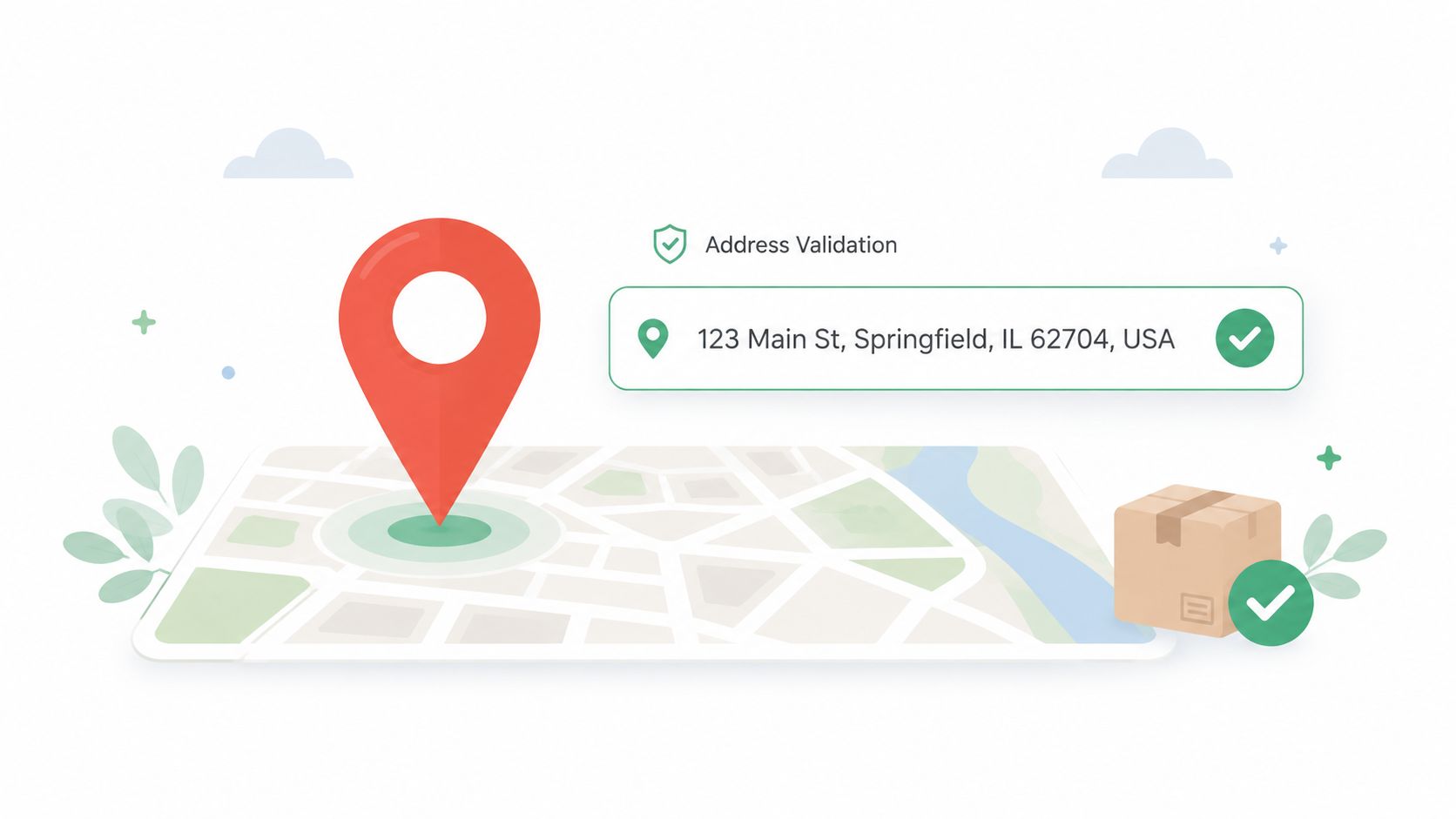
Nothing destroys post-purchase confidence faster than an order going to the wrong place because of a preventable address error. That's why address validation accuracy deserves to be treated as a customer satisfaction metric, not just a logistics metric.
For many Shopify brands, bad address data creates a chain reaction. Carrier exceptions, delivery failures, support tickets, replacement shipments, refund requests, and a customer who now associates your store with hassle. If you're using a tool with real-time validation, measure whether it improves address quality and downstream delivery outcomes.
Accuracy matters more internationally
This gets even more important when you ship across regions with inconsistent formats, transliteration issues, or multilingual customers. Existing guidance on satisfaction measurement rarely explains how to segment CSAT or NPS by language or region, even though cultural expectations can change how customers interpret the same rating scale, as discussed in HubSpot's customer success metrics article.
That gap matters in practice. A multilingual post-purchase experience may reduce friction dramatically, but if you only review one blended satisfaction score, you won't know which markets are improving and which still struggle.
A better operating model is to track:
- Validation pass behavior by geography: Different regions produce different error patterns.
- Correction acceptance: If customers repeatedly reject suggested corrections, your rules may be too rigid or your formatting unclear.
- Delivery outcomes after validation: The true test is whether validated addresses lead to smoother fulfillment.
This metric also connects to carrier performance and reputation, especially for brands managing regional fulfillment complexity such as those following Haulier.AI's guide to UK transport. If your address data quality is poor, even a strong carrier network has to work around avoidable mistakes.
Address quality isn't glamorous. But when it improves, customers notice it in the most practical way possible. Their order arrives where they expected, without an apology email in between.
8-Metric Customer Satisfaction Comparison
| Metric | 🔄 Implementation Complexity | ⚡ Resource Requirements | ⭐ Expected Outcomes | 💡 Ideal Use Cases | 📊 Key Advantages |
|---|---|---|---|---|---|
| Net Promoter Score (NPS) | Low, single-question, periodic surveys | Low, survey tool + benchmarking data | Indicates loyalty/advocacy; tracks trends over time ⭐⭐⭐ | Strategic, long-term tracking of customer advocacy after SelfServe rollouts | Simple, benchmarkable, identifies promoters/detractors for follow-up 📊 |
| Customer Effort Score (CES) | Low–Medium, needs transactional triggers | Low, event triggers per workflow | Strong predictor of churn/support load; actionable UX signal ⭐⭐⭐ | Measuring friction for specific tasks (order edits, address updates) immediately after action | Pinpoints UX friction; correlates with reduced support tickets ⚡ |
| Customer Satisfaction Score (CSAT) | Low, point-of-transaction survey | Low, deploy at completion; needs volume | Measures immediate satisfaction with interactions; short-term signal ⭐⭐ | Evaluating satisfaction per SelfServe module (upsells, address validation) | High response rates; easy to segment and report 📊 |
| First Contact Resolution (FCR) Rate | Medium, integrate app + ticketing systems | Medium, ticket tagging, attribution logic | Direct measure of self-service ROI; strong support cost impact ⭐⭐⭐⭐ | Proving operational impact and support ticket reduction | Most direct ROI metric; ties to cost savings and workload reduction 📊⚡ |
| Order Completion Rate (Upsells) | Low–Medium, track upsell funnel analytics | Low, conversion tracking + A/B testing | Measures incremental revenue and conversion friction ⭐⭐ | Optimizing post-purchase upsells (Thank You / Order Status pages) | Direct revenue signal; informs recommendation strategies 📊 |
| Support Ticket Volume & Cost Reduction | Medium, baseline and cost calculations required | Medium–High, finance data, ticket categorization | Tangible financial ROI and staffing impact when realized ⭐⭐⭐⭐ | Justifying SelfServe cost to finance and ops; measuring savings | Concrete dollar savings; supports headcount/resource decisions 💡📊 |
| Customer Retention & Repeat Purchase Rate | High, cohort analysis over months/quarters | High, robust data infrastructure and attribution | Long-term CLV and loyalty impact; slower to surface ⭐⭐⭐ | Measuring sustained business impact and lifetime value improvements | Connects self-service usage to CLV; supports strategic investment cases 📊 |
| Address Validation Accuracy & Delivery Success Rate | Medium, integrate address API + carrier data | Medium, Google Maps API, carrier feeds, regional tuning | Reduces undeliverables and shipping costs; improves delivery KPIs ⭐⭐⭐⭐ | High-volume shippers and international merchants focused on delivery success | Prevents failed deliveries; lowers reship costs and related tickets ⚡📊 |
From Data to Decisions Activating Your Metrics
Tracking customer satisfaction metrics only matters if the numbers change how you operate. Too many teams collect survey data, glance at a dashboard once a month, and then go back to firefighting. That doesn't improve the customer experience. It just documents the same problems more neatly.
The better approach is narrower and more disciplined. Start with one or two metrics tied directly to post-purchase friction. Support ticket volume is a strong operational baseline. Customer Effort Score is a strong experience baseline. Together, they tell you whether customers still need help and whether the workflow feels easy when they try to help themselves.
Once those baselines are in place, audit the moments creating the most unnecessary work. For a lot of Shopify brands, that means address changes, order edits, contact updates, cancellations, and post-purchase merchandising opportunities. You don't need a giant transformation project to make progress. You need to identify which requests are repetitive, policy-compatible, and safe to automate or hand to the customer.
Then make the measurement loop tighter. If you launch a self-service order editing flow, measure immediately around that change. Look at effort after the interaction. Look at CSAT after the task completes. Watch preventable ticket categories. Review whether customers are finishing actions cleanly on mobile and in the languages you support. The effectiveness of these precise measurements often determines a team's credibility. Broad “customer experience improved” claims don't persuade anyone. A visible reduction in repetitive support demand, paired with better immediate feedback, does.
It's also worth keeping the trade-offs in view. Not every issue should be self-served. Some cancellations, fraud-sensitive changes, and high-risk order modifications still need review. Good post-purchase systems don't remove control from the merchant. They define where customer autonomy helps and where approval gates still protect operations. The strongest customer satisfaction metrics usually improve when those boundaries are clear.
Finally, don't isolate these metrics inside support. NPS belongs in leadership reporting. CSAT belongs in workflow reviews. Effort and FCR belong in UX and operations discussions. Retention belongs in commercial planning. Address validation belongs in fulfillment and international expansion conversations. The value of measurement shows up when the whole business sees post-purchase not as cleanup, but as part of the product.
If you do this well, your metrics stop being passive reporting. They become decision tools. You can identify friction faster, prove where a tool is paying off, and build a stronger case for investing in systems that make life easier for both customers and your team.
If you're trying to reduce repetitive support tickets, give customers more control after checkout, and measure the operational payoff clearly, SelfServe is built for that job. It helps Shopify merchants enable order edits, address changes, multilingual post-purchase flows, and upsells in one place, so you can improve customer satisfaction while keeping your team focused on the issues that require human attention.