How to Ship Clothing: Ultimate Guide 2026
You've got orders coming in, customers expect fast delivery, and every shipping mistake hits twice. Once in margin, and again in support time. This is the challenge for apparel brands on Shopify, especially once volume picks up and the warehouse starts feeling the strain.
Shipping clothing looks simple from the outside. It isn't. Soft goods are easier to store than hard goods, but apparel creates its own problems: wrinkles, moisture exposure, mis-picks across size variants, damaged presentation, denied insurance claims, and return loops that eat up team capacity. If you're trying to figure out how to ship clothing profitably, the answer isn't one trick. It's a system.
That system starts before the label is printed and continues after the parcel is delivered. The stores that handle this well don't just pack faster. They protect garment quality, choose packaging on purpose, control carrier costs, reduce address errors, and make post-purchase communication do real operational work.
The Unboxing Experience Starts with Perfect Preparation
Monday morning, 60 orders are waiting, two packers are covering for a callout, and the fastest person on the line starts folding every item the same way to keep up. By the afternoon, support is answering “arrived wrinkled” and “this doesn't feel new” emails. The problem usually started before the shipping label existed.
Preparation sets the floor for everything that follows. If the garment is folded carelessly, packed with the wrong inner protection, or grouped with items that can mark or crush it, the customer sees it the moment the package opens. For high-volume Shopify stores, that affects more than presentation. It drives replacement costs, return rates, and the support load after delivery.
Fold by garment type, not by packer preference
A single folding standard sounds efficient until it creates rework.
As noted earlier from DHL's guidance on shipping clothes, the practical approach is item-specific: T-shirts and casual tops use a standard retail fold, formal shirts and blouses should be buttoned and folded along the seams with acid-free tissue between layers, and heavier items like jeans should be folded lengthwise and then horizontally. Use that as an operating baseline, then adjust for your own catalog and complaint history.
The trade-off is speed versus consistency. A universal fold is faster to teach. A category-based SOP produces fewer wrinkles, fewer presentation complaints, and fewer judgment calls on the pack bench.
Use simple rules your team can apply without hesitation:
- T-shirts and knitwear should be folded flat enough to hold shape without creating hard creases.
- Button-downs and blouses need structure first, then a barrier between contact points.
- Denim and heavier bottoms need compact folding that controls bulk.
- Delicate or premium pieces should keep their shape, even if that means using more material or a larger final packout.
If a new packer has to stop and ask three questions before folding a blouse, the SOP is too loose.
Inner protection does real operational work
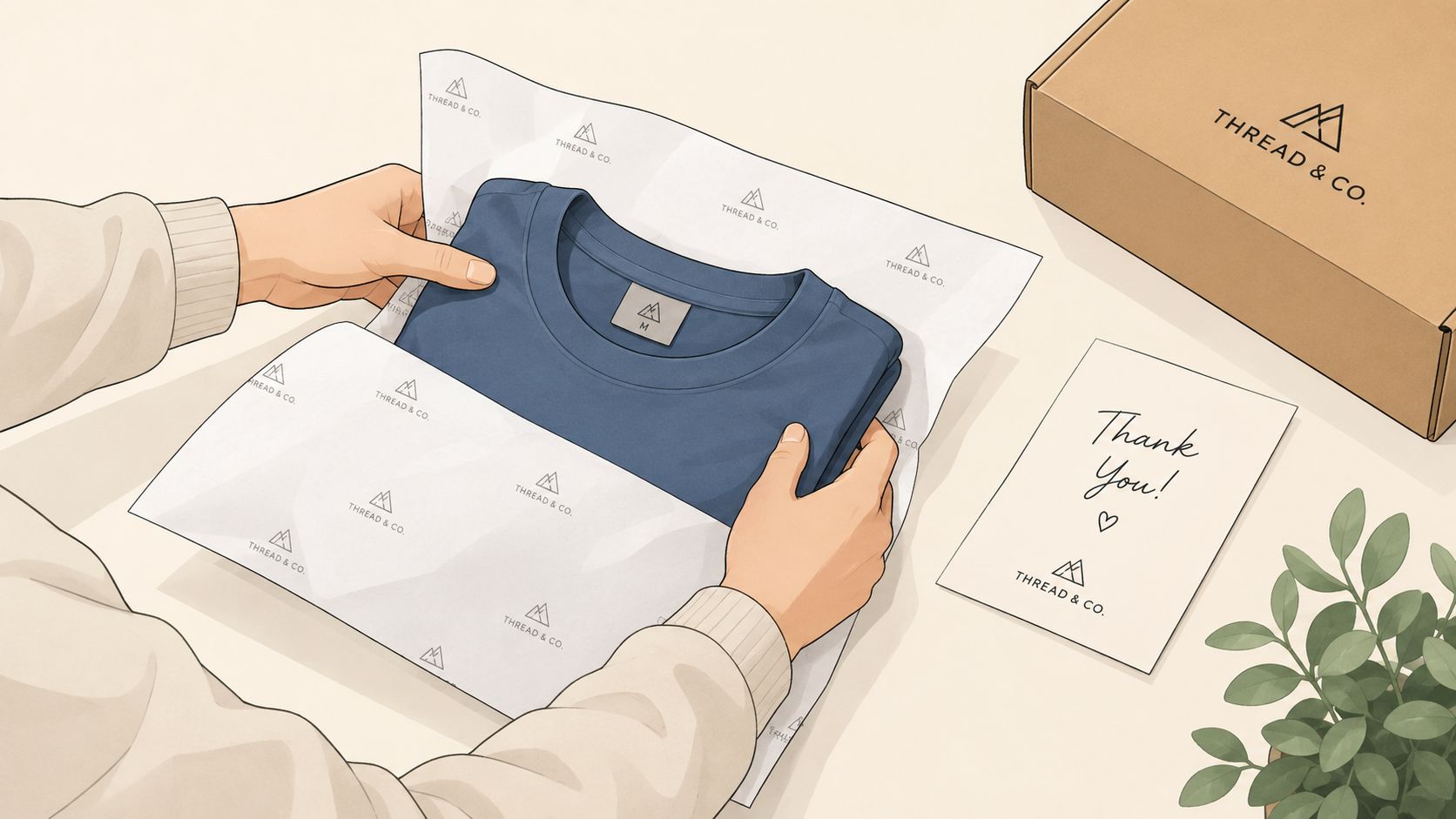
Tissue, sleeves, and garment bags are not only about brand presentation. They reduce friction between fabrics, help preserve the fold, and give the customer a cleaner first touch.
I treat the inner layer as part of quality control. Light-colored garments, premium fabrics, and anything prone to scuffing or snagging should not go straight into outer packaging. A basic protective layer often prevents the kind of minor condition issue that triggers a return request, a discount demand, or a “looked worn on arrival” complaint.
That also shapes the wider post-purchase customer experience. Customers judge the order as one event, not as separate decisions made by warehouse, carrier, and support.
The same logic shows up outside e-commerce. Even general packing guidance like this expert advice for a smooth move makes the same point: preparation and item separation prevent avoidable damage later.
Build a prep standard that holds up under volume
Good prep should survive peak weeks, temp labor, and late cutoff times. That means the standard has to be clear enough to repeat fast.
A workable prep workflow looks like this:
- Inspect before packing for lint, loose threads, makeup transfer, missing tags, and visible defects.
- Match the fold to the garment instead of forcing one method across the whole catalog.
- Add an inner layer for delicate, premium, embellished, or light-colored items.
- Isolate risk items such as belts, hardware, sequins, or accessories that can mark apparel in transit.
- Sort into packing lanes so the team is not deciding packaging rules order by order.
Teams usually notice the benefit in support volume before they notice it on the pack line. Fewer preventable issues after delivery means fewer exceptions to handle later, and that is where profitable apparel shipping starts.
Choosing Cost-Effective and Protective Packaging
A customer orders a cotton tee, a knit cardigan, and a leather belt. If all three go into the same thin mailer, the belt hardware can mark the knit, the parcel can bulge into a surcharge risk, and support may end up handling a preventable replacement. Packaging decisions affect margin after checkout, not just material cost at the pack station.
The useful question is not poly mailer or box. The useful question is which package protects this order at the lowest all-in cost, including damage risk, dimensional weight, packing speed, and return handling.
Use mailers as the default for the right orders
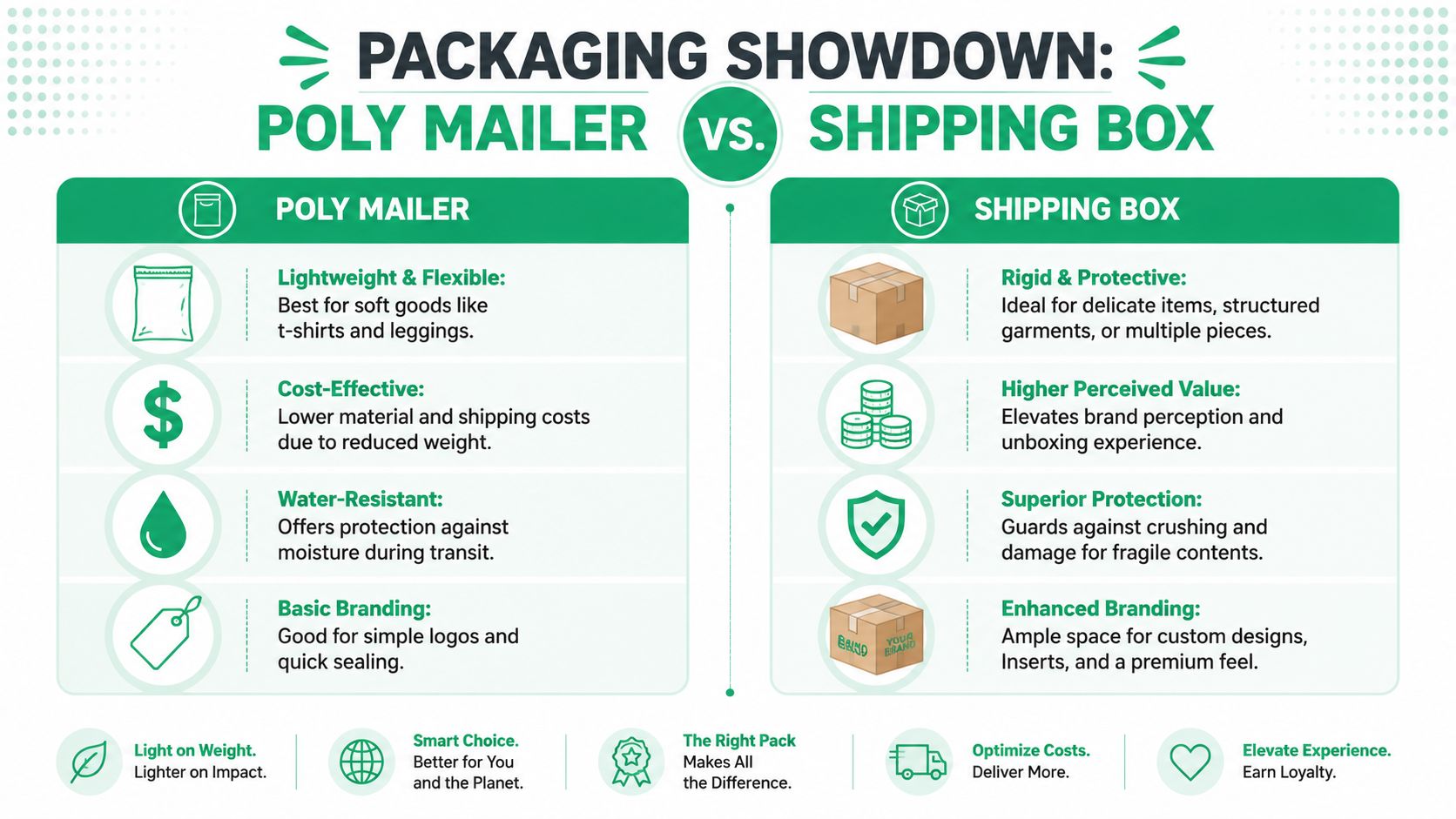
Poly mailers usually make sense for soft, low-friction apparel. They keep material cost down, store easily, and help teams pack faster during high-volume shifts. As noted earlier in the same DHL guidance, they work best for flexible garments that can handle light compression without arriving creased, misshapen, or underwhelming.
That usually includes:
- T-shirts
- Leggings
- Sweatshirts
- Pajamas
- Simple single-SKU reorders
A mailer stops being the cheapest option once it creates downstream work. If a package needs extra void fill, manual judgment, or exception handling after delivery, the apparent savings disappear quickly.
Use boxes where shape control matters
Boxes cost more in materials and often more in freight, but they solve specific operational problems. They protect structure, separate mixed items better, and reduce the odds of a premium product arriving looking handled.
Use a box when the order includes:
- Structured garments such as blazers, pleated pieces, or dress shirts that should hold shape
- Delicate or embellished items that can snag, crush, or transfer color
- Multi-item orders with accessories, belts, or hardware
- Gift-oriented shipments where presentation affects perceived value
- Higher-AOV orders where a claim, exchange, or avoidable return costs more than the box
The best packaging matrix is tied to SKU attributes and order composition, not gut feel from the packer. High-volume brands usually get better results when the rule lives in their shipping logic or multi-carrier shipping software setup, so the right package is prompted before the order reaches the bench.
| Packaging type | Best for | Main upside | Main risk |
|---|---|---|---|
| Poly mailer | Soft single-item apparel | Lower weight and lower material cost | Compression and weaker presentation |
| Shipping box | Structured, delicate, or multi-item orders | Better shape protection and premium feel | Higher material cost and shipping cost |
Standardize packaging fit, not just packaging design
Branding matters, but fit matters more. A custom box that is too large adds dead space, raises the chance of dimensional penalties later, and forces more dunnage into every order. A smaller unbranded carton that fits correctly often produces the better outcome for both cost and delivery condition.
This also matters on returns. If customers can reuse the original package easily, return compliance improves and damaged-in-return rates usually drop. Packaging should support the full shipment cycle, especially for Shopify brands managing exchanges, self-service returns, and repeat buyers.
If you are testing box durability and size discipline, this roundup of expert advice for a smooth move is a useful reference on box strength and fit under real handling pressure.
A cheap package that causes a replacement is expensive. A premium package used on the wrong SKU is wasteful. Profitable apparel packaging sits between those two mistakes.
Navigating Carriers and Optimizing Shipping Rates
Shipping expense often accumulates unnoticed by apparel brands. It happens through oversized packaging, bad carrier routing, avoidable surcharges, and too much loyalty to one service level.
That's a serious cost center. A 2025 projection cited by Best Colorful Socks' fashion logistics statistics puts global fashion logistics market spend at €327.95 billion, with transportation as the largest segment at 38.5%, valued at approximately $72.2 billion in 2025. If transportation is the biggest line item in the category, it deserves operational scrutiny inside your business too.
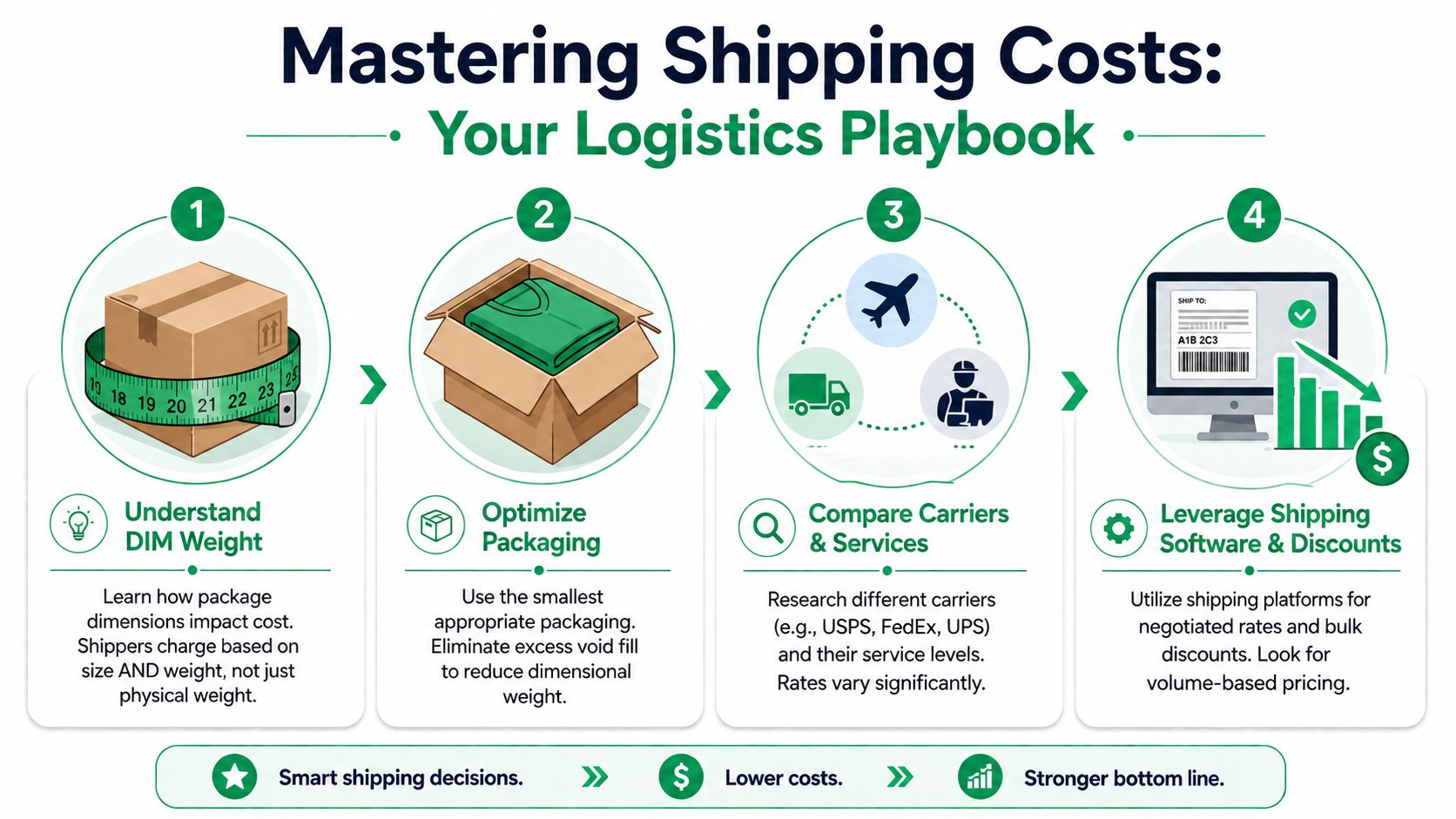
Start with dimensional weight
Apparel teams often think in ounces. Carriers often think in cube.
A lightweight puffer jacket in an oversized box can cost more than a heavier order packed tightly. That's why DIM weight matters. If your packaging leaves too much dead space, you may pay for the size of the parcel rather than the scale weight.
Use this as a packing discipline:
- Match the package to the folded item
- Avoid default box sizes that are too tall or too wide
- Review multi-item orders separately, because the cheapest package for one item may be inefficient for three
- Measure your real packed dimensions, not the supplier's listed box dimensions
This visual is a useful shorthand for the process:
Use different carriers for different jobs
There isn't one best carrier for all apparel orders. The best setup is usually a mix.
Domestic lightweight parcels, premium express shipments, international orders, and destination-specific lanes all behave differently. A smart team doesn't ask, “Who's our carrier?” It asks, “Which carrier is best for this parcel profile?”
A simple operating model looks like this:
| Shipment type | What to prioritize |
|---|---|
| Lightweight domestic apparel | Low base rates and efficient residential delivery |
| Time-sensitive orders | Reliable express performance and predictable scans |
| International DTC shipments | Customs handling, visibility, and landed-cost clarity |
| High-value apparel | Better claims process and service consistency |
For international orders, rate shopping gets more important, not less. If your team is comparing service levels and landed costs, this guide on how to save on global shipping costs is a useful reference point.
Shipping software should make the decision easier
At volume, no one should be copying rates manually or choosing services from memory.
A multi-carrier setup works best when your shipping platform can compare options in real time, apply service rules, and surface exceptions before labels are purchased. If you're evaluating that kind of setup, this overview of a multi-carrier shipping solution shows how merchants think about the workflow layer around carrier choice.
The core idea is simple. Set rules once, then let the system route most orders automatically.
Carrier strategy isn't about chasing the cheapest label on every shipment. It's about avoiding expensive decisions at scale.
A short walkthrough can help your team align on the basics before you formalize rules:
Negotiate after you understand your own parcel mix
High-volume stores often try to negotiate rates too early. Carriers care about consistent volume, yes, but they also care about what you're shipping.
Come prepared with:
- Your common package sizes
- Typical shipment zones
- Service-level split
- Domestic versus international mix
- Claim patterns and delivery issues
If you don't know your parcel profile, you can't tell whether a commercial rate is helping.
Ensuring Safe Transit with Labels and Insurance
A label gets the package moving. Documentation and packaging quality determine whether it arrives cleanly and whether you're protected when it doesn't.
For apparel brands, operations and risk management converge. Teams usually focus on speed first. The better move is to focus on accuracy first, then speed.
Label quality and customs accuracy matter
Print labels directly from the order source whenever possible. Manual re-entry creates preventable address errors, name mismatches, and customs issues.
For international apparel orders, customs documentation needs to match what's in the parcel. Generic descriptions cause delays. So do vague declared contents that don't line up with the order record. If your store ships across borders regularly, treat customs fields as part of order QA, not a last-click shipping task.
A few practical habits go a long way:
- Use specific item descriptions instead of broad terms like “clothes”
- Check destination formatting for postal codes, regions, and phone fields
- Make customs review part of exception handling for international orders
- Store packaging notes on the order when high-value items need special prep
Insurance only works if packaging supports the claim
A lot of merchants buy insurance and assume they're covered. That's not how claims work in practice.
According to ShipStation's apparel shipping guide, 34% of apparel claims in 2025-2026 were denied due to insufficient packaging when items were shipped in standard mailers without weatherproofing. The same guidance notes that carriers such as FedEx and UPS require acid-free paper or plastic interlayers for items over $500 to validate insurance.
That changes how you should think about premium apparel. Insurance is not a substitute for proper prep. If the item is valuable enough to insure, it's valuable enough to package to carrier standard.
If your claim file shows a premium garment in a basic mailer with no inner protection, the carrier may see preventable damage, not bad luck.
Use a simple decision rule for higher-value orders
Not every order needs the same level of protection. That's where teams either overpack everything or underprotect the items that matter most.
A cleaner decision model looks like this:
- Standard soft goods get efficient packaging and moisture protection.
- Delicate or light-colored items get an extra inner barrier.
- Higher-value apparel gets documented prep, structured protection, and packaging that supports an insurance claim.
- International premium orders get an extra review before label purchase.
This isn't glamorous work, but it saves money. It also keeps your team from having the worst conversation in ecommerce ops: “We insured it, but the claim was denied.”
Automating Workflows for High-Volume Shipping
Manual shipping workflows break long before a team admits they've broken. Orders still go out, labels still print, and support keeps cleaning up the mess. But the hidden cost shows up in wrong addresses, re-shipments, slow pick waves, and staff spending time on repetitive corrections.
High-volume apparel operations need fewer decisions at the packing table, not more.
Batch the predictable work
The simplest automation win is grouping similar work together. Print labels in batches. Pick by zone or product family. Pack similar order types in the same run.
That matters more in apparel than many categories because SKU variation is where errors creep in. One style can have multiple sizes, colors, and seasonal variants that look nearly identical in a bin. A clean pick-and-pack system reduces those mistakes before software ever gets involved.
Use straightforward operational rules:
- Create packing stations by order type, such as single-item soft goods versus structured multi-item orders
- Use barcode scanning where possible to verify SKU, size, and color before sealing
- Set exception queues for gift orders, premium apparel, and international shipments
- Hold late edits in one review lane instead of letting them interrupt the main fulfillment flow
Fix address problems before labels are printed
Address corrections are one of the most annoying operational leaks in ecommerce. They create support tickets, carrier fees, delays, and duplicate effort across ops and CX.
The actual fix isn't just “check addresses better.” It's giving customers a controlled way to correct mistakes before the warehouse commits the order. That removes a chunk of manual intervention from your team's day.
Know when to hand work to a 3PL
A 3PL makes sense when your internal team spends more time managing shipping complexity than improving the customer experience.
That doesn't mean outsourcing everything by default. It means being honest about where your bottleneck is. If your warehouse can't keep up with pick accuracy, cut-off times, or return handling, a 3PL may remove pressure. If your issue is bad product data or constant order edits, a 3PL won't solve the root cause by itself.
A strong shipping operation still needs the basics:
- Clear packaging SOPs
- Labeling consistency
- Exception handling
- Order data accuracy
- Returns routing that doesn't confuse the customer
For teams refining their physical labeling setup, these eco-conscious labelling solutions for businesses are worth reviewing, especially if you're balancing warehouse practicality with material choices.
Automation works best when it removes repeatable friction. It works poorly when it hides a broken process.
Enhancing the Post-Purchase Experience and Revenue
The shipment leaving your facility isn't the end of the job. For apparel brands, that's where the customer starts paying closer attention.
Tracking communication, delivery clarity, and returns handling shape whether the buyer feels confident ordering again. Apparel has fit uncertainty built into the category, so your post-purchase experience needs to reduce friction instead of adding more of it.
A strong operation keeps this part simple. Send clean tracking updates. Make returns and exchanges easy to understand. Give customers a clear path when they need help, without forcing them to open a support ticket for every minor issue.
That's also why shipping emails matter more than many teams think. They don't just confirm movement. They answer questions before the customer asks them. If you're tightening that flow, these examples of shipping confirmation emails are a good benchmark for what useful communication looks like.
There's a commercial angle here too. Post-purchase real estate is often underused. If a customer has already bought a dress, a coordinated add-on that can be included before fulfillment closes can improve order value without creating a second shipment. That only works when operations and merchandising are aligned, but when they are, post-purchase stops being a pure service layer and starts contributing to margin.
Returns fit into the same logic. The easier you make legitimate returns and exchanges, the more trust you build. The less confusing your process is, the fewer “Where do I send this?” tickets your team handles. Good post-purchase design reduces cost and increases repeat purchase intent at the same time.
If you want to reduce support tickets, prevent address-related shipping mistakes, and create post-purchase revenue opportunities inside Shopify, SelfServe is worth a look. It lets customers make approved order changes on their own, supports multilingual experiences, validates addresses in real time, and adds upsell opportunities directly on the Thank You and Order Status pages without creating extra operational chaos.