Post Purchase Monetization: Tactics, Metrics, and ROI
Fewer than 5% of ecommerce brands actively monetize their post-purchase flow, even as roughly 6 billion transactions occur globally each day, according to a 2025 industry analysis of post-purchase revenue. That gap changes how operators should think about growth. The thank-you page, order-status experience, and editing window aren't empty administrative steps. They're commercial and operational surfaces attached to orders you've already won.
Post purchase monetization works best when it improves the customer's next action instead of interrupting the one they just completed. A relevant accessory, a subscription invitation, or an easy address correction can create value while reducing the manual work your support team would otherwise absorb. For Shopify Plus merchants, the strongest programs combine both sides of that equation: incremental revenue per order and fewer avoidable interventions.
Why Post Purchase Monetization Matters Now
Most acquisition activity asks how to bring another prospective buyer into the funnel. Post purchase monetization starts with a customer who has already paid and asks what useful action should come next. That shift matters operationally because the acquisition cost has already been incurred, while the order still provides product context, customer intent, and an active brand relationship.
The strongest programs combine commercial and service outcomes. A relevant accessory, subscription invitation, or controlled order edit can create incremental revenue while reducing avoidable work for support agents. For Shopify Plus operators, the post-checkout flow becomes a managed operating surface rather than a passive confirmation step.
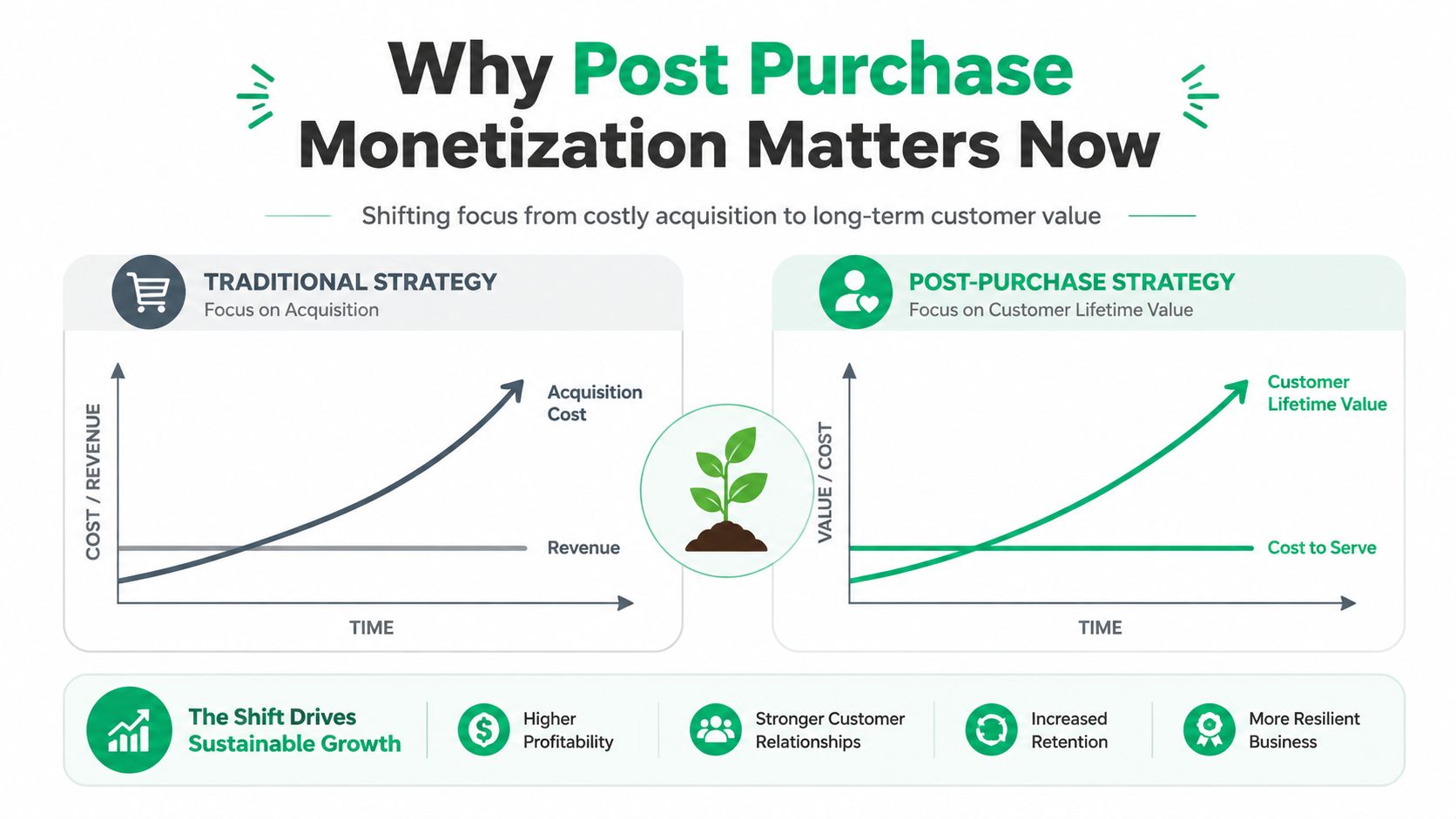
The installed order base is the opportunity
The transaction volume discussed in the 2025 revenue analysis creates a large addressable surface for confirmation-page offers, order-status recommendations, and post-purchase services. Merchants do not need to create new demand for every incremental sale. They can make an existing transaction more useful and commercially complete.
That approach still requires restraint. Relevance, timing, inventory, margin, and customer expectations determine whether an offer helps or harms. A replenishable product may justify a refill prompt, while a large gift order may call for delivery controls instead of another recommendation.
Privacy and attribution constraints also increase the value of late-stage, first-party moments. The order supplies dependable context without requiring a speculative inference about an unknown visitor. Operators building a broader retention program can use these actionable retention playbooks for 2026 and adapt the tactics to the post-checkout experience.
Revenue and service efficiency belong together
Post purchase monetization has an operational side that many upsell programs overlook. Order changes, cancellations, and address corrections generate support tickets. A well-configured self-service flow can resolve eligible requests, preserve the order, and offer a relevant addition when the customer is already making a change. The merchant gains potential revenue, while the customer avoids waiting for an agent.
That connection requires clear rules. The flow should define which edits are allowed, when fulfillment locks changes, how inventory is reserved, and which offers remain valid after an order update. Poorly timed promotions can create confusion, split shipments, or extra contacts that erase the margin from the sale.
A post-purchase experience platform should connect offers, order editing, fulfillment rules, and customer communication instead of isolating each function in a separate widget. Customers want control after checkout, and merchants need that control bounded by explicit permissions.
Post purchase monetization becomes core revenue infrastructure when it uses completed-order volume, protects trust, and lowers the cost of serving customers. It complements acquisition by making each successful purchase work harder.
Core Monetization Tactics and How They Work
The right tactic depends on remaining purchase intent, product fit, and payment friction. A practical guide to post-purchase upsells provides a useful starting point, but the final choice should match the store's catalog, fulfillment timing, and ability to support order changes.
Compare the main surfaces
| Tactic | Typical Acceptance Rate | Implementation Complexity | Best For |
|---|---|---|---|
| Thank-you page upsell | About 3% to 8%, with performance above 5% described as good in benchmark guidance (GrowthSuite benchmark guide) | Low to medium | Complementary products with immediate relevance |
| One-click post-purchase upsell | Around 5% to 12%, or roughly 10% to 15% in optimized cases (Tagada technical overview) | Medium to high | High-intent add-ons where payment-token support is available |
| Order-status-page offer | Varies by relevance and placement | Medium | Reorders, accessories, education, and loyalty prompts |
| Post-purchase email sequence | Usually lower-intent than an immediate one-click flow | Low to medium | Products requiring consideration, education, or later replenishment |
| Subscription conversion | Depends on product cadence and customer fit | Medium to high | Consumables and repeat-purchase categories |
| Cross-sell during order editing | Depends on the edit reason and recommendation | Medium | Customers already reopening an order |
The thank-you page is the fastest surface for testing one offer. Match the recommendation closely to the purchased item and keep confirmation focused. A phone case after a phone purchase is easy to understand. An unrelated category-wide promotion adds noise and can weaken confidence in the confirmation experience.
One click versus re-engagement
One-click upsells work best when the platform preserves the original payment token and order-event context. Customers can accept an add-on without entering payment details again, reducing friction while purchase intent remains high. Industry and vendor summaries cite incremental revenue per order around $8 to $18, while other summaries report an AOV lift of about 68.1%. Treat these figures as directional benchmarks rather than expected store performance (Tagada's one-click upsell analysis).
Email and SMS serve a different purpose. They ask customers to reconsider later, so they suit offers that need explanation, comparison, or a longer decision period. Replenishment, education, and subscription conversion often fit these channels. A simple, relevant add-on belongs closer to order confirmation.
Practical rule: Present one strong offer before several weak ones. Track attach rate and contribution margin, not clicks alone.
Order-status pages deserve their own test plan because customers return to them for tracking and delivery information. A relevant recommendation can sit beside that utility, provided shipment details remain easy to find. If an offer pushes tracking below the fold or makes delivery status harder to read, the placement has sacrificed service clarity for limited commercial upside. The same page can also support a targeted order-edit recommendation, provided the offer follows the customer's stated change and does not create a second shipment unnecessarily.
The Hidden Revenue in Operational Efficiency
Support work creates a cost even when no refund follows. An agent must read the request, verify what can change, check fulfillment status, update the platform, and explain the result. Across a high-volume store, that repeated handling can restrict the team's capacity and delay higher-value work.
Independent ecommerce support analysis reported that order-related issues account for 40% of tickets, while another source found that some stores attribute nearly 30% of customer service to post-purchase errors (2026 support and post-purchase analysis). The analysis also estimated that 2% to 5% of orders generate an address-change request and described self-service editing as reducing modification-ticket triggers from about 7% of orders to 0.5% to 2%. These figures describe operational pressure, not guaranteed results for every merchant.
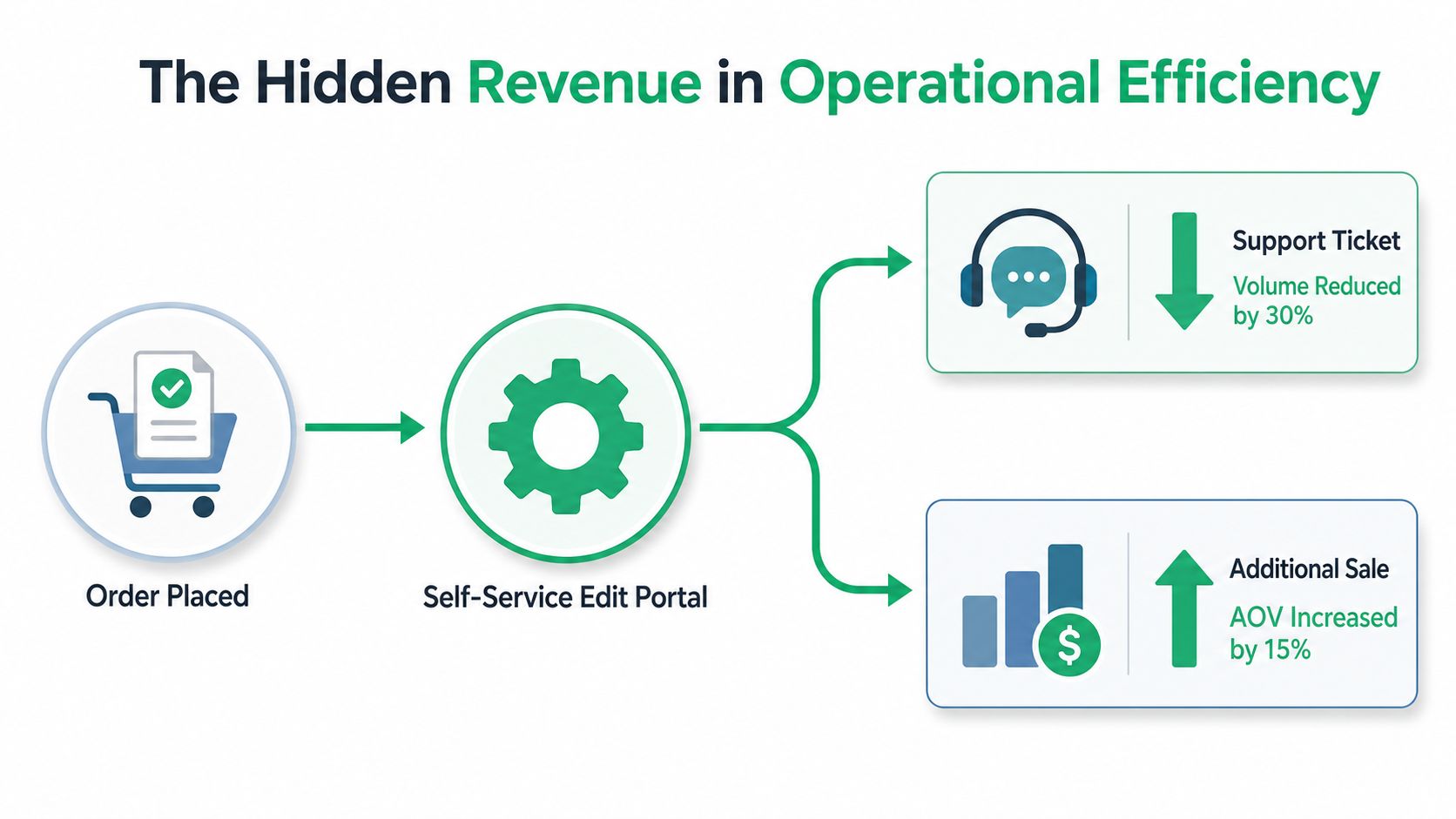
Editing can prevent cancellation
Customers often contact support because an order is nearly right. They entered the wrong address, forgot an accessory, selected an unsuitable variant, or need to update contact details. Forcing them to cancel and reorder adds friction, creates more operational work, and can lose the sale.
A defined editing window gives shoppers a controlled way to correct the order. Merchants can limit changes by fulfillment state, product type, payment status, or shipping method. Address validation and autocomplete reduce delivery mistakes, while approval queues keep higher-risk changes under review.
The revenue opportunity appears when editing also presents a relevant addition. A customer correcting a shipping address may add a compatible product. Someone changing a variant may accept a related accessory. The recommendation must solve the immediate problem, not obstruct it. If the offer feels like a trap, it can increase contact volume instead of order value.
Build permissions around real operations
A useful portal reflects warehouse and support rules rather than promising unlimited flexibility. Set permissions for:
- Shipping details: Allow address and contact edits only before the order enters a fulfillment lock.
- Product changes: Restrict substitutions by inventory, price, bundle, and warehouse availability.
- Cancellation handling: Route sensitive cancellations into a manual approval queue.
- Order tagging: Mark edited orders so warehouse and support teams can identify them quickly.
- Language support: Serve the editing interface in the shopper's language for international stores.
The cited merchant case reported a reduction from 3,000 monthly edit tickets to 30, described as a 99% reduction, after introducing a 15-minute self-service window. That outcome belongs to the cited merchant, not a universal forecast. It still demonstrates why avoided support work belongs in the monetization model, alongside any added-product revenue.
For operators reviewing operational efficiency metrics, the calculation should include avoided handling, fewer escalations, lower correction risk, and orders preserved from cancellation. Track those effects separately from attach rate so a recommendation does not receive credit for savings caused by the editing workflow.
A short walkthrough can help support, operations, and merchandising agree on rules before launch:
The same operating principle applies beyond ecommerce. Teams working to streamline UK haulage operations can give customers controlled self-service for routine changes and reserve specialist attention for exceptions.
Technical Requirements and Implementation Considerations
The technical foundation determines whether a post-purchase offer is genuinely one click or merely a new checkout disguised as an upsell. Before selecting an app or building custom logic, map the data and control points from payment authorization through fulfillment.
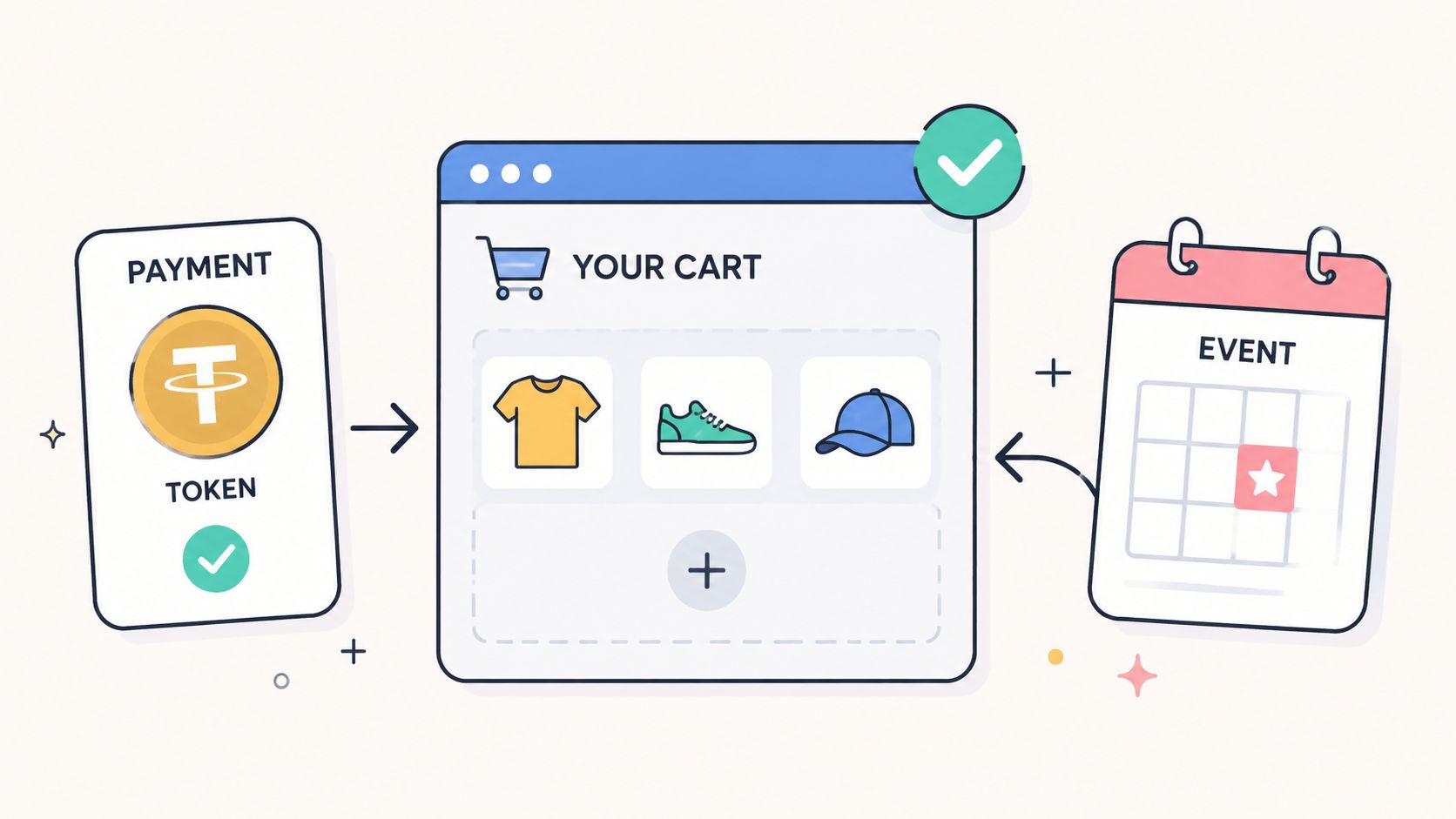
Preserve payment and order context
A one-click flow needs access to the original payment authorization or tokenized payment context, along with the order event that identifies what was purchased. Without that connection, the customer must re-enter payment details, and the experience loses its primary advantage.
The implementation team should confirm:
- Payment handling: Does the provider support compliant token reuse for an approved post-purchase charge?
- Order association: Does the add-on attach to the original order, or create a separate order that complicates fulfillment and reporting?
- Inventory checks: Does the offer disappear when stock changes?
- Tax and shipping logic: Are price differences recalculated correctly for the customer's destination?
- Fulfillment timing: Can the warehouse receive the update before the order is picked or packed?
Payment architecture deserves careful review, especially for merchants comparing providers. A practical guide to payment provider selection for startups can help teams frame questions about authorization, integration, and compliance, but Shopify Plus operators still need provider-specific confirmation.
Protect the warehouse from marketing logic
An offer can convert well and still damage profitability if it creates split shipments, oversells a constrained SKU, or changes an order after the warehouse has locked it. Set a clear edit cutoff based on actual fulfillment events, not an arbitrary customer-facing promise.
Use product restrictions to block items that can't be added safely. Apply order tags when a customer edits an order, and send those tags into the customer service and fulfillment systems. If the store uses a 3PL or ERP, verify whether edited orders sync in real time and how the partner handles payment differences, packing slips, and shipment notifications.
Attribution is another weak point. A post-purchase order can include a natural repeat purchase, an email-driven conversion, and a thank-you-page offer. Record the surface, offer ID, acceptance event, refund, cancellation, and fulfillment outcome separately. Otherwise, the dashboard may credit the offer for revenue the customer would have generated anyway.
Implementation test: Run the full journey with test orders across payment methods, currencies, languages, inventory states, and fulfillment statuses before exposing the flow to customers.
Real Merchant Scenarios and Results
A high-volume apparel merchant has a straightforward opportunity, but the execution still needs restraint. After a customer buys a jacket, the thank-you page can present a compatible care product or accessory, while the order-status page can surface a related item after the customer checks delivery details. The team should suppress offers that conflict with the original order, avoid recommendations that create difficult fulfillment splits, and judge the program by gross margin rather than headline revenue.
The immediate page is appropriate for the simplest offer. The status page can support a broader relationship because customers return there for tracking, delivery updates, and order management. The two placements should share rules, but they shouldn't display the same recommendation repeatedly.
Subscription businesses need a different sequence
A subscription-box merchant may use the confirmation page to introduce recurring delivery or a loyalty program, but the timing must fit the product and the customer's purchase intent. A customer who has just bought a trial box might need a clear explanation of frequency, cancellation control, and what changes between shipments.
A strong flow separates the commercial ask from the reassurance content. Confirm the initial order, explain the recurring option, and make the acceptance action explicit. Follow-up email can then provide product education and renewal information rather than repeating an aggressive upsell.
The result to watch is not merely subscription acceptance. Track cancellations, support contacts, refund requests, and the quality of the recurring cohort. A subscription that creates immediate revenue but generates confusion can raise service costs and damage trust.
International stores must monetize carefully
An international merchant can combine multilingual order editing with add-on recommendations. A shopper who notices an address mistake should see a localized editing experience, real-time address validation, and clear confirmation of what changed. The merchant can recommend an appropriate addition only after the correction path is obvious.
This pattern works because the customer is already engaged with the order. It also prevents a common failure mode: forcing the shopper to contact support for a minor correction, then making the agent manually handle a potential add-on.
The operational outcome depends on permissions, language quality, and fulfillment integration. Translation alone isn't enough. The store must ensure that address formats, tax treatment, inventory, payment differences, and customer notifications behave correctly in each supported market.
Across all three scenarios, customer experience improves when the offer follows the customer's task. Apparel buyers can see a useful accessory, subscription buyers can understand a recurring option, and international customers can correct order details without waiting. The offer earns attention by helping first.
Your Implementation Roadmap
Post purchase monetization should launch in stages. Building personalization, order editing, loyalty, subscriptions, and complex attribution at once creates too many failure points before the team has established reliable operating baselines. The roadmap should also treat self-service as a revenue control, not only a customer-service feature. Fewer avoidable tickets leave agents available for complex cases, while an order-editing flow can present a relevant add-on during an active customer task.
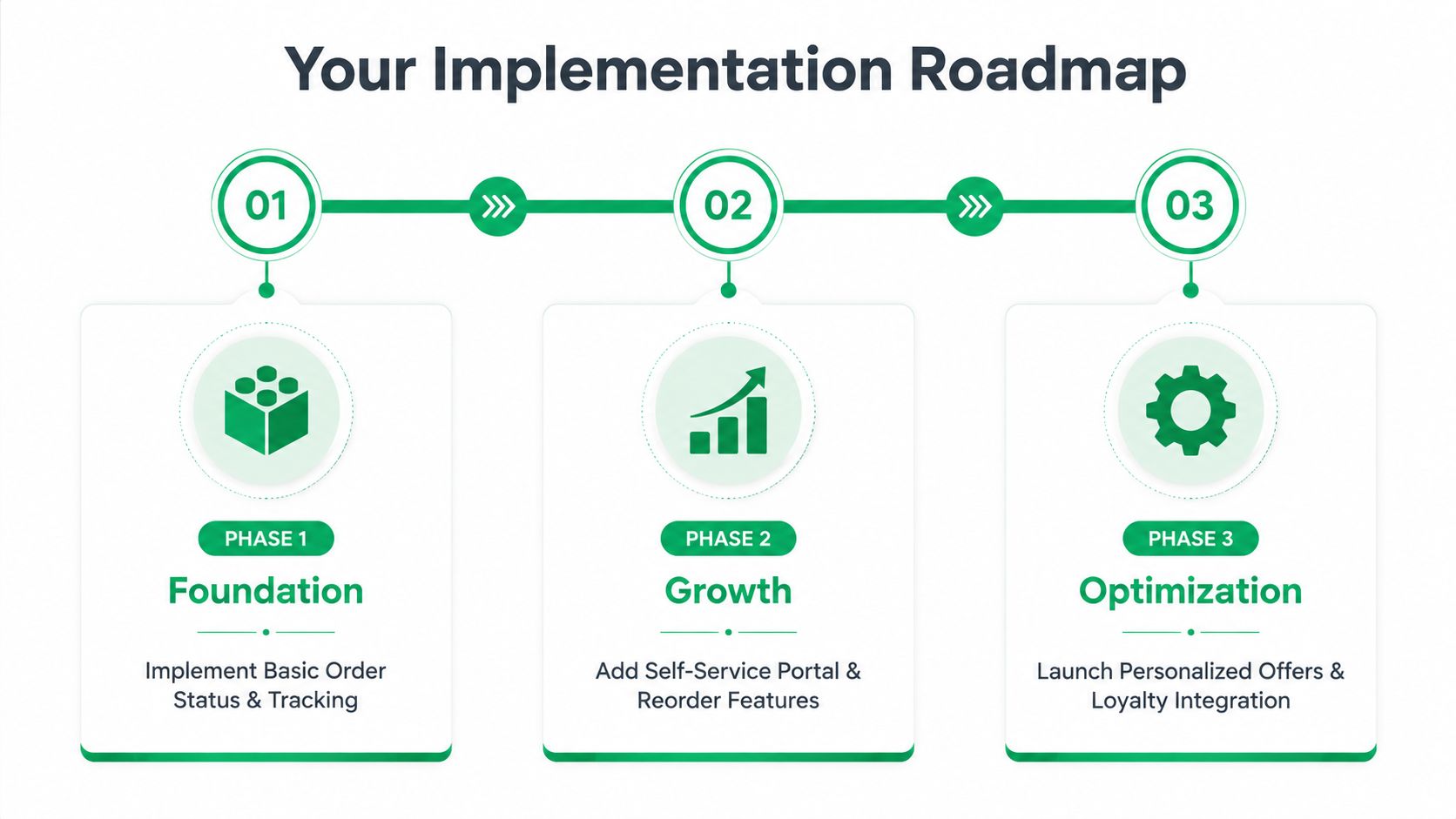
Phase one establishes control
Start with the confirmation and order-status experience. Verify order details, tracking links, customer notifications, and support contact paths before adding commercial elements. Choose one complementary offer with clear margin and reliable inventory. Define the audience, suppression rules, acceptance event, refund treatment, and owner for daily monitoring.
The first milestone is a clean flow that does not create support confusion or fulfillment exceptions. Record baseline values for support contacts, order edits, cancellations, refunds, and revenue per completed order. These measures show whether a revenue gain reflects genuine improvement or normal variation.
Phase two adds self-service
Introduce order editing after the store understands its fulfillment cutoff. Begin with lower-risk fields such as shipping and contact details, then evaluate product additions and substitutions. Give customers a defined editing window, show exactly what can change, and route exceptions to trained staff.
Add recommendations inside the editing experience once the correction path works. Merchandising should provide a limited set of compatible products, while operations confirms inventory, payment handling, and warehouse procedures. Review whether the portal reduces manual work and support demand without creating new exception queues. That reduction is part of the monetization case, because it lowers operational cost while preserving an opportunity to increase order value.
Small teams can use a managed Shopify app and standard rules. Larger Shopify Plus organizations may need custom permissions, 3PL integration, and one owner coordinating support, operations, and engineering.
Phase three improves decision quality
After operations remain stable, add post-purchase email sequences, subscription prompts, loyalty activation, or category-specific offers. Test one variable at a time, including relevance, placement, copy, or timing. Clicks alone cannot establish a winner.
The post-purchase upsell optimization analysis highlights a specific limitation: incremental lift is difficult to isolate when natural repeat purchasing and post-checkout engagement are mixed with offer responses. Use holdouts or controlled comparisons where possible. Include refunds, support contacts, fulfillment friction, and later repeat behavior in the review.
Advance only when the current phase has stable operations, clear attribution, and a customer experience support teams can explain.
Measuring Success and Avoiding Common Pitfalls
AOV alone can hide a weak program. Track gross margin per order, attach rate, and revenue per visitor, then pair them with refund and cancellation rates, support contacts, edit completion, fulfillment exceptions, and repeat behavior. Review results by offer type and customer segment so a high-value upsell does not mask costly service work.
Trust is an operating metric. Broad offers, repeated prompts, or poorly timed edits may raise immediate acceptance while increasing tickets, refunds, and customer uncertainty. Judge each flow on net contribution after operational friction, not checkout revenue alone. Controlled comparisons help separate offer impact from customers who would have purchased again without the prompt.
Treat post purchase monetization as infrastructure. Keep offers relevant, protect the customer's primary task, and monitor whether self-service editing reduces avoidable support work while preserving order value.
SelfServe supports Shopify and Shopify Plus merchants with post-purchase editing, multilingual order management, address validation, and curated offers on Thank You and Order Status pages. Visit SelfServe to review the workflow.