What Is Last Mile Tracking and Why It Matters in 2026
Last mile tracking is the real-time visibility you have into a package’s journey during its final—and most important—leg: from the local distribution center to your customer's front door. It’s the system that provides live updates on where an order is, its estimated arrival time, and confirmation of its successful delivery.
Essentially, it’s what turns a customer's delivery anxiety into confidence and trust in your brand.
The Final Sprint Your Package Takes
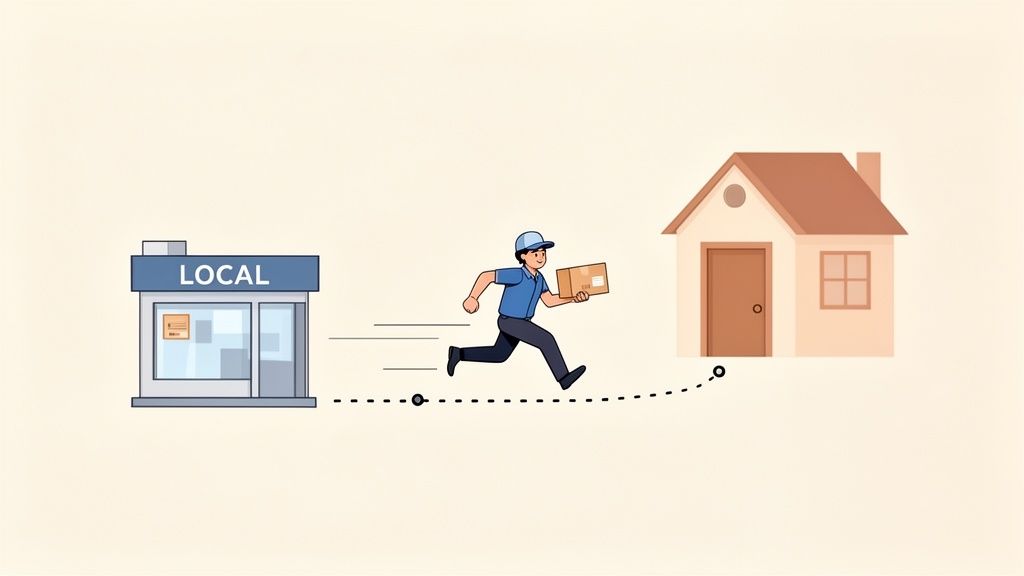
Think of the entire shipping process as a relay race. The first few legs—moving goods from a factory to a central warehouse, then to a regional hub—are long but follow a predictable path.
The final leg, however, is an all-out sprint through unpredictable city traffic and winding suburban streets. This is the last mile, and it’s where the entire delivery experience can either succeed brilliantly or fail spectacularly.
While it’s often the shortest distance covered, this final stage is also the most complex and expensive part of the entire process. In fact, research shows that last mile delivery accounts for over 53% of total shipping costs. Why? It's a combination of fuel expenses, driver wages, and the sheer inefficiency of making dozens, if not hundreds, of individual stops.
This is where what last mile tracking truly comes into play. By giving you and your customer a live, transparent view into this chaotic final step, you transform a logistical headache into a powerful tool for building customer relationships. You’re giving them the one thing they want most: certainty.
Last mile tracking isn't just a technical feature; it's the bridge between your brand and your customer at the most emotional point of the buying journey. It transforms the question "Where is my order?" into a branded, reassuring experience.
For any modern ecommerce brand, offering this level of transparency isn't a "nice-to-have" anymore. It’s a core expectation. One study revealed that a staggering 97% of customers expect the ability to monitor their orders from checkout to delivery.
Failing to provide this can directly harm your business in a few critical ways:
- Skyrocketing Support Tickets: Anxious customers will flood your support channels with "Where Is My Order?" (WISMO) inquiries, draining your team's resources and driving up operational costs.
- Eroding Brand Trust: A single bad delivery experience can erase all the goodwill you've built through marketing and product quality.
- Losing Repeat Business: A customer frustrated by a poor delivery is far less likely to shop with you again, which directly hits your customer lifetime value.
Ultimately, last mile tracking is how you deliver a seamless, professional experience that not only builds loyalty but also gives your operations team the control and data they need to run a smarter, more efficient business.
Why the Last Mile Is So Expensive and Essential
The final leg of a package's journey might be the shortest, but it’s hands-down the most tangled and expensive part of getting an order to a customer.
Picture this: one massive truck can haul thousands of packages from a warehouse to a regional hub, all in a single, efficient trip. But once it arrives, that single shipment splinters. An entire fleet of smaller vehicles is needed to navigate individual neighborhoods, each making dozens of unique stops to reach every front door.
This is where the simple math of logistics breaks down. Every single stop adds a new layer of complexity and cost. Drivers get stuck in city traffic, burn fuel looking for a parking spot, and lose precious minutes trying to find the right apartment in a massive complex. These seemingly small delays add up fast, putting a serious dent in your profit margins.
The Staggering Cost of the Final Journey
When you look at the numbers, it becomes crystal clear why this is such a focus for merchants. That final delivery stage is responsible for a staggering 53% of total shipping costs. And the expenses don't just come from fuel and driver salaries. The real profit killer is often the failed delivery.
When a delivery fails on the first try, it isn't just an inconvenience; it's a direct financial hit. The costs of rescheduling, additional fuel, and extra labor for a second attempt can quickly erode your margins on an order.
Research shows that a single failed delivery costs a business about $17.20 per attempt. Now consider that in urban areas, as many as 30-50% of deliveries might need a second try. Those costs can spiral out of control fast, highlighting why getting it right the first time is so crucial. You can find more data on how these expenses impact businesses and get more insights about last mile tracking from OneRail.com.
Why Transparency Is No Longer Optional
But the costs aren't just measured in dollars and cents; they're also measured in customer trust. A few years ago, a vague "out for delivery" notification was good enough. Not anymore. Today’s shoppers expect to see their package moving on a live map, get real-time ETAs, and know exactly when to be home for its arrival.
This isn't just a "nice-to-have" feature; it's the new standard set by the biggest names in retail and on-demand services. When your brand can't provide that same level of visibility, you create an information vacuum. Customers fill that void with anxiety and frustration, which inevitably leads to a flood of "Where Is My Order?" (WISMO) calls and emails that bog down your support team.
Ultimately, poor last-mile visibility turns the most exciting part of the shopping experience—the moment the package arrives—into a point of stress. Investing in solid tracking isn't just a logistics move. It's about owning the customer journey from the moment they click "buy" to the second they unbox their order, ensuring your brand's promise is delivered right to their doorstep.
How Modern Last Mile Tracking Technology Works
So, what’s really going on behind the scenes with modern last-mile tracking? It’s not just a single piece of tech, but a series of connected events that work together to move a package from the local hub to a customer's doorstep with total visibility.
It all kicks off the moment a package is slated for its final journey.
The Journey Begins With a Scan
Before a package is even loaded onto a delivery truck, a driver or warehouse associate gives it an initial scan. This simple action is the starting gun. It tells the central system, "This package is officially out for delivery," and logs it into the tracking ecosystem.
From this single scan, the entire information chain comes to life. The system can now generate a dynamic estimated time of arrival (ETA), and both the operations team and the eager customer can see that the package is on its way.
This final leg of the journey is also the most expensive, and getting it right is critical for profitability. Failed deliveries, in particular, can be a massive drain.
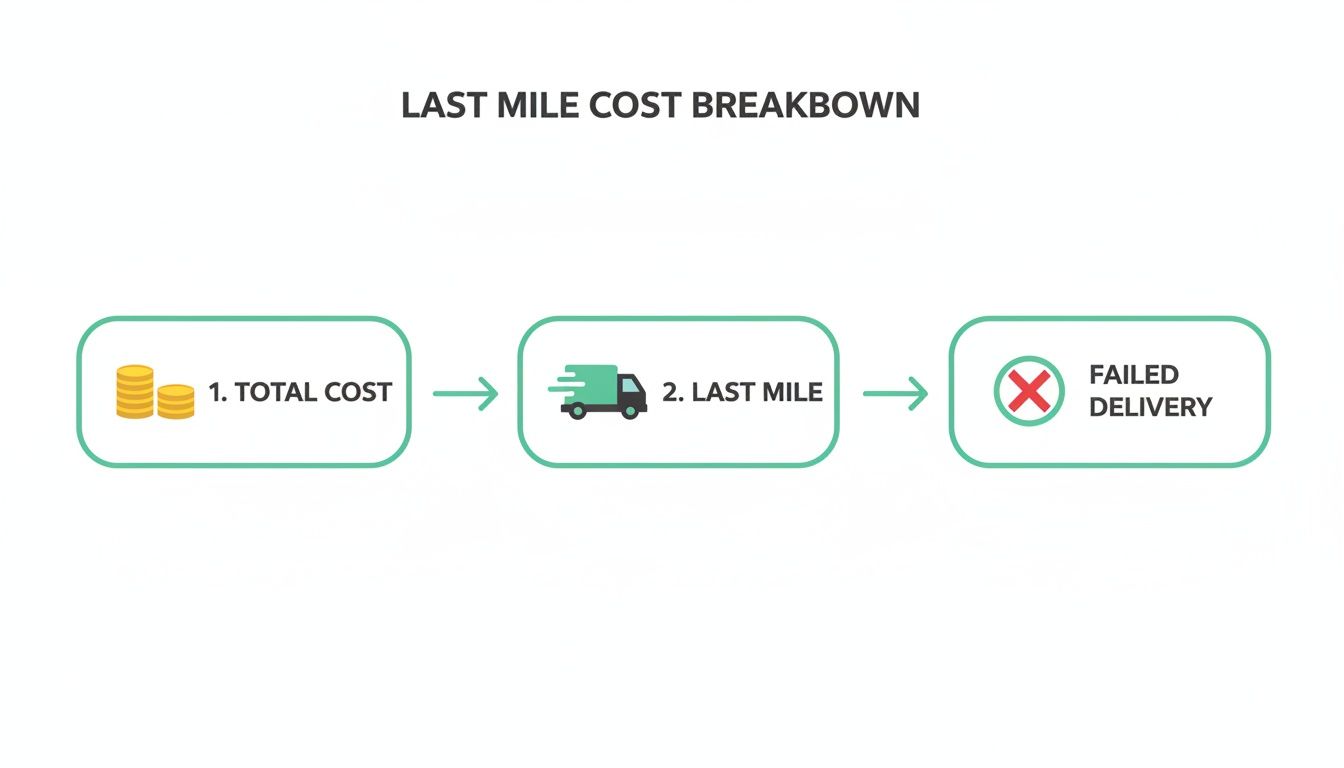
As you can see, a failed delivery attempt doesn't just add a small fee; it forces you to repeat the most expensive part of the shipping process, doubling your last-mile cost for that order.
From the Vehicle to the Cloud
Once the truck is on the road, the technology inside the vehicle takes center stage. GPS and telematics devices act as the eyes and ears, constantly pinging the package’s location back to a central server in real-time.
This is where sophisticated software really starts to shine, particularly with route optimization and geofencing.
- Route Optimization: This isn't just about finding the shortest A-to-B path. Smart algorithms calculate the most efficient route for the day, factoring in live traffic, delivery time windows promised to customers, and the entire sequence of stops. This saves a huge amount of fuel, time, and driver frustration.
- Geofencing: This technology creates a virtual boundary around a customer's address. When the delivery driver's device crosses that boundary, it can automatically trigger a notification to the customer, like "Your driver is arriving soon!"
This constant stream of data—GPS pings, driver app updates, and scan events—is what closes the visibility gap. It turns a vague, day-long delivery window into a precise ETA that updates on the fly. This is especially crucial in cities, where unexpected traffic affects 70% of urban deliveries. Having this data allows for quick rerouting and keeps "where's my order?" calls to a minimum. You can learn how FarEye tackles carrier tracking challenges with this kind of technology.
The final piece of the puzzle is the driver's handheld device or mobile app. At each stop, the driver updates the package status—delivered, attempted, or an exception. They can capture proof of delivery with a quick photo or signature, which instantly syncs to the system. This final action closes the loop, notifies the customer, and confirms a successful delivery. For merchants looking to fine-tune this customer-facing experience, many of the best Shopify shipping apps offer tools to better manage and communicate these final delivery steps.
The Business Benefits of Superior Last Mile Tracking
Knowing how last-mile tracking works is one thing. Understanding what it can do for your bottom line is something else entirely. Smart merchants know that investing in a great tracking system isn't just another expense—it's a serious profit-driver. The ripple effects go far beyond simply knowing where a package is, touching everything from operational efficiency to customer loyalty.
When you give customers a precise, real-time ETA and send proactive delivery updates, you dramatically lower the odds of a failed delivery on the first try. That simple win immediately cuts down on re-delivery costs, saving you money on extra fuel, driver wages, and the administrative headache of rescheduling.
Slash Operational Costs
One of the most immediate impacts you'll see from better last-mile tracking is a drop in your operational expenses. When customers are left guessing about their delivery, they inevitably start contacting your support team. That flood of "Where Is My Order?" (WISMO) inquiries can bury your agents, pulling them away from solving more complex problems that actually require a human touch.
Effective tracking automates these updates, answering customer questions before they even have a chance to ask. This alone can drastically reduce your support ticket volume. On top of that, the data you collect from your tracking system fuels smarter route optimization, which means less fuel burned, lower vehicle maintenance costs, and more deliveries squeezed into every driver's day.
Elevate the Customer Experience
For any ecommerce brand, the delivery is the final, physical touchpoint you have with your customer. A vague, anxiety-filled waiting game chips away at trust. A transparent, predictable experience, on the other hand, builds it. Last-mile tracking is what turns that uncertainty into confidence.
Today’s customers don't just hope for tracking; they demand it. A recent study found that 97% of shoppers expect to be able to monitor their orders through every step of the delivery process. Giving them this visibility is one of the single most powerful ways to boost satisfaction and earn their repeat business.
When you provide live map views and proactive notifications, you’re not just delivering a product; you’re delivering peace of mind. That positive feeling is what converts a first-time buyer into a loyal brand advocate. If you're handling logistics in-house, our guide on using third-party logistics software can help you streamline these efforts even further.
To put it in perspective, let's compare how key business metrics stack up for merchants with and without a modern tracking system.
Impact of Last Mile Tracking on Key Ecommerce Metrics
As the table shows, the difference isn't subtle. Implementing a robust tracking system directly strengthens your core business metrics, creating a more resilient and profitable operation.
Unlock New Revenue Opportunities
A well-designed tracking page is more than a simple status checker—it's a powerful marketing channel hiding in plain sight. Instead of sending your customers to a generic carrier website, a branded tracking page keeps them engaged within your brand's ecosystem. This creates a golden opportunity to drive more sales.
While a customer is eagerly checking on their order's progress, you can serve up:
- Targeted Upsells: Suggest complementary products that pair perfectly with their new purchase.
- Exclusive Promotions: Offer a special discount code to encourage their next order.
- New Product Showcases: Introduce them to your latest arrivals and collections.
By turning the tracking page into a post-purchase marketing tool, you can significantly increase customer lifetime value (LTV) and open up an entirely new revenue stream. You’re effectively transforming the final step of one purchase journey into the first step of their next one.
Solving Common Last-Mile Delivery Challenges
Even the slickest last-mile tracking system will eventually run into the chaos of the real world. That final sprint from the delivery vehicle to your customer’s doorstep is where things most often go sideways. But with some smart preparation and quick thinking, you can turn potential delivery disasters into moments that actually build customer loyalty.
Let's break down the most common hurdles we see every day and, more importantly, how to clear them.
The Cost of a Single Typo
One of the sneakiest and most expensive problems is a simple one: an incorrect or incomplete delivery address. A single transposed number in a zip code or a missing apartment number can send a driver on a wild goose chase. The result? A failed delivery attempt and a customer staring at a "delivery exception" notification with growing frustration.
This isn't just a minor inconvenience. It's a direct blow to your profit margin. You’ve now paid for the most expensive leg of the journey once, and you're likely going to have to pay for it all over again.
The only real fix is to be proactive. By using address validation tools that check customer-entered addresses against official postal databases before a label is even printed, you can catch the vast majority of these errors. It’s a simple preventative step that stops a huge number of failed deliveries from ever happening in the first place.
Taming Unexpected Delivery Exceptions
Of course, even with a perfect address, the real world has other plans. This is where you run into the dreaded delivery exception—a catch-all term for any surprise that halts a delivery. You’ve probably seen them yourself: "no secure location to leave package," "business closed," or "access code required."
Without a good system in place, these exceptions immediately create customer anxiety and a flood of "Where is my order?!" support tickets. The key is to get ahead of the customer's worry with automated, real-time communication.
When a delivery exception happens, the absolute worst thing you can do is leave your customer in the dark. An automated text or email that clearly explains the problem and offers an immediate solution—like a link to reschedule or redirect the package—gives the customer control and preserves their trust.
Instead of waiting for an angry email, your system should instantly fire off a notification that explains what happened and empowers the customer to fix it themselves. This simple act turns a moment of potential frustration into a showcase of excellent, proactive service.
The Problem with Vague ETAs
Finally, there’s the challenge of managing expectations around Estimated Times of Arrival (ETAs). Let's be honest, a static, day-long delivery window of "between 9 a.m. and 7 p.m." just doesn't fly anymore. Customers crave precision, but things like unexpected traffic, bad weather, or a delivery route that's running behind schedule can make promises hard to keep.
The solution is to ditch static estimates for dynamic ETAs that are powered by real-time data. Modern last-mile tracking systems do this beautifully. They constantly recalculate arrival times based on the driver's live GPS location, current traffic patterns, and the number of stops left on their route.
By giving customers a live tracking map and an ETA that updates on the fly, you provide the transparency they expect. This level of honesty, even when it means showing a delay, is always better than a broken promise. It shows respect for the customer's time and builds the kind of brand loyalty that lasts.
Integrating Tracking Into Your Post-Purchase Experience
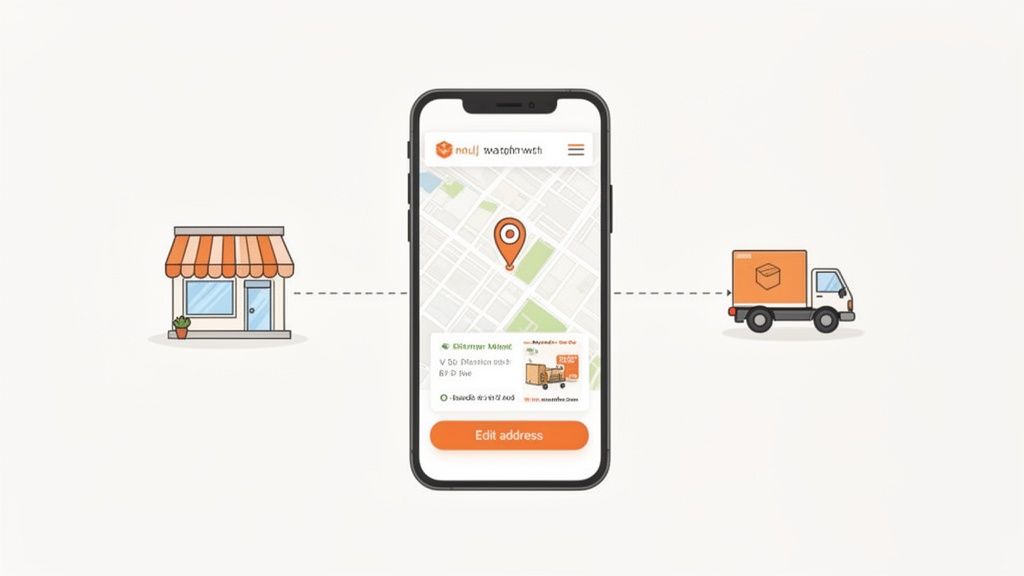
Last-mile tracking data is useful on its own, but its real value is unlocked when you weave it directly into the rest of your post-purchase technology. When you stop treating tracking as an isolated feature, it becomes a powerful tool that actively prevents problems and even generates revenue.
A standalone tracking page is like a weather app telling you it's raining outside. An integrated tracking system is like that same app handing you an umbrella. It connects critical information directly to a useful action.
Turn Data Into Action
Here’s a common scenario: a customer sees their package is out for delivery on the live map but suddenly realizes they made a typo in their apartment number. Without an integrated system, all they can do is cross their fingers, wait for the inevitable "delivery failed" notification, and then start a support ticket.
With an integrated platform, that same customer can correct the address right there on the tracking page. The system instantly pings the driver's device with the updated information, the delivery succeeds, and you've just saved on redelivery fees and dodged a support ticket entirely.
This is what it means to empower your customers. You’re giving them the control they expect. After all, a recent study found that 97% of customers expect to be able to monitor their orders. Giving them the tools to act on that information is the next logical step. For a deeper dive into setting this up, our guide on how to track Shopify orders breaks it down further.
Your New Owned Marketing Channel
An integrated tracking page also gives you something incredibly valuable: a captive audience. Instead of sending customers to a third-party carrier site—often cluttered with ads for other services—you bring them back to a branded experience that you control completely.
This is your space. It's the perfect spot to:
- Showcase new products that complement what they just bought.
- Offer an exclusive discount to nudge them toward their next purchase.
- Share helpful content, like how-to videos or styling guides for their new item.
Suddenly, a routine post-purchase check-in becomes the starting line for the next sale. You’re not just delivering a package anymore; you’re building a relationship and turning what used to be a cost center into a reliable revenue driver.
Your Last Mile Tracking Questions Answered
Okay, so we've covered the theory. But I know what you're thinking—how does this all play out in the messy reality of running an ecommerce store? Let's dive into the practical questions we hear all the time from operations teams and merchants.
Does Last Mile Tracking Work for International Shipments?
It does, but international shipping adds a few extra layers to the process. Once the package arrives in the destination country, the tracking experience is pretty much the same as a domestic one. The real challenge is getting a clear, unbroken view from your warehouse all the way to their doorstep.
This is where a good tracking platform becomes a "universal translator." It has to pull data from the origin carrier (like UPS) and the final-mile carrier (like Royal Mail in the UK) and stitch them together. Keep in mind, you might see a temporary "black hole" in tracking updates while a package is going through customs—that's a common bottleneck no matter what system you use.
Can I Use Last Mile Tracking if I Use Multiple Shipping Carriers?
This is exactly where a dedicated tracking platform shines. In fact, it's one of the main reasons people use them. If you're using a mix of carriers—maybe FedEx for express, USPS for standard, and a regional courier for local deliveries—you're creating a chaotic experience for your customers.
Think about it: you're sending one person to a FedEx site, the next to a confusing local courier page, and another to DHL. A proper tracking platform pulls all that data into one place. It presents it on a single, clean, branded page so every customer gets the same great experience, no matter who is actually knocking on their door.
What Is the Difference Between Carrier Tracking and a Branded Tracking Page?
Default carrier tracking pages are a dead end for your brand. The moment a customer clicks that link, they've left your website and landed on a generic page—often one that's cluttered with the carrier's own marketing or, even worse, ads for other companies.
A branded tracking page, on the other hand, is an extension of your store. It lives on your domain, uses your logos and colors, and keeps the customer firmly within your world. You turn a boring, functional check-in into a chance to reinforce your brand, share relevant content, and even show off new products to encourage their next purchase.
How Much Does Implementing a Last Mile Tracking Solution Cost?
The cost really depends on two things: how many packages you ship per month and which features you need. Most providers offer tiered monthly plans or a simple pay-per-shipment model.
But here’s how you should really think about the cost: what's the return on that investment? Calculate the money you'll save by slashing "Where Is My Order?" tickets, the cost of failed deliveries from incorrect addresses, and the added revenue from customers who buy again because they had a great experience. Most brands find the right solution pays for itself surprisingly fast.
Juggling post-purchase issues while trying to provide a world-class tracking experience is tough. SelfServe is built to make it easy. Give your customers the power to manage their own orders, free up your support team, and turn your tracking page into a revenue-generating asset. See how SelfServe can upgrade your post-purchase journey and start a free trial today.